
Are Foundry Blasting Bottlenecks Limiting Your Production Results?
Many factories purchase a standard Roller Conveyor Machine and expect identical results across castings, H-beams, and steel plates. In practice, unsuitable conveying speed, poor line integration, and manual handling can create uneven cleaning, rising labor costs, and delayed deliveries. Real-world project comparisons show why equipment must be matched to each workpiece and production process.
Our company evaluates workpiece conditions, production targets, upstream molding lines, and downstream quality standards before recommending a Customizable Roller Conveyor Machine. As an experienced Manufacturer and Supplier, we provide OEM and ODM Shot Blasting Machine solutions that improve capacity, labor efficiency, and surface-treatment consistency in practical factory applications.
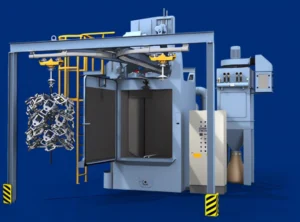
Why Roller Conveyor Equipment Cannot Be a One-Size-Fits-All Solution
A Roller Conveyor Machine transfers workpieces continuously through blasting, but its actual value depends on how well it fits the complete production line. A foundry may need rapid desanding after molding, a steel structure plant may process long H-beams, while a steel plate processor may prioritize uniform pretreatment before coating. Each application creates different project pain points.
- Castings may vary in shape, wall thickness, sand adhesion, and batch size.
- H-beams require stable support, accurate alignment, and safe handling of long sections.
- Steel plates demand consistent cleaning and surface preparation across broad areas.
- Upstream molding or cutting equipment may determine the required conveying rhythm.
- Downstream painting, welding, inspection, or assembly may impose strict quality limits.
For this reason, procurement teams should compare complete project outcomes instead of reviewing isolated equipment specifications. The correct Conveyor Roller arrangement, blasting exposure, loading method, and control logic can produce very different results from a visually similar machine used in the wrong application.
Case Study One: Casting Plant Cleaning After Molding
Real-world pain points before the retrofit
A casting plant using an automatic molding line faced inconsistent sand removal after shakeout. Operators manually repositioned castings before blasting, and some areas remained contaminated because workpieces entered the cleaning process with different orientations. The plant also experienced production interruptions when the molding line delivered castings faster than the manual loading station could handle.
In this type of project, the Roller Conveyor Machine must be designed around the molding line output rather than selected only by maximum blasting width. The Manufacturer reviews casting dimensions, mold-cycle timing, transfer points, and the required cleaning result. The conveyor then becomes a connection between molding, shakeout, blasting, inspection, and the next production stage.
Changes after line integration
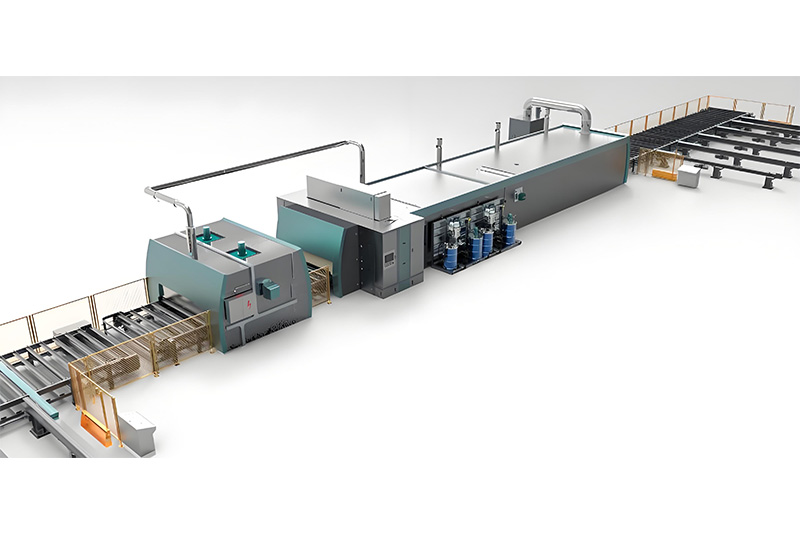
After integrating a Pass-Through Shot Blast Machine with the molding and material-handling process, the plant could establish a more predictable flow. A suitable Conveyor Roller layout reduced manual repositioning and helped maintain consistent exposure. The following comparison represents the type of result buyers should verify through project records and acceptance testing.
| Evaluation item | Before retrofit | After integrated solution |
| Loading method | Mostly manual positioning | Organized transfer from molding and shakeout |
| Production flow | Interrupted by loading delays | More continuous and balanced |
| Labor requirement | Several operators for handling and rework | Fewer handling tasks and clearer responsibilities |
| Cleaning consistency | Variation between casting batches | More stable process control |
| Quality defects | Residual sand and missed areas | Lower defect and rework risk |
The main achievement was not simply a faster conveyor. It was the coordination of molding-line timing, workpiece orientation, blasting exposure, and inspection requirements. Buyers should ask the Supplier to demonstrate how the proposed Shot Blasting Machine will respond to actual casting variation rather than relying on a standard catalog configuration.
Case Study Two: H-Beam Processing at a Steel Structure Plant
Handling long and heavy structural sections
Steel structure plants often process H-beams with different lengths, flange dimensions, and surface contamination levels. Before automation, workers may use cranes or forklifts for repeated positioning, creating handling bottlenecks and increasing the risk of unstable loading. Manual transfer also makes it difficult to maintain a consistent speed through the blasting zone.
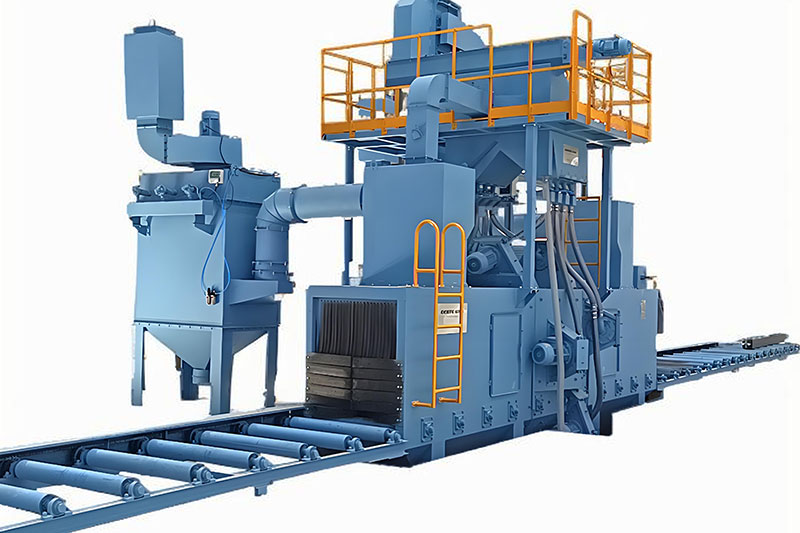
For H-beam applications, the Roller Conveyor Machine must support the entire workpiece safely while maintaining reliable movement. The project may require reinforced rollers, suitable spacing, side guidance, loading coordination, and connection with shot blasting and painting equipment. A Customizable design is especially important when one production line handles multiple beam sizes.
Pre- and post-upgrade comparison
After introducing a conveyor-fed Shot Blasting Machine, the plant could organize loading and unloading into defined operating zones. This reduced repeated crane movements and improved scheduling between fabrication and surface treatment. The improvement should be measured through actual throughput, labor hours, defect records, and delivery performance.
| Project metric | Manual or disconnected process | Integrated conveyor process |
| Material transfer | Repeated crane and forklift movements | Planned roller conveying and loading points |
| Labor cost | High handling involvement | Lower dependence on repetitive transfer work |
| Surface quality | Speed and coverage varied by operator | More repeatable conveying conditions |
| Production capacity | Restricted by handling intervals | Improved line continuity and scheduling |
| Safety exposure | Frequent manual intervention near heavy sections | Better separation of handling and blasting operations |
These results depend on correct line balancing. If the conveyor runs faster than the blasting process can handle, cleaning quality may decline. If it runs too slowly, the machine becomes a capacity constraint. A qualified OEM or ODM Supplier should evaluate both equipment performance and the complete steel structure workflow.
Case Study Three: Steel Plate Pretreatment Before Coating
Reducing coating-related defects
Steel plate processing plants commonly require stable pretreatment before painting, welding, or fabrication. Inadequate cleaning can leave mill scale, rust, or contamination on the surface, leading to poor coating adhesion, premature corrosion, inspection rejection, and rework. When plates are manually transferred or inconsistently positioned, surface-treatment results can vary across the same batch.
A Pass-Through Shot Blast Machine equipped with an appropriately configured Roller Conveyor Machine can support a more controlled plate-cleaning sequence. The system should be matched to plate width, thickness, length, contamination, required cleanliness grade, and downstream coating conditions. The Supplier should also explain how dust collection, abrasive circulation, and inspection procedures support stable operation.
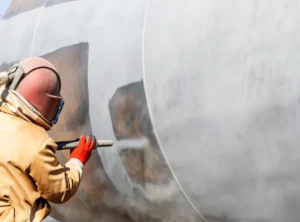
Connecting pretreatment with downstream production
The strongest project results occur when blasting is planned as part of the complete process. Incoming plates can be identified and loaded according to production orders, transferred through cleaning at a controlled rate, and moved directly to inspection or coating. This reduces unnecessary staging and helps quality personnel trace defects to specific process conditions.
- Define the required cleanliness and surface-profile targets.
- Confirm plate dimensions, weight range, and production sequence.
- Match Conveyor Roller spacing and conveying speed to the workpieces.
- Integrate loading, blasting, inspection, and coating transfer points.
- Verify capacity and quality during factory and site acceptance testing.
How Buyers Should Evaluate Case Study Evidence
Marketing claims rarely reveal whether a machine will perform effectively in a different factory. Procurement teams should request evidence that connects equipment design with measurable project outcomes.
- Workpiece drawings, photographs, weight ranges, and contamination descriptions
- Before-and-after production capacity and labor records
- Defect, rework, and coating rejection comparisons
- Integration details for molding lines, cranes, painting lines, or assembly stations
- Acceptance criteria for cleaning quality, conveying stability, and safety functions
- References from projects using comparable workpieces and production volumes
Our existing molding-line and foundry projects provide practical references for evaluating these factors. We analyze upstream output, downstream requirements, and real operating constraints before proposing a Customizable solution. This process helps customers avoid purchasing equipment that performs well in isolation but fails to fit the factory system.
Choose a Project Partner, Not Only a Machine Supplier
A Roller Conveyor Machine achieves its full value when it improves the complete production chain. Contact our team with your workpiece data, layout, molding-line conditions, and production targets. We can provide a Customizable OEM or ODM proposal for integrated Shot Blasting Machine and Pass-Through Shot Blast Machine applications.
 English
  Russian
  Spanish
  Portuguese
  French
  Indonesian
  Thai
Thai