
Improper horizontal molding parameters cause iron casting defects; master key parameters for stable horizontal iron casting molding line.
This guide details key parameters affecting horizontal molding quality in iron casting, ensuring stable operation of horizontal iron casting molding line.
Explore each key parameter of horizontal molding and horizontal iron casting molding line below.
Parameter 1: Molding Sand Quality—Foundation of Horizontal Molding Quality
Molding sand quality is the most basic key parameter affecting the quality of horizontal molding in iron casting production, directly determining the stability of the horizontal iron casting molding line.
- The horizontal iron casting molding line relies on high-quality molding sand to form precise, durable molds for horizontal molding, as poor sand quality leads to common defects like sand holes, scabs, and mold collapse. Key indicators of molding sand quality for horizontal molding include permeability, strength, viscosity, and temperature—each must be strictly controlled to match the requirements of the horizontal iron casting molding line.
- For horizontal molding, the molding sand must have sufficient permeability to allow gas generated during iron casting to escape, preventing porosity in castings. It must also have appropriate strength to withstand the pressure of molten iron without deformation, a critical factor for the horizontal iron casting molding line’s continuous operation.
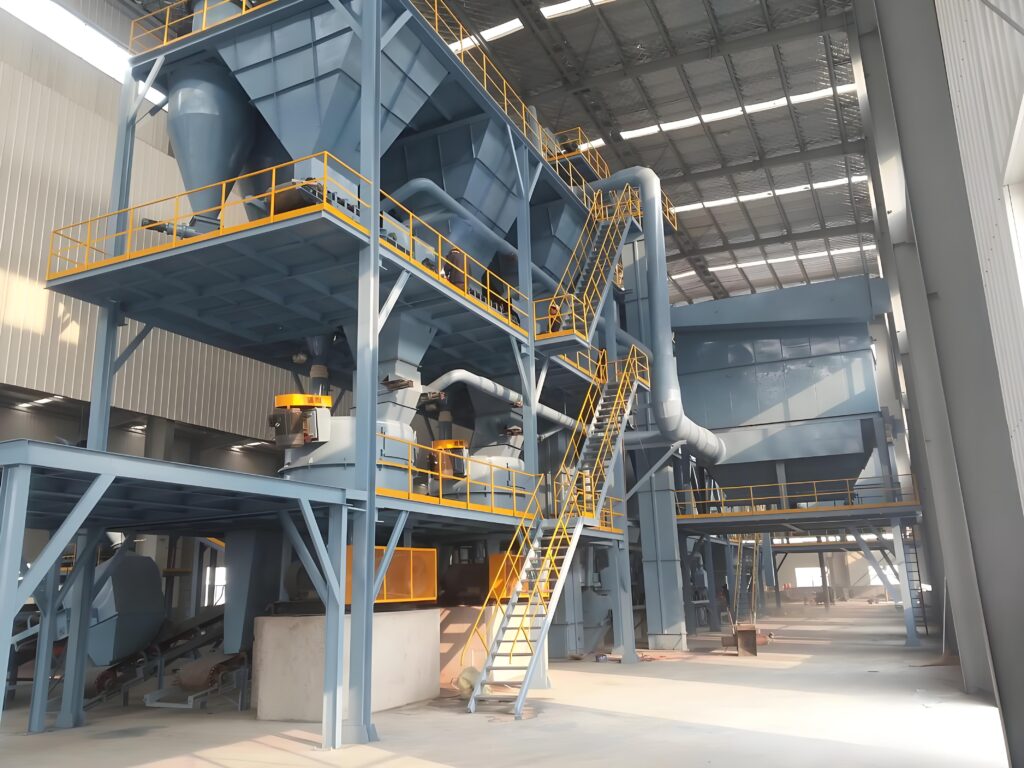
The horizontal iron casting molding line is equipped with sand mixing equipment to adjust these parameters, ensuring the molding sand is uniform and meets horizontal molding standards. Neglecting molding sand quality will disrupt the horizontal iron casting molding line, reduce horizontal molding efficiency, and increase casting rejection rates, making it a non-negligible parameter for iron casting production.
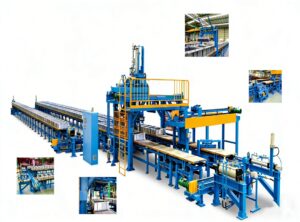
Parameter 2: Sand Compaction Pressure—Critical for Horizontal Molding Precision
Sand compaction pressure is another core parameter affecting horizontal molding quality, directly influencing the dimensional accuracy and surface finish of iron castings produced by the horizontal iron casting molding line.
- The horizontal iron casting molding line uses precise pressure control to compact molding sand into molds during horizontal molding—insufficient pressure leads to loose molds, which collapse under molten iron pressure, causing casting deformation.
- Excessive pressure, on the other hand, makes the sand mold too dense, reducing permeability and leading to gas defects. The optimal compaction pressure for horizontal molding varies based on casting size, complexity, and sand type, and the ligne de moulage de fonte en fer horizontale est conçue pour ajuster ce paramètre de manière flexible. Pour les petites fontes en fer de précision, la ligne de moulage de fonte en fer horizontale utilise une pression inférieure pour éviter d'endommager le moule en sable ; pour les grandes fontes à parois épaisses, une pression plus élevée assure la stabilité du moule.
Le processus de moulage horizontal repose sur une pression de compactage constante dans tout le moule, ce que la ligne de moulage de fonte en fer horizontale réalise grâce à des capteurs de pression automatisés. Contrôler efficacement la pression de compactage du sable garantit que le moulage horizontal produit des fontes en fer de haute précision et maintient le fonctionnement stable de la ligne de moulage de fonte en fer horizontale.
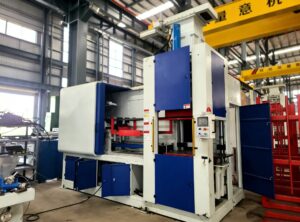
Paramètre 3 : Température du moule—Assurer un moulage horizontal stable et une formation de fonte
La température du moule est un paramètre clé qui affecte directement le processus de solidification du fer en fusion et la qualité du moulage horizontal dans la production de fonte en fer, étroitement liée à l'efficacité de la ligne de moulage de fonte en fer horizontale.
- The horizontal iron casting molding line doit maintenir une température de moule stable pendant horizontal molding pour éviter des défauts tels que des fermetures à froid, des retraits et des fissures. Si la température du moule est trop basse, le fer en fusion se solidifie trop rapidement, entraînant un remplissage incomplet et des fermetures à froid ; si elle est trop élevée, la solidification est retardée, provoquant des trous de rétrécissement et des déformations.
- The horizontal iron casting molding line est équipée de systèmes de contrôle de la température pour ajuster la température du moule en fonction des exigences du moulage horizontal—un préchauffage du moule à une plage optimale avant le coulage garantit une solidification uniforme.
- Pour le moulage horizontal de fontes en fer complexes, la ligne de moulage en fer de fonte horizontale utilise un contrôle de température localisé pour répondre aux différents taux de refroidissement dans diverses zones du moule.
Maintenir une température de moule appropriée améliore non seulement la qualité du moulage horizontal, mais prolonge également la durée de vie des composants du moule de la ligne de moulage de fonte en fer horizontale, réduisant les coûts de maintenance et assurant une production continue.
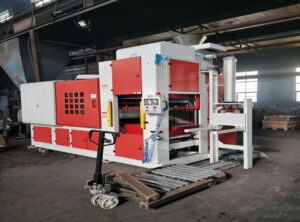
Paramètre 4 : Température et vitesse de coulage—Clé du succès du moulage horizontal
La température et la vitesse de coulage sont des paramètres critiques qui affectent la qualité du moulage horizontal, car ils déterminent comment le fer en fusion remplit le moule dans la ligne de moulage de fonte en fer horizontale.
- The horizontal iron casting molding line s'appuie sur un contrôle précis de ces deux paramètres pour garantir un remplissage complet et uniforme sans défauts. La température de coulage pour le moulage horizontaldoit être suffisamment élevée pour maintenir le fer en fusion fluide, mais pas si élevée qu'elle entraîne l'érosion du moule ou l'oxydation de la fonte.
- La température optimale varie en fonction de la composition et de la taille de la fonte en fer, et la ligne de moulage de fonte en fer horizontale est calibrée pour maintenir cette température de manière cohérente. La vitesse de coulage est également importante : trop rapide, et le fer en fusion éclabousse, causant l'érosion du sable et un remplissage inégal ; trop lent, et le fer en fusion se solidifie prématurément, entraînant des fontes incomplètes.
The horizontal iron de fonte horizontale uses automated pouring systems to control speed, matching it to the mold’s gating system and horizontal molding requirements. Proper coordination of pouring temperature and speed ensures horizontal molding produces defect-free iron castings and maximizes the horizontal iron casting molding line’s productivity.
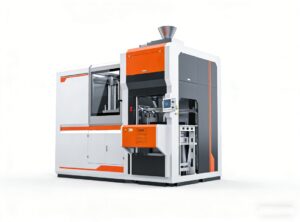
Parameter 5: Mold Parting and Clamping Force—Ensuring Horizontal Molding Precision
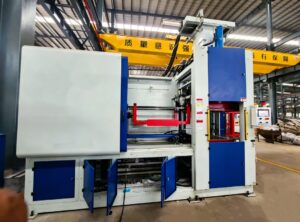
Mold parting and clamping force are key parameters that affect the alignment and stability of molds in horizontal molding, directly impacting the horizontal iron casting molding line’s performance.
- The horizontal iron casting molding line uses horizontal mold parting, where the mold is split into two halves for easy casting removal—precise parting alignment is essential to avoid casting misalignment and flash. The ligne de moulage de fonte en fer horizontale’s clamping mechanism applies uniform force to hold the mold halves together during horizontal molding, preventing molten iron leakage and mold movement.
- Insufficient clamping force leads to mold separation and casting defects; excessive force damages the mold and increases wear on the horizontal iron casting molding line. The horizontal molding process relies on the horizontal iron casting molding line’s automated clamping system to adjust force based on mold size and complexity.
Proper control of mold parting and clamping force ensures horizontal molding produces high-precision iron castings and extends the service life of the horizontal iron casting molding line’s components.
Parameter 6: Cooling Time—Guaranteeing Horizontal Molding Casting Quality
Cooling time is a critical parameter affecting the quality of iron castings produced by horizontal molding and the efficiency of the horizontal iron casting molding line.
- The horizontal iron casting molding line must control cooling time to ensure molten iron solidifies completely and uniformly, avoiding defects like shrinkage, cracks, and residual stress. Cooling time varies based on casting size, thickness, and material—thick-walled iron castings require longer cooling times to prevent internal defects, while thin-walled castings can cool faster to improve horizontal molding efficiency.
- The horizontal iron casting molding line integrates cooling systems to adjust cooling rate, ensuring consistent cooling across the entire casting. Rushing the cooling process leads to premature mold removal and casting deformation; overly long cooling times reduce the horizontal iron casting molding line’s productivity.
Proper cooling time control balances horizontal molding quality and efficiency, ensuring the horizontal iron casting molding line produces high-quality iron castings while maintaining optimal production throughput.
Conclusion
Control key parameters to ensure horizontal molding quality and stable horizontal iron casting molding line.
For horizontal molding and horizontal iron casting molding line solutions,
email:[email protected]
 French
  English
  Russian
  Spanish
  Portuguese
  Indonesian
  Thai
Thai