
Des étapes incorrectes de moulage horizontal entraînent des défauts de coulée ; maîtrisez le processus avec la machine de moulage horizontal sans châssis pour des résultats parfaits.
Ce guide détaille l'ensemble du processus fondamental de moulage horizontal, de la préparation du moule à la formation de la coulée, en utilisant la machine de moulage horizontal sans châssis pour plus d'efficacité.
Explorez chaque étape du moulage horizontal et le rôle de la machine de moulage horizontal sans châssis ci-dessous.
Étape préparatoire pour le moulage horizontal : préparation des matériaux et des équipements.
Le processus fondamental du moulage horizontal commence par un travail préparatoire minutieux, qui détermine directement la qualité de la formation de la coulée ultérieure et dépend fortement de la machine de moulage horizontal sans châssis.
- Sélectionnez du sable à moulage de haute qualité, le matériau de base pour le moulage horizontal, en veillant à ce qu'il ait la viscosité, la perméabilité et la résistance appropriées pour résister à la pression du métal fondu. Le sable à moulage est mélangé avec des liants et des additifs dans un mélangeur spécialisé, une étape qui peut être automatisée avec le Machine de moulage sans moule horizontale pour garantir un mélange uniforme.
- Préparez le modèle et le noyau, qui sont fabriqués avec précision pour correspondre à la forme de coulée souhaitée—ces éléments sont installés dans la machine de moulage horizontal sans châssis pour former la cavité du moule.
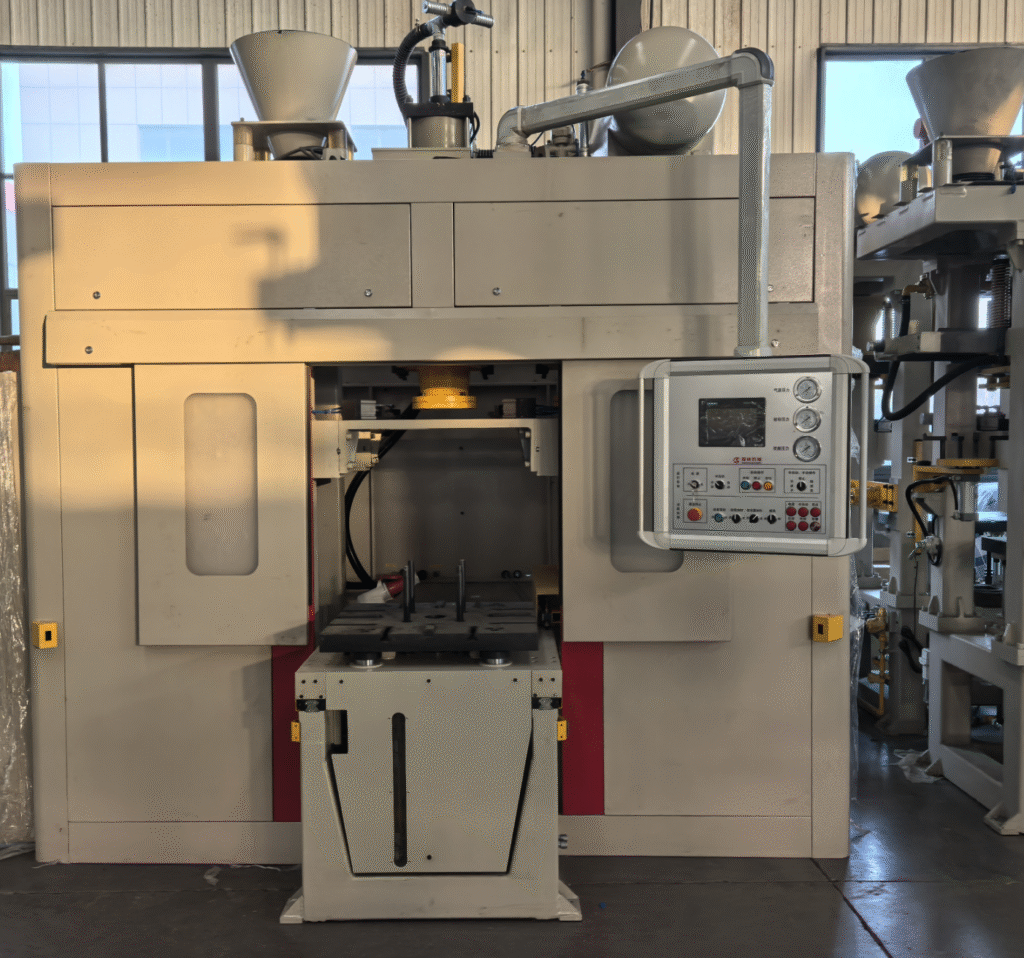
- La machine de moulage horizontal sans châssis elle-même doit être inspectée et calibrée avant de commencer le moulage horizontal : vérifiez le système de pression, le tapis roulant et le mécanisme d'alimentation en sable pour garantir un fonctionnement fluide.
Cette étape préparatoire pose les bases d'un moulage horizontal sans erreur, et l'automatisation de la machine de moulage horizontal sans châssis réduit les erreurs manuelles, rendant l'ensemble du processus plus stable et efficace par rapport aux horizontal molding méthodes traditionnelles.
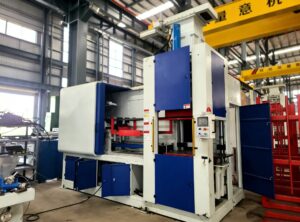
Préparation du moule dans le moulage horizontal : opération du noyau avec la machine de moulage horizontal sans châssis.
La préparation du moule est l'étape clé du moulage horizontal, et la machine de moulage horizontal sans châssis joue un rôle central dans l'optimisation de ce processus. Contrairement au moulage horizontal traditionnel basé sur des châssis, tla machine de moulage horizontal sans châssis eélimine le besoin de châssis, formant directement le moule en compactant le sable à moulage entre deux plaques de modèle.
- La machine de moulage horizontal sans châssis alimente the prepared molding sand into the molding cavity evenly, ensuring no gaps or uneven distribution.
- Then, the machine applies precise pressure to compact the sand, a key step in horizontal molding that determines the mold’s strength and dimensional accuracy. The Horizontal flaskless molding machine’s pressure control system ensures consistent compaction across the entire mold, avoiding defects like mold collapse during casting.
After compaction, the Horizontal flaskless molding machine lifts the pattern plates, leaving a precise mold cavity for horizontal molding. This step is fully automated with the Horizontal flaskless molding machine, reducing labor intensity and improving mold consistency, which is critical for mass production in horizontal molding processes.
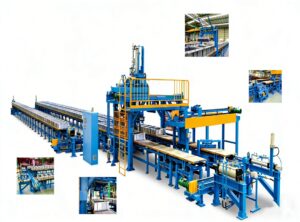
Mold Assembly and Inspection: Ensuring Quality in Horizontal Molding
After mold preparation with the Horizontal flaskless molding machine, mold assembly and inspection are essential to ensure smooth horizontal molding and high-quality casting formation.
- The two halves of the mold (formed by the Horizontal flaskless molding machine) are carefully assembled, aligning the core and mold cavity precisely to avoid misalignment, which would cause casting defects. The Machine de moulage sans moule horizontale often includes an automated assembly function, ensuring accurate alignment and reducing manual errors in horizontal molding.
- Next, the assembled mold is inspected thoroughly: check for sand cracks, loose sand, or foreign objects in the cavity, as these issues can ruin the casting. The Horizontal flaskless molding machine’s built-in inspection sensors can assist in this step, detecting minor defects that are easy to overlook in manual horizontal molding.
Additionally, the mold’s gating and riser systems (critical for molten metal flow) are checked to ensure they are unobstructed. This inspection step is vital in horizontal molding, as even small mold defects can lead to scrapped castings, and the Horizontal flaskless molding machine’s automation helps maintain consistent quality across all molds.
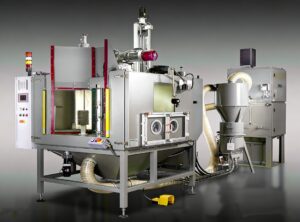
Casting Formation: The Final Step of Horizontal Molding with Horizontal Flaskless Molding Machine
Casting formation is the final and most critical step in the fundamental process of horizontal molding, where the Horizontal flaskless molding machine works in tandem with pouring equipment to produce the final casting.
- The molten metal (heated to the appropriate temperature) is carefully poured into the mold cavity through the gating system, a process that requires precision to avoid splashing or incomplete filling. Tla machine de moulage horizontal sans châssis’s stable mold structure ensures the mold remains intact during pouring, preventing molten metal leakage. As the molten metal cools and solidifies in the mold, the Horizontal flaskless molding machine maintains a stable environment to ensure uniform cooling, reducing defects like shrinkage or cracks.
- Once the metal is fully solidified, the Horizontal flaskless molding machine separates the mold halves, releasing the finished casting. The machine then removes residual sand from the casting, completing the horizontal molding process. The Machine de moulage sans moule horizontale’s automation in this step ensures consistent casting quality, faster cycle times, and higher efficiency compared to manual or semi-automatic horizontal molding methods.
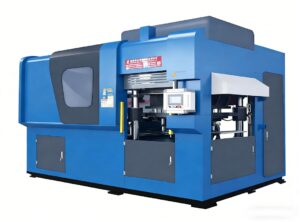
Post-Casting Processing: Completing the Horizontal Molding Process
While casting formation is the final step of mold-based horizontal molding, post-casting processing is essential to refine the finished product, and the Horizontal flaskless molding machine often integrates with post-processing equipment to streamline the entire workflow.
- After the casting is released from the Horizontal flaskless molding machine, it is cleaned to remove residual molding sand, either manually or with automated sandblasting equipment integrated with the horizontal molding line. Next, the casting is inspected for defects such as cracks, porosity, or dimensional inaccuracies—any defective parts are repaired or scrapped. The Machine de moulage sans moule horizontale’s precision ensures that post-processing work is minimized, as the castings produced through horizontal molding are already close to the desired final shape.
Additionally, the casting may undergo heat treatment to improve its mechanical properties, a step that complements the high-quality mold produced by the Horizontal flaskless molding machine. This post-processing stage completes the fundamental horizontal molding process, ensuring the final casting meets industry standards and application requirements.
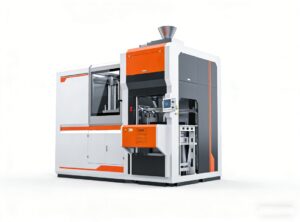
Key Advantages of Using Horizontal Flaskless Molding Machine in Horizontal Molding
The Horizontal flaskless molding machine is a game-changer for the fundamental horizontal molding process, offering numerous advantages over traditional horizontal molding methods.
- The Horizontal flaskless molding machine eliminates flasks, reducing equipment costs and labor required for flask handling, making horizontal molding more efficient.
- The machine’s automation ensures consistent mold quality and casting accuracy, reducing rejection rates in horizontal molding.
- The Horizontal flaskless molding machine speeds up the horizontal molding cycle, increasing production capacity for mass casting production.
- The machine’s compact design saves espace de workshop, optimisation de la disposition des lignes de production de moulage horizontal.
Enfin, la machine à moulage horizontal sans moule réduit le gaspillage de sable et la pollution environnementale, rendant le moulage horizontal plus durable. Ces avantages font de la machine à moulage horizontal sans moule un outil indispensable pour les processus modernes de moulage horizontal, garantissant une haute efficacité, une qualité et une rentabilité.
Conclusion
Maîtrisez les étapes du moulage horizontal avec la machine à moulage horizontal sans moule pour des pièces moulées de haute qualité.
Fou des solutions de moulage horizontal et de machine à moulage horizontal sans moule,
email: [email protected]
 French
  English
  Russian
  Spanish
  Portuguese
  Indonesian
  Thai
Thai