
Why Do Most Sand Casting Factories Struggle With Unstable Dimensional Accuracy and High Defect Rates?
Most small and medium foundries rely on outdated manual processes and low-precision molding equipment, resulting in uneven mold density, sand inclusion defects, dimensional deviation and poor surface finish. These issues cause high rework rates, delayed orders and rising production costs, severely undermining product qualification rates and market competitiveness in mass sand casting production.
Reliable sand casting quality depends on standardized sand molding machine configuration and process control. As a professional Manufacturer and Supplier, we offer fully Customizable molding equipment for all casting scenarios.
This in-depth guide analyzes core processes, key parameters and equipment selection rules to help foundries upgrade their sand casting production systems effectively.
Core Working Principle and Industrial Value of Modern Sand Casting
Sand casting remains the most widely used metal forming process in the global foundry industry, covering iron, steel, aluminum and copper alloy casting production. Its core advantage lies in low mold cost, strong part structure adaptability and support for both small-batch trial production and large-scale mass manufacturing. The entire process relies on sand mold forming, molten metal pouring, cooling solidification and shakeout cleaning to complete near-net-shape metal parts.
Traditional manual sand molding cannot meet modern industrial precision requirements. Professional sand molding machine and automated molding equipment standardize sand filling, compaction and mold locking processes, effectively solving the common pain points of loose sand molds and inconsistent mold hardness. Stable mold quality ensures consistent wall thickness, dimensional tolerance and surface flatness for each casting, greatly improving the overall stability of sand casting batches.
Key Process Parameters That Determine Sand Casting Finishing Quality
High-quality sand casting production must strictly control standardized process parameters. Many factory quality problems are caused by random parameter adjustment and non-standard equipment operation. As an experienced Manufacturer and Supplier, we sort out core controllable indicators for daily production:
- Mold hardness: Standard compactness ranges from 85 to 95 hardness degrees to prevent sand drop and deformation
- Sand grain fineness: 50–100 mesh adjustable, matching different surface roughness requirements
- Mold wall tolerance: Controlled within ±0.5mm for precision industrial castings
- Pouring temperature: Strictly matched with material properties to avoid shrinkage porosity and cold shut defects
- Cooling time: Fixed according to workpiece thickness to prevent internal stress and cracking
Only when molding equipment stably maintains the above parameters can foundries achieve long-term stable sand casting quality. Manual operation cannot sustain fixed parameter output, which is why automated sand molding machine systems have become mainstream modern foundry upgrades.
Why Automated Équipement de moulage Replaces Traditional Manual Molding?
Traditional manual sand molding highly depends on worker experience, resulting in unavoidable human errors and unstable batch consistency. Different operators have different compaction strength and sand filling uniformity, leading to fluctuating sand casting defect rates. In addition, manual molding has low output efficiency, high labor costs and long production cycles, limiting factory capacity expansion.
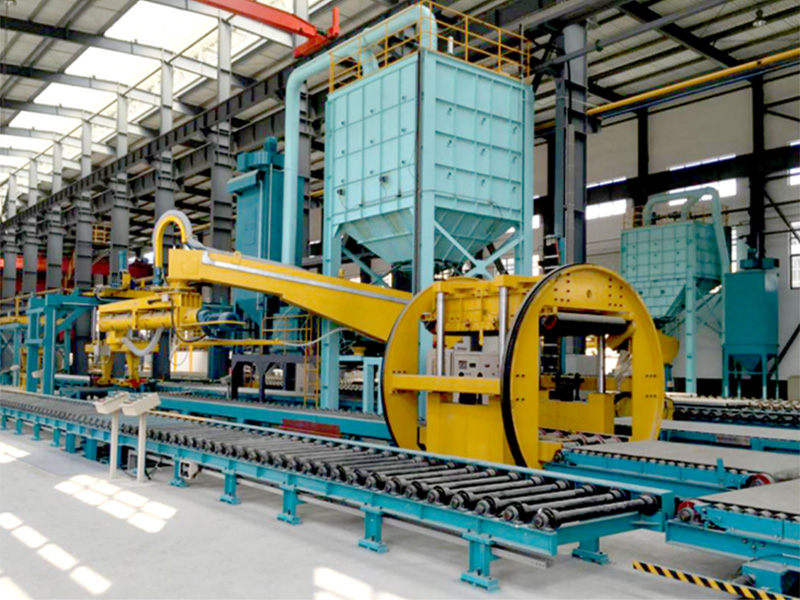
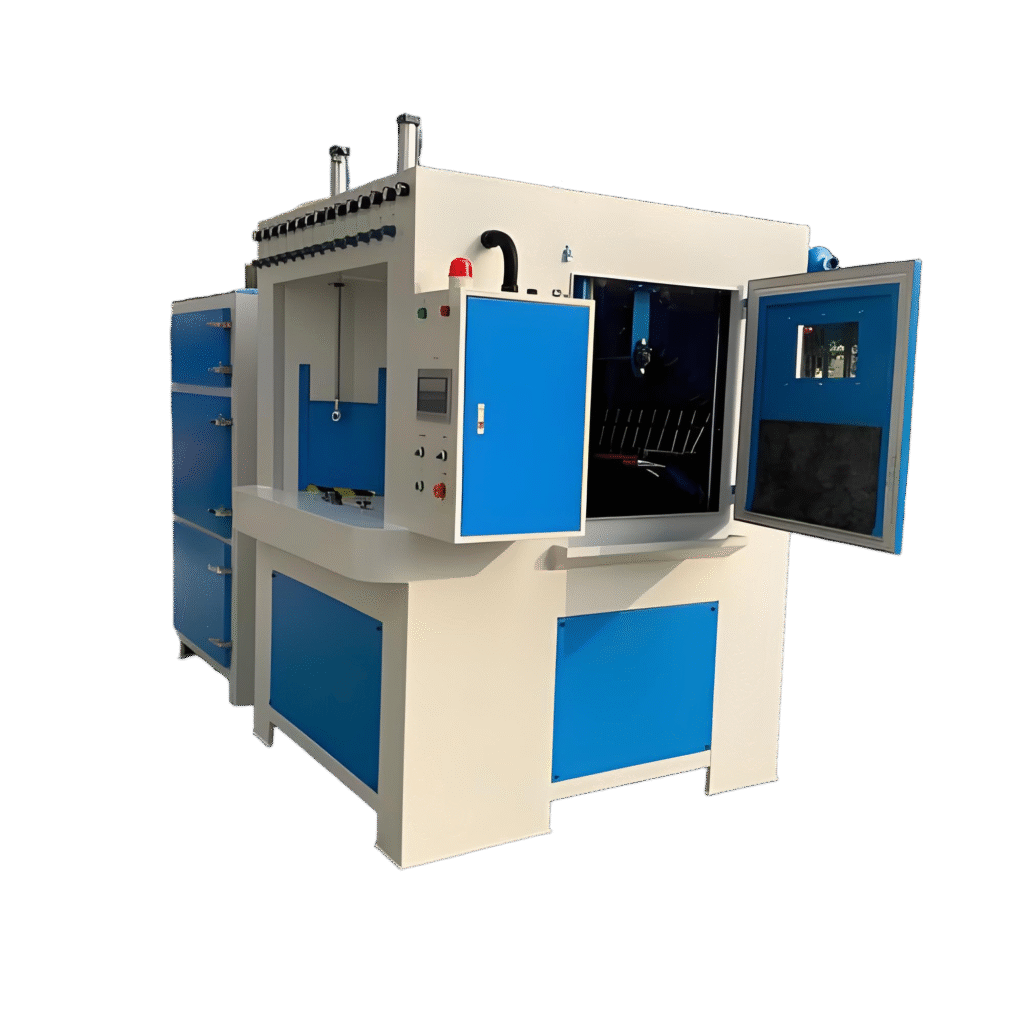
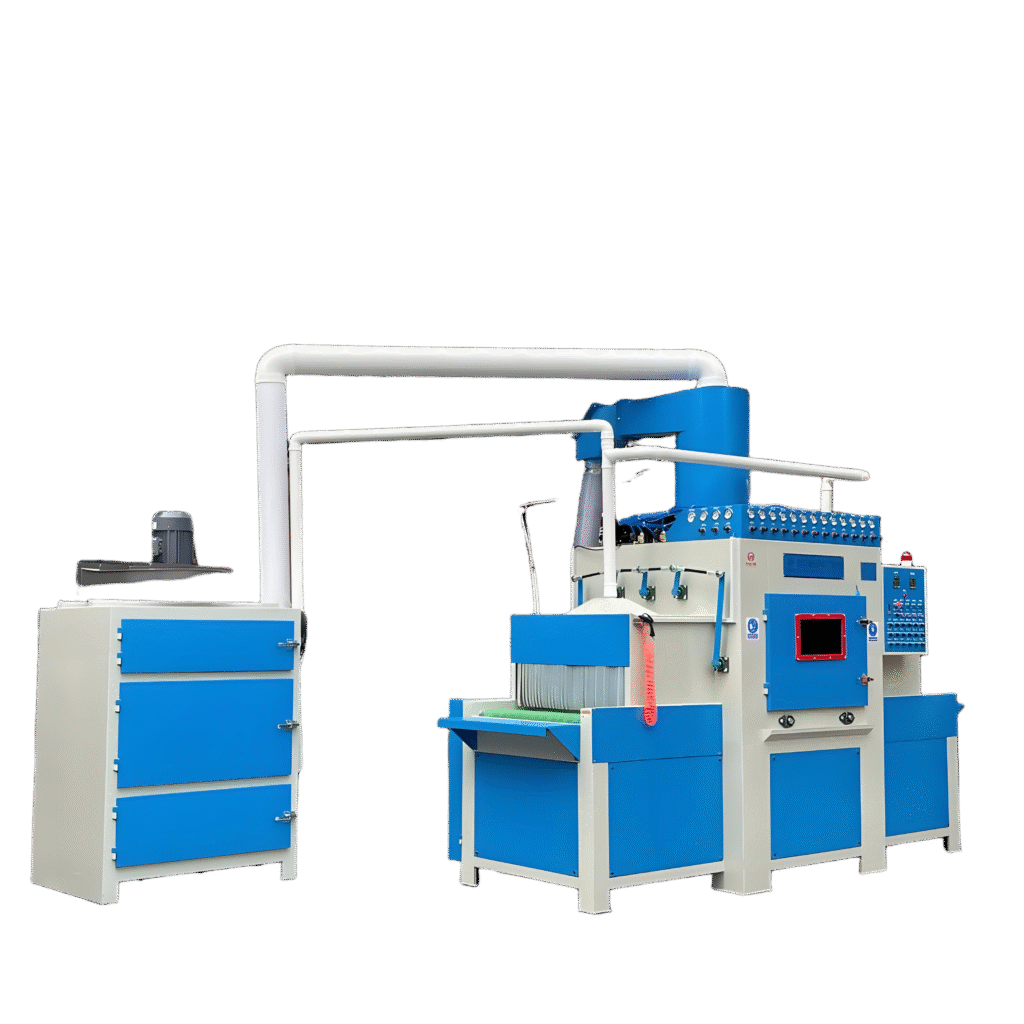
Modern automated molding equipment realizes mechanized sand filling, high-pressure compaction and automatic mold flipping. The sand molding machine ensures uniform mold density for every product, eliminates molding dead angles, and greatly reduces sand inclusion, air hole and deformation defects. For large-scale foundries, standardized molding equipment can increase daily output by more than three times while cutting manual dependence, achieving high-efficiency and low-cost sand casting production.
Technical Comparison: Manual Molding vs Automatic Sand Molding Machine Production
The following parameter comparison table clearly reflects the performance gap between traditional processes and modern equipment, providing intuitive selection basis for foundry upgrading:
| Production Index | Manual Sand Molding | Automatic Sand Molding Machine |
| Batch Dimensional Consistency | Poor, large deviation fluctuation | High precision, stable tolerance |
| Product Qualification Rate | 80%–86% | 97%–99% |
| Daily Production Efficiency | Low, labor-restricted | 200%–300% efficiency improvement |
| Labor Dependency | High labor intensity & cost | Semi-automated, labor-saving |
Customizable Sand Casting Solutions for Different Production Scenarios
Different workpiece sizes, batch volumes and precision requirements need matched molding equipment configurations. Universal single-model equipment cannot adapt to diversified sand casting production demands. Small-batch customized casting factories are suitable for semi-automatic sand molding machine with flexible mold switching functions.
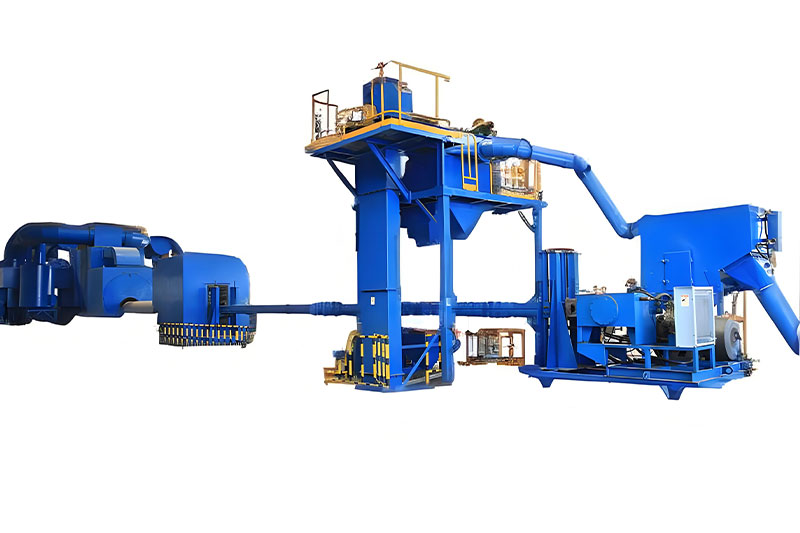
Large-scale standard part mass production requires fully automatic assembly line molding equipment to realize continuous and efficient output. High-precision mechanical castings need high-compaction molding systems to ensure ultra-high mold hardness and smooth surface. As a professional Manufacturer and Supplier, we provide fully Customizable equipment schemes, adjusting machine pressure, mold size, production speed and automation level according to customer workshop conditions and product standards.
Daily Process Optimization to Reduce Sand Casting Defect Rates
Even with high-end molding equipment, unreasonable process management will still cause quality problems. Daily production needs to focus on sand material screening, mold exhaust design and cooling process control. Regular inspection of sand moisture content and particle uniformity avoids air hole and sand inclusion defects caused by unqualified sand materials.
Reasonable exhaust slot design on the sand mold can smoothly discharge gas generated during high-temperature pouring, effectively reducing pore defects. Timely maintenance and parameter calibration of the sand molding machine ensure long-term stable operation of molding equipment, avoiding quality fluctuations caused by equipment aging and parameter drift.
Master standardized processes and matched molding equipment to stabilize sand casting quality and boost profits. Contact our team for Customizable equipment solutions and professional technical guidance today.
 French
  English
  Russian
  Spanish
  Portuguese
  Indonesian
  Thai
Thai