
Hidden Operational and Supply Chain Losses of Traditional Foundry Molding Systems
Most traditional foundries rely on conventional framed sand molding machine systems that rely heavily on manual handling and repetitive flask positioning. This outdated workflow causes low hourly output, inconsistent mold precision, high labor costs, and frequent casting defects. Meanwhile, unvetted Supplier vendors often deliver non-standard equipment without Customizable support, creating long-term equipment bottlenecks and uncontrollable post-purchase operational risks for growing foundry factories.
Trusted Flaskless Molding Machines providers must offer certified equipment, full Customizable options, and reliable OEM & ODM solutions. As a professional Manufacturer, we deliver efficiency-focused molding equipment for global foundry clients.
Many buyers only compare upfront prices and ignore long-term efficiency gains. Below are insider industry analyses to help you understand equipment advantages and professional sourcing rules.
Why Flaskless Molding Machines Outperform Traditional Sand Molding Equipment
Traditional sand molding machine setups require metal flasks to shape and support sand molds during pouring and cooling. These metal frames occupy massive workshop space, require regular maintenance, and slow down mold switching speed, greatly limiting production flexibility. For small-batch, multi-variety casting orders, framed molding equipment inevitably reduces overall operational efficiency and increases labor consumption.
Flaskless Molding Machines completely eliminate the need for fixed metal flasks by adopting high-strength sand compaction and self-supporting mold technology. The equipment forms stable, high-precision sand molds through mechanical pressure and optimized sand proportioning. This structural innovation simplifies the entire molding workflow, shortens production cycles, and reduces auxiliary equipment investment.
Professional Manufacturer teams further enhance equipment adaptability through Customizable parameter tuning. Different from rigid standard sand molding machine units, upgraded Flaskless Molding Machines support flexible mold size adjustment, making them suitable for diversified casting specifications and helping foundries quickly respond to changing market order demands.
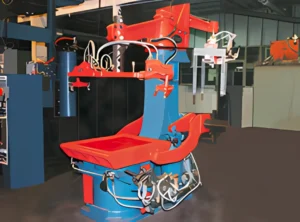
Core Efficiency Upgrades Brought by Flaskless Molding Technology
The efficiency improvement of modern Flaskless Molding Machines is reflected in three core dimensions: production speed, labor cost control, and product qualification rate. These advantages are the key reasons why global foundries are phasing out old-fashioned sand molding machine systems and upgrading automated flaskless molding lines.
- Faster Molding Cycles: Flaskless design removes repeated flask alignment, clamping and disassembly steps. Standard equipment shortens single molding cycle by 30% to 50% compared with traditional sand molding machine units, greatly improving daily output capacity.
- Lower Labor Dependence: Automated feeding, compaction and demolding processes reduce manual intervention. Factories can cut labor costs while eliminating human operation errors that cause mold deformation and casting defects.
- Stable Casting Precision: Mechanical standardized compaction ensures consistent mold density and dimensional accuracy. It effectively reduces flash, sand hole and deformation defects, improving the overall product qualification rate and reducing waste loss.
For medium and large foundries pursuing scalable development, these efficiency upgrades directly translate into higher annual profits and stronger market competitiveness. Meanwhile, reliable Supplier partners can provide targeted OEM and ODM upgrades to further optimize equipment performance according to on-site production conditions.
Technical Parameter Comparison: Traditional vs Flaskless Molding Equipment
To help buyers intuitively evaluate equipment value and complete data-driven procurement decisions, the following table compares core operational parameters between traditional sand molding machine and Flaskless Molding Machines, covering efficiency, cost and customization indicators:
| Evaluation Parameter | Traditional Sand Molding Machine | Flaskless Molding Machines |
| Single Molding Cycle | 55–75 seconds | 25–40 seconds |
| Daily Production Output | 600–800 molds | 1500–2200 molds |
| Labor Input | 2–3 operators per station | 1 monitoring operator |
| Auxiliary Cost | High flask maintenance & storage cost | Zero flask-related auxiliary cost |
| Customization Support | Limited fixed specifications | Full Customizable OEM/ODM modification |
Key Supplier Audit Milestones for Flaskless Molding Machine Procurement
Excellent equipment performance depends on reliable Manufacturer and Supplier strength. Many buyers encounter commercial risks such as exaggerated parameters, unfulfilled customization promises and delayed after-sales services. Standardized audit steps can effectively avoid procurement failures:
- Compliance Verification: Check validISO9001 quality certificates and CE safety certificatesto ensure Flaskless Molding Machines meet cross-border export standards.
- Customization Capability Check: Verify the supplier’s past Customizable project cases to confirm genuine OEM and ODM technical modification capabilities.
- Production Capacity Audit: Confirm independent workshop production capacity to avoid middlemen reselling untested refurbished equipment.
- After-Sales Confirmation: Clarify remote debugging, spare parts supply and long-term technical support to guarantee stable long-term operation.
A professional Manufacturer focuses on matching equipment functions with client production demands, rather than blindly recommending high-specification equipment. Customizable structural and parameter upgrades can perfectly adapt to different workshop layouts and casting process requirements.
Upgrade your foundry efficiency with high-quality Flaskless Molding Machines. Contact our professional team for tailored OEM/ODM solutions and cost-effective equipment procurement plans now.
 English
  Russian
  Spanish
  Portuguese
  French
  Indonesian
  Thai
Thai