
How Wrong Surface Finishing Equipment Selection Burns Foundry Operational Budgets?
Countless industrial purchasers and foundry managers repeatedly face costly supply chain dilemmas when sourcing Blasting Equipment. Most buyers randomly select either Wheel Blasting or Sandblasting solutions without analyzing workpiece characteristics, daily output demands and long-term operating costs. This misselection causes low production efficiency, excessive abrasive consumption, unqualified surface roughness, and unnecessary capital waste, weakening overall factory profitability and disrupting standardized mass production schedules.
Ideal Blasting Equipment decisions rely on process matching, budget planning and qualified Suppliers with certification support. As a professional Manufacturer, we deliver Customizable OEM and ODM Wheel Blasting Machine and sandblasting solutions for global industrial clients.
This comprehensive industry guide breaks down technical differences, cost structures and procurement red flags to help you pick the optimal finishing technology and reliable Supplier effortlessly.
Fundamental Working Principles of Two Mainstream Blasting Technologies
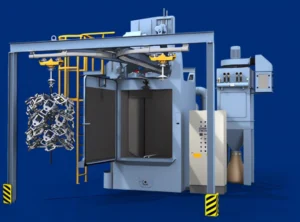
Core Mechanism of Wheel Blasting
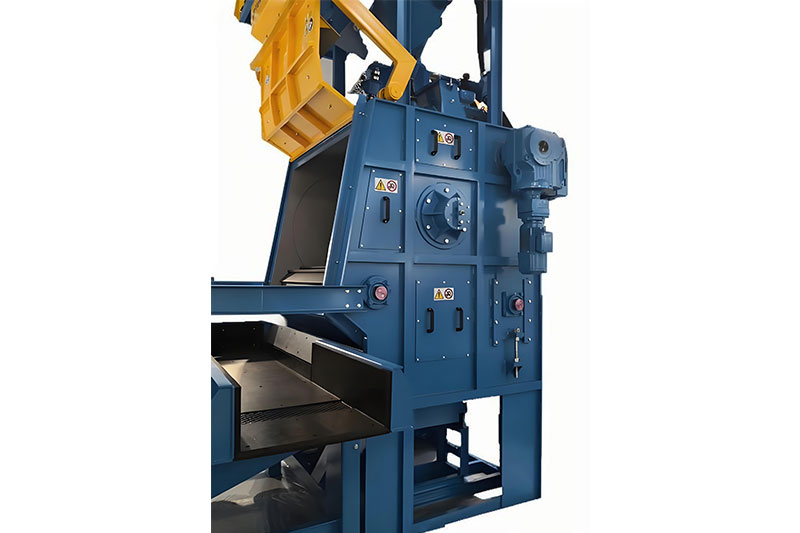
Wheel Blasting is a mechanical surface treatment process that relies on centrifugal force instead of compressed air to complete workpiece descaling, derusting and texturing. A professional Wheel Blasting Machine equips high-speed rotating blast wheels, which throw high-hardness abrasives including steel shots and steel grit toward target workpieces at a fixed trajectory and stable kinetic energy. This mechanical ejection method forms uniform impact marks on metal surfaces to eliminate oxide layers, casting scales and residual burrs efficiently.
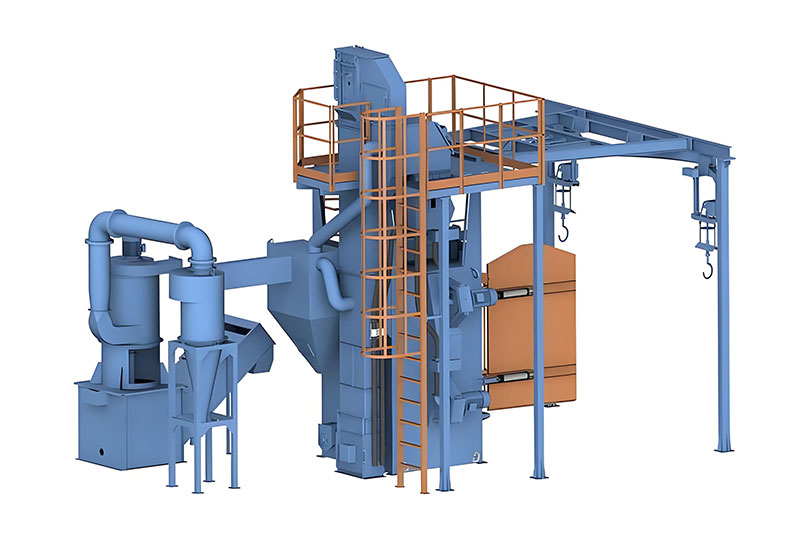
As a mainstream automated Blasting Equipment type, modern Wheel Blasting systems support fully enclosed cyclic abrasive recycling structures. The internal circulation module recovers, screens and reuses over 95% of consumables, drastically cutting long-term material costs. Trusted Manufacturer teams can provide Customizable blast wheel angles, rotating speeds and cabin structures to adapt to flat parts, complex castings and large structural components through mature OEM and ODM modification services.
Operational Logic of Industrial Sandblasting
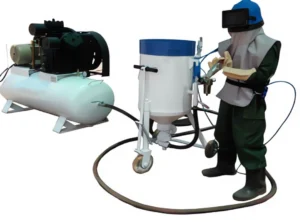
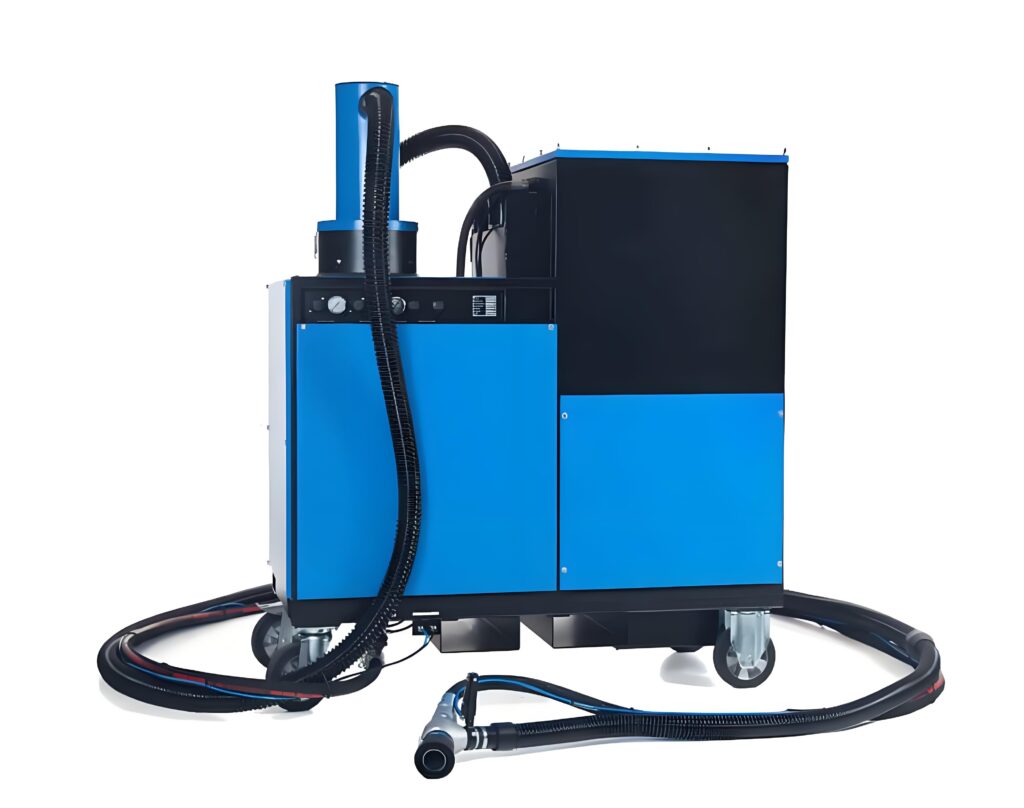
Different from mechanical-driven Wheel Blasting, Sandblasting belongs to pneumatic blasting technology. This type of Blasting Equipment utilizes high-pressure compressed air to mix and accelerate quartz sand, glass beads and garnet abrasives inside specialized spray guns. Operators manually or semi-automatically control nozzles to spray abrasives onto workpiece surfaces to finish cleaning, frosting and stress relief processing.
Sandblasting features flexible operation and lower upfront investment, making it suitable for small-batch, high-precision and irregular workpieces that cannot be processed by a standard Wheel Blasting Machine. Most professional Supplier vendors offer diversified sandblasting room types, including open-type, cabinet-type and tunnel-type devices. Meanwhile, Customable parameter adjustments for air pressure and nozzle size can meet personalized OEM and ODM demands for fine surface finishing across multiple industries.
Why Process Scenario Matching Determines Your Procurement ROI
The primary reason for failed Blasting Equipment procurement is separating equipment selection from actual application scenarios. Many novice buyers only compare initial quotation prices and ignore core indicators such as production volume, workpiece shape, surface standard and workshop space, eventually leading to negative ROI and redundant idle equipment. Distinguishing applicable scenarios for Wheel Blasting and Sandblasting is the core precondition for scientific sourcing decisions.
Optimal Application Scenarios for Wheel Blasting Machine
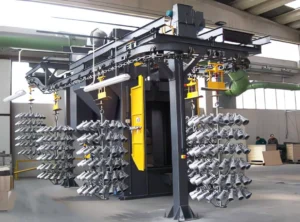
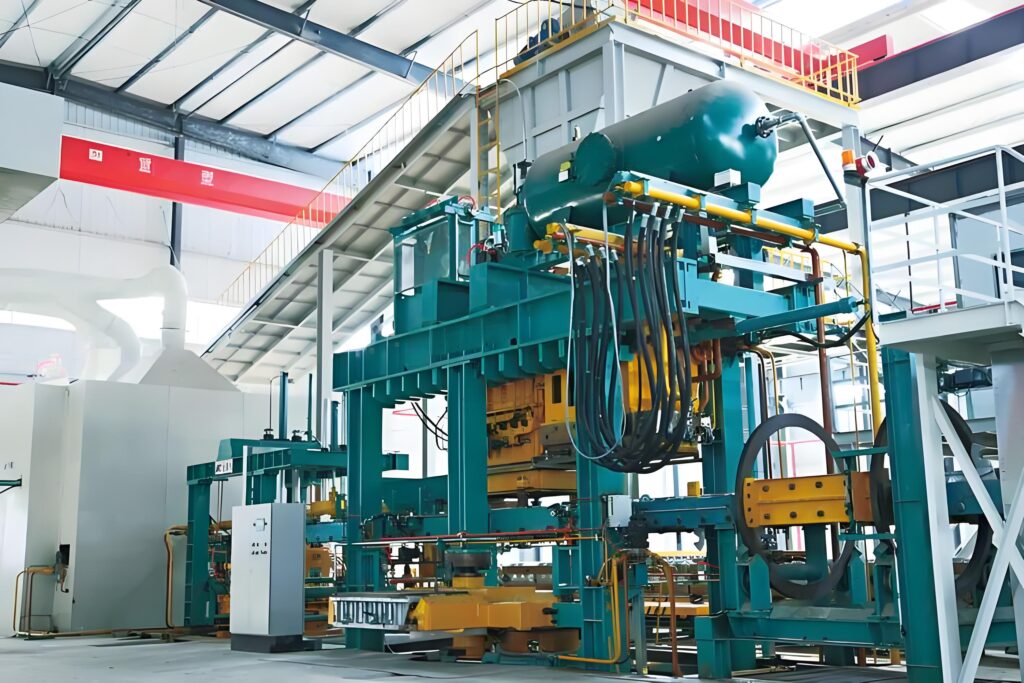
Wheel Blasting is tailored for large-batch standardized production and heavy-duty metal processing tasks. This technology boasts stable output efficiency and low unit operating costs, widely applied in foundry casting, automotive parts, steel structure and railway accessory industries. A standard Wheel Blasting Machine can continuously process hundreds of identical workpieces per shift with consistent surface roughness, perfectly fitting assembly-line production modes.
Additionally, enclosed Wheel Blasting systems come with integrated high-efficiency dust removal modules, which fully comply with global environmental emission compliance standards. For factories facing strict environmental audits and large-order delivery pressure, automated Wheel Blasting equipment is undoubtedly the most cost-effective long-term solution. Top-tier Manufacturer partners also support Customizable assembly line docking to realize unmanned intelligent blasting production.
- Suitable Industrial Scenarios for Sandblasting Equipment
Sandblasting excels at flexible fine processing and complex-shaped workpiece treatment. Its adjustable spraying range and controllable abrasive impact force make it irreplaceable for precision molds, aluminum alloy parts, curved components and small customized accessories. Unlike a fixed-structure Wheel Blasting Machine, sandblasting Blasting Equipment can handle blind holes, grooves and irregular surfaces without damaging workpiece precision structures.
For engineering wholesalers and small-batch processing factories with diversified order types, sandblasting equipment features lower entry thresholds and flexible deployment advantages. Reliable Supplier teams provide multiple Customizable sandblasting configurations, ranging from portable handheld devices to large sealed blasting rooms, and support personalized OEM exterior design and ODM functional upgrades to satisfy differentiated market demands.
Comprehensive Technical & Commercial Parameter Comparison
To help B2B buyers visualize performance gaps and make data-driven sourcing decisions, we have sorted out a multi-dimensional comparison table covering technical parameters, cost composition, maintenance difficulty and applicable crowds for Wheel Blasting and Sandblasting Blasting Equipment. This table solves most scenario-selection confusion during cross-border procurement:
| Evaluation Dimension | Wheel Blasting (Wheel Blasting Machine) | Industrial Sandblasting |
| Driving Principle | Centrifugal blast wheel mechanical acceleration | Compressed pneumatic acceleration |
| Initial Procurement Cost | Medium to high, suitable for long-term investment | Low to medium, low entry barrier |
| Abrasive Recycling Rate | 95%+ with closed circulation system | 40%–65%, severe material waste |
| Single-Shift Output | High-volume mass production | Small-batch flexible production |
| Surface Finishing Precision | Medium, unified roughness for standard parts | High, adjustable precision for complex parts |
| Daily Maintenance Cost | Low, only wearable blast wheel parts | High, frequent nozzle and filter replacement |
| Customization Support | Full Customizable OEM/ODM for automated lines | Flexible customization for small workshops |
Why Abrasive Consumption and Maintenance Risk Cannot Be Ignored
Most buyers only focus on upfront quotation costs while ignoring recurring operating expenses including abrasive consumption and daily maintenance fees, which become hidden supply chain risks that erode profit margins throughout the equipment life cycle. As a Director of International Business with over 20 years of export experience, I regard life-cycle cost accounting as the core audit milestone for large Blasting Equipment procurement.
Cost Analysis of Wheel Blasting Operations
The biggest advantage of Wheel Blasting Machine lies in its ultra-low long-term operating cost. The closed-loop circulation system independently screens, separates and reuses abrasives, greatly reducing daily material purchasing frequency. The only consumable parts of Wheel Blasting equipment are blast wheel blades, impellers and protective liners, which have a service life of 6–18 months based on production intensity.
Professional Manufacturer teams provide matched wearable spare parts and Customizable alloy material upgrades to extend component service life. For large-scale foundries that run two-shift or three-shift continuous production, the comprehensive cost of Wheel Blasting is at least 30% lower than sandblasting within one year, which brings stable and considerable cost-saving benefits to end users.
Hidden Cost Risks of Sandblasting Systems
Although sandblasting Equipment requires less upfront investment, its pneumatic working principle leads to irreversible abrasive loss during every spraying cycle. Abrasives such as quartz sand and garnet are easily crushed into fine dust and discharged by the dust removal system, resulting in low recycling efficiency and continuous high material costs.
In addition, sandblasting nozzles, high-pressure air pipes and filter cartridges belong to high-frequency consumables that need monthly inspection and replacement. For buyers who ignore these hidden costs, the actual total investment of sandblasting will far exceed budget expectations within half a year. Working with a reliable Supplier to formulate standardized maintenance plans is essential to control extra operating risks for sandblasting devices.
Core Supplier Selection Standards for Blasting Equipment Procurement
After confirming the optimal surface finishing technology, selecting a qualified Supplier becomes the second key to avoiding procurement failures. Whether purchasing a professional Wheel Blasting Machine or customized sandblasting Equipment, buyers must follow unified supplier audit standards to eliminate trading intermediaries and unqualified small workshops:
- Compliance Certification Audit: Verify valid ISO9001 quality certification and CE safety certificationto ensure the Blasting Equipment meets international export standards and avoids customs clearance risks.
- Customization Capacity Audit: Confirm whether the Manufacturer supports deep-level OEM and ODM modification, including parameter adjustment, structural optimization and exclusive brand customization.
- Finished Product Testing Audit: Require suppliers to provide real workpiece blasting test videos to verify the actual processing effect of Wheel Blasting and sandblasting equipment.
- After-Sales Mechanism Audit: Check the supplier’s remote debugging capability, spare parts inventory and localized after-sales response cycle to eliminate cross-border service blind spots.
Excellent suppliers can accurately recommend matching Wheel Blasting or sandblasting solutions according to the buyer’s budget, workshop area and production volume, instead of blindly pushing high-priced equipment to increase order profit margins. This professional consultation capability is the core trait that distinguishes premium Manufacturer partners from ordinary trading-type Supplier vendors.
Common Sourcing Mistakes Every Blasting Equipment Buyer Must Avoid
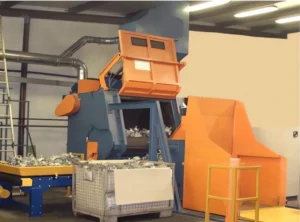
Combined with thousands of global cross-border procurement cases, I have summarized three typical mistakes that frequently appear in Blasting Equipment sourcing. These errors are easy to overlook but will directly affect equipment utilization rate and long-term factory profitability for Wheel Blasting and sandblasting projects.
- First, choosing sandblasting equipment for large-batch heavy-duty workpieces to save initial costs. This decision will cause skyrocketing abrasive consumption and labor costs, and the low production efficiency cannot support order expansion.
- Second, over-configuring a high-power fully automatic Wheel Blasting Machine for small-batch customized parts, resulting in long-term equipment idleness and capital occupancy.
- Third, cooperating with suppliers without formal customization capabilities for OEM and ODM projects. Unqualified vendors cannot adjust equipment parameters according to regional power grids and environmental regulations, forcing buyers to bear additional transformation costs. All mistakes can be avoided through early scenario analysis and standardized supplier audits.
Select suitable finishing technology and verified manufacturers to maximize your ROI. Contact us now for Customizable Wheel Blasting Machine and sandblasting Blasting Equipment procurement consulting and quotation services.
 English
  Russian
  Spanish
  Portuguese
  French
  Indonesian
  Thai
Thai