Wrong pressure shot blasting machine causes poor quality; parameter and scene matching ensures optimal shot blasting effect.
This guide compares parameter differences of high-low-pressure shot blasting machines, analyzes scene adaptation, and helps select suitable Wheelblast Equipment.
Explore detailed comparisons and application tips of both shot blasting machines below.
What Are the Core Pressure and Abrasive Parameter Differences Between High-Low-Pressure Shot Blasting Machines?
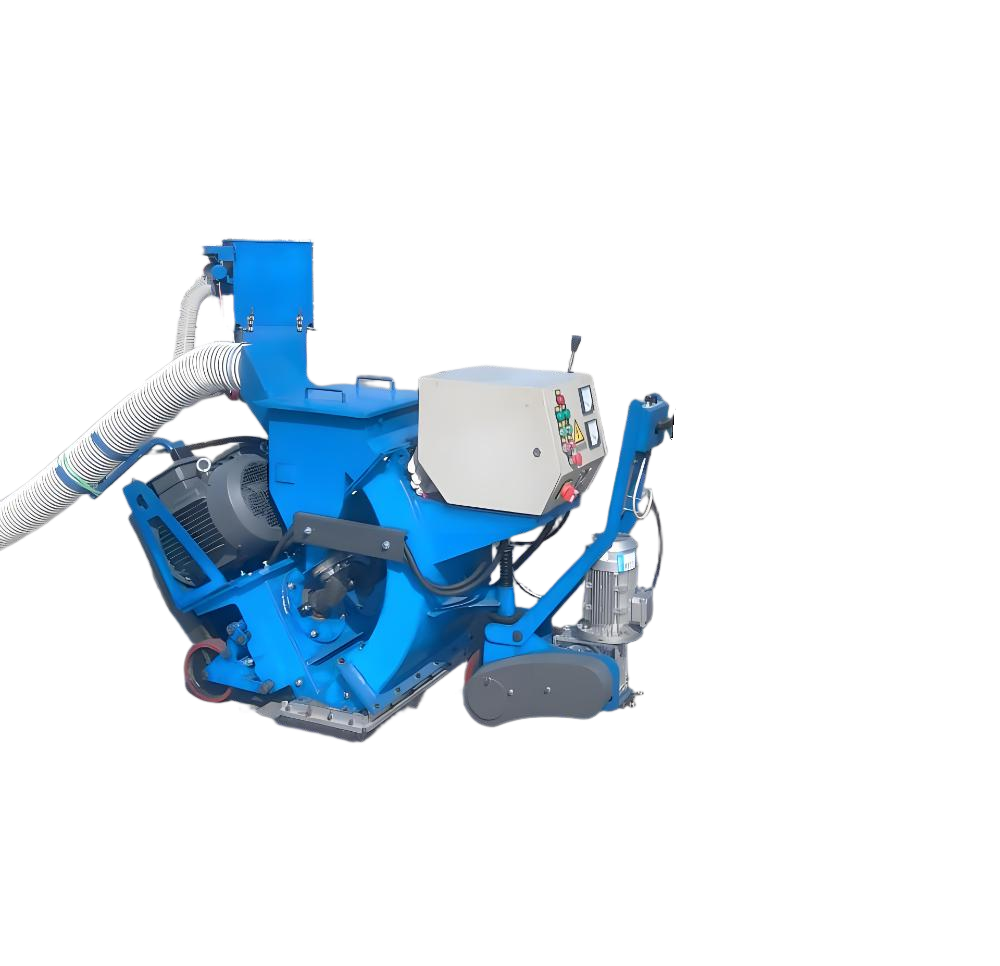
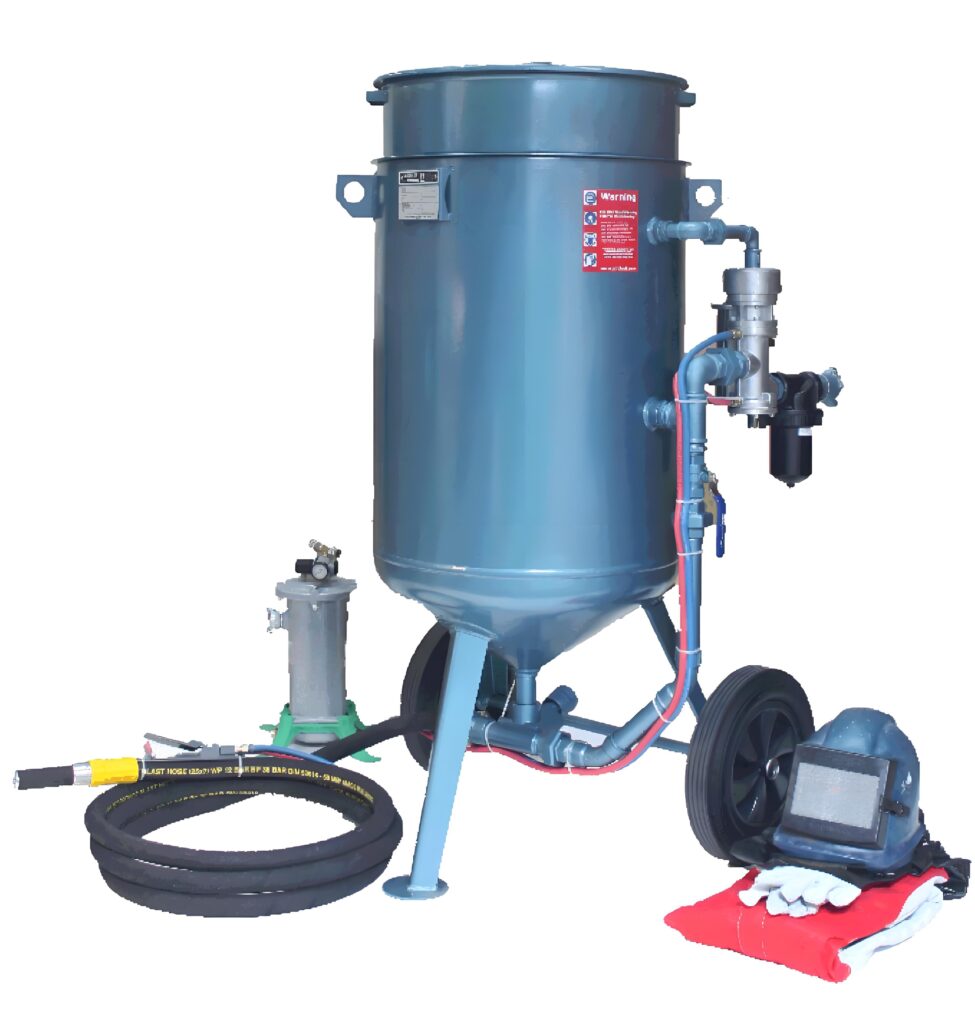
The most fundamental difference between high-pressure and low-pressure shot blasting machines lies in core parameters like working pressure and abrasive adaptation. High-pressure shot blasting machines typically operate at 0.7-1.2MPa, generating strong impact force through high-pressure airflow to drive abrasives. They are compatible with coarse abrasives (1.0-2.0mm steel grit, steel shot) and large abrasive flow rates (300-500kg/min), suitable for heavy-duty cleaning. In contrast, low-pressure shot blasting machines work at 0.3-0.6MPa, with gentle airflow that adapts to fine abrasives (0.2-0.8mm glass beads, aluminum oxide) and low flow rates (50-200kg/min). Wheelblast Equipment, as a common high-pressure type, uses impeller rotation to enhance abrasive velocity, while low-pressure machines rely on suction or low-pressure air supply. Additionally, high-pressure machines require higher motor power (15-37kW) to maintain pressure, while low-pressure ones need 5-15kW. These parameter differences directly determine the machine shot intensity and application scope of each shot blasting machine.
How Do High-Low-Pressure Shot Blasting Machines Differ in Structural Design?
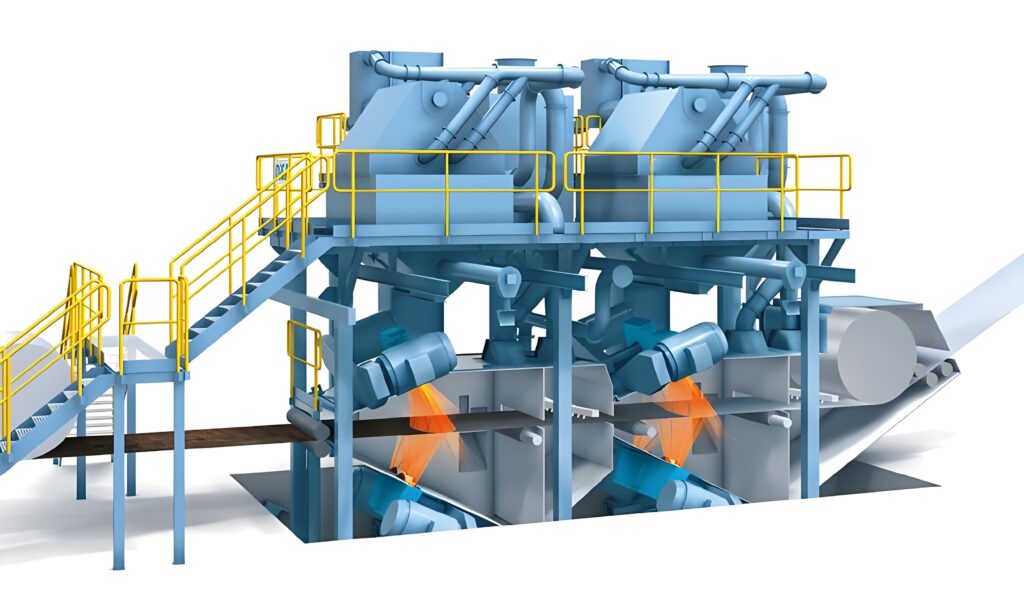
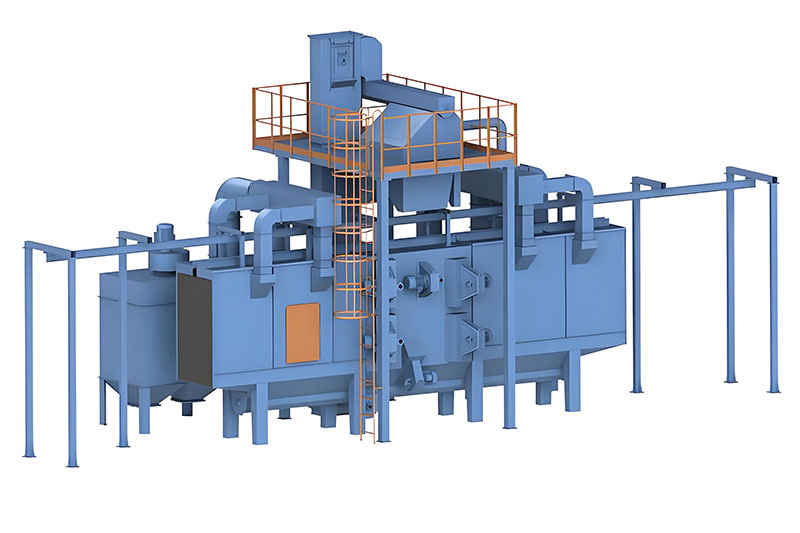
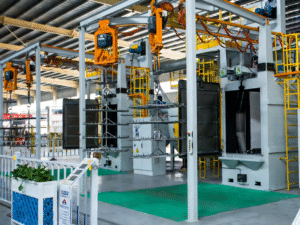
Structural design of high-low-pressure shot blasting machines is tailored to their parameter characteristics. High-pressure shot blasting machines feature reinforced air supply systems, including thickened pipelines and high-pressure-resistant valves, to avoid air leakage under high pressure. Their impeller heads (core of Wheelblast Equipment) are made of high-wear-resistant materials, with optimized blade angles to improve abrasive acceleration efficiency. The abrasive storage tank has a larger capacity and anti-clogging design to match high flow rates. Low-pressure shot blasting machines adopt lightweight structures, with smaller nozzles and flexible pipelines for precise operation. Suction-type low-pressure models integrate a vacuum system to simplify structure and reduce energy consumption. Unlike high-pressure machines that need heavy-duty bases for stability, low-pressure ones have compact, movable frames. Moreover, high-pressure shot blasting machines are equipped with more robust dust removal systems to handle large dust output during shot blasting, while low-pressure models use simplified dust collectors due to milder operation. These structural differences ensure each shot blasting machine operates stably under its working pressure.
What Are the Efficiency and Energy Consumption Differences Between the Two Shot Blasting Machines?
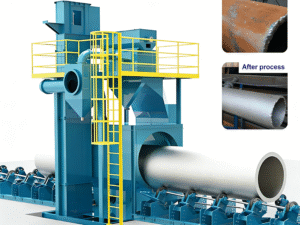
Efficiency and energy consumption vary significantly between high-low-pressure shot blasting machines. High-pressure shot blasting machines, with strong impact force and high abrasive flow, achieve 2-3 times higher cleaning efficiency than low-pressure ones. They can remove thick rust, scale, and paint layers in a short time, suitable for large-batch heavy workpieces. However, their energy consumption is much higher—per hour power consumption is 3-5 times that of low-pressure models, and abrasive wear is faster, increasing operational costs. Low-pressure shot blasting machines have lower efficiency but excel in precision cleaning, with slower but more controlled machine shot. They consume 40-60% less energy and have lower abrasive loss, making them cost-effective for small-batch delicate workpieces. Wheelblast Equipment (high-pressure) has higher hourly output but requires frequent abrasive replacement, while low-pressure machines balance efficiency and cost for long-term use. The choice depends on whether the project prioritizes speed or cost control.
Which Industrial Scenarios Are High-Pressure Shot Blasting Machines Suitable For?
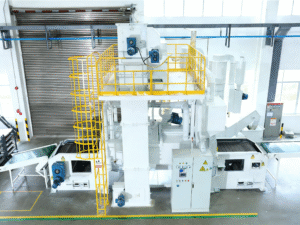
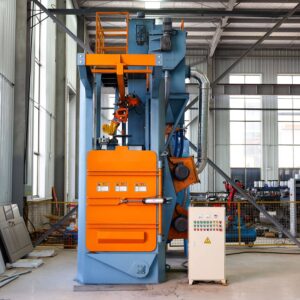
High-pressure shot blasting machines, including professional Wheelblast Equipment, are ideal for heavy-duty, large-scale shot blasting scenarios. They are widely used in steel structure manufacturing to remove thick rust and scale from steel plates, beams, and columns, ensuring coating adhesion. In the automotive industry, they clean engine blocks, gearboxes, and other large metal parts, removing casting sand and burrs. Shipbuilding and marine engineering rely on high-pressure shot blasting machines for hull and offshore platform pretreatment, as they can handle large workpieces and harsh corrosion layers. Additionally, they are used in concrete surface roughening for bridge and highway projects, where strong impact force is needed to enhance bonding with new materials. High-pressure shot blasting machines are also suitable for military equipment maintenance, effectively removing old coatings and corrosion from armored vehicles and weapons. Their high efficiency and strong cleaning ability make them indispensable for industrial projects requiring thorough heavy-duty shot blasting.
Which Industrial Scenarios Are Low-Pressure Shot Blasting Machines Suitable For?
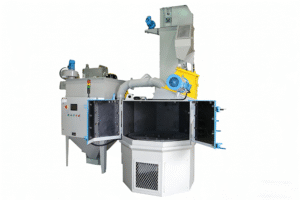
Low-pressure shot blasting machines are designed for precision, delicate, and small-scale shot blasting scenarios. In the electronic component industry, they clean circuit boards, connectors, and sensor parts, removing dust and oxide layers without damaging delicate structures. The aerospace field uses low-pressure machines for precision cleaning of aluminum alloy and titanium alloy parts, ensuring surface smoothness meets strict standards. Jewelry and hardware manufacturing relies on them for polishing and deburring small workpieces like rings, screws, and watch parts. They are also suitable for automotive maintenance, such as cleaning small parts like carburetors and injectors. In the furniture and woodworking industry, low-pressure shot blasting machines create decorative textures on wood surfaces with fine abrasives. For cultural relic restoration, they gently remove dirt and rust from fragile artifacts without causing damage. Their mild operation and precise control make them the first choice for scenarios requiring high surface quality.
How to Select Between High-Low-Pressure Shot Blasting Machines Based on Project Needs?
Selecting between high-low-pressure shot blasting machines requires comprehensive consideration of project factors. First, assess workpiece characteristics: thick, heavy, and heavily corroded workpieces need high-pressure machines, while delicate, small, or precision workpieces require low-pressure ones. Second, consider project scale: large-batch, high-efficiency requirements favor high-pressure Wheelblast Equipment, while small-batch, precision-focused projects suit low-pressure models. Third, evaluate cost budgets: high-pressure machines have higher initial purchase and operational costs, suitable for large enterprises, while low-pressure ones are cost-effective for small and medium-sized businesses. Additionally, consider on-site conditions: high-pressure machines need more space and stable power supply, while low-pressure ones are compact and movable. Finally, factor in surface quality requirements: high-pressure machines achieve Sa3-level cleaning, while low-pressure ones meet Sa2-level or precision finishing needs. Rational selection based on these factors ensures the shot blasting machine matches project demands.
Conclusion
High-low-pressure shot blasting machines differ in parameters and adapt to distinct scenarios.