Should You Switch From Manual Blasting to Automatic Blasting in Your Foundry?
Manual blasting may limit output, increase operator dependence, and create inconsistent finishes. However, an automatic retrofit can also cause production interruptions, unexpected integration costs, and underused equipment. Foundries that upgrade without checking order volumes, workpiece compatibility, site conditions, and return on investment may replace one operational problem with a larger financial risk.
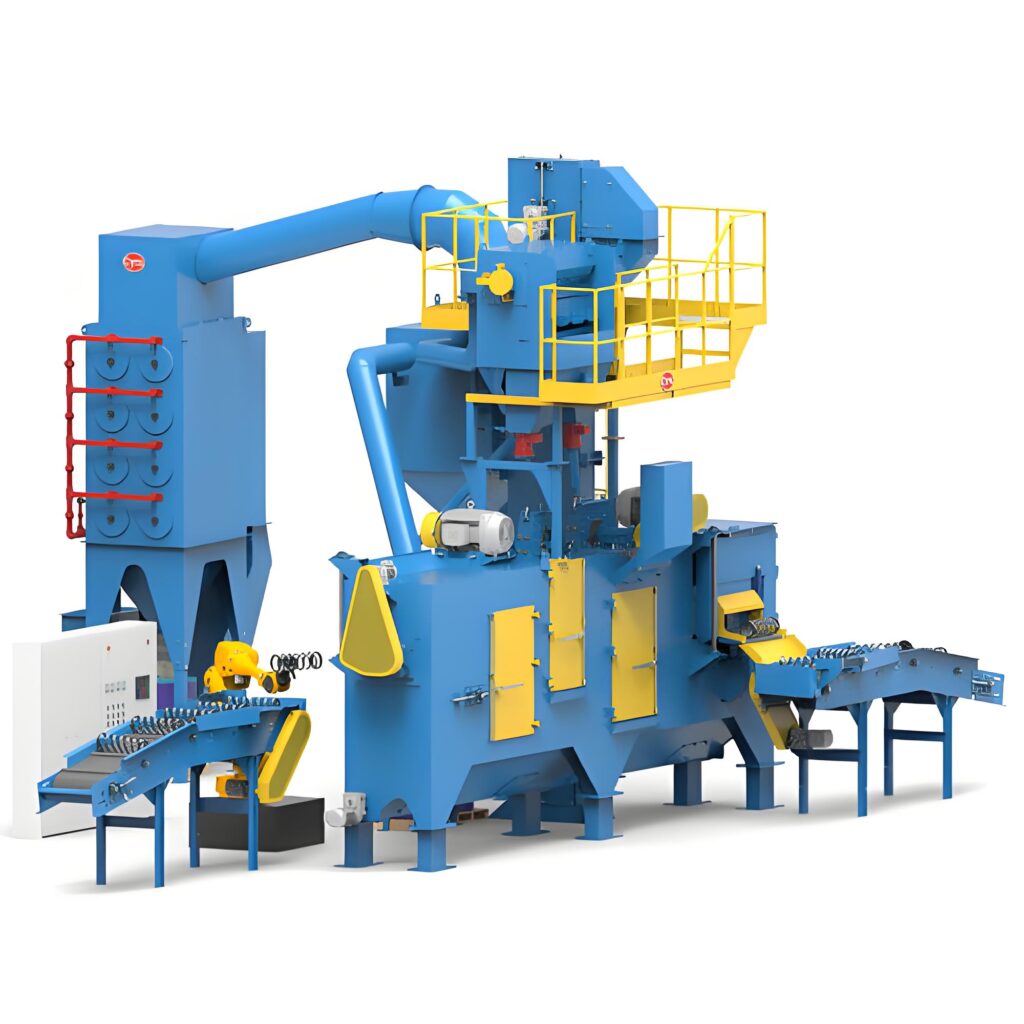
Switch only when repeatable workpieces, sufficient batch volume, compatible site conditions, and verified payback support automation. Our company assesses your existing process, production line, and investment risks before recommending a Customizable Shot Blasting Machine or Wheelblast Equipment solution.
Start with a Foundry Self Assessment
Automation is not automatically better for every foundry. The first step is to determine whether your current operation has the production stability and process compatibility required for an automated line. A clear self assessment helps distinguish a genuine capacity problem from a temporary scheduling or labor issue.
- Measure monthly order volume, batch size, product variety, and peak demand.
- Record workpiece dimensions, weight, material, geometry, and loading requirements.
- Review current cycle time, labor hours, defect rate, rework, and abrasive consumption.
- Check available floor space, crane access, power supply, ventilation, and dust collection.
- Identify whether the existing line can accept conveyors, loaders, unloaders, and control systems.
When automation may be suitable
- Orders contain repeatable workpieces processed in stable batches.
- Customers require consistent surface preparation and traceable process parameters.
- Manual labor availability is declining or operator recruitment is difficult.
- Current capacity cannot meet delivery schedules without overtime or outsourcing.
- The facility can maintain a high production utilization rate.
When manual blasting may remain practical
- Orders are low volume, highly varied, or frequently redesigned.
- Workpieces are oversized, irregular, or difficult to position automatically.
- Production demand is seasonal or commercially uncertain.
- The existing workshop lacks space or infrastructure for a complete retrofit.
Verify Workpiece and Process Compatibility
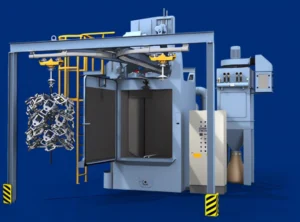
An automatic Shot Blasting Machine must match the actual shot blasting process, not only the expected output. Incorrect part handling can cause shadow areas, collisions, incomplete cleaning, excessive impact, or damage to thin sections. A Supplier should test representative workpieces before final equipment selection.
| Assessment area | Questions for procurement | Potential upgrade risk |
| Workpiece compatibility | Can parts be loaded, rotated, supported, and unloaded reliably? | Incomplete coverage, collisions, or fixture redesign |
| Order batch size | Is demand stable enough to justify automated cycles? | Low utilization and slow payback |
| Surface requirements | Can the programmed process achieve the required cleaning and profile? | Rework, coating failure, or customer rejection |
| Existing production line | Can the new system connect with molding, fettling, inspection, and painting? | Material flow bottlenecks and manual transfer points |
| Site conditions | Are floor strength, height, power, ventilation, and dust control adequate? | Construction delays and additional infrastructure costs |
Foundries should also confirm abrasive recovery, wear part access, dust filtration, noise control, safety interlocks, and maintenance procedures. A machine that performs well during a demonstration may still be unsuitable if it cannot handle the customer’s full product range or integrate with the existing work sequence.
Calculate ROI Beyond the Machine Price
Return on investment should include the complete cost of the retrofit. Comparing only manual wages with the purchase price of automation creates an unrealistic business case. Hidden costs may include civil work, electrical upgrades, conveyors, fixtures, programming, operator training, commissioning, production downtime, spare parts, and modifications to upstream or downstream equipment.
- Capital cost of the machine, controls, loading system, dust collection, and installation.
- Lost production during dismantling, construction, commissioning, and operator training.
- Adaptation costs for existing molding, casting, fettling, inspection, or coating lines.
- Ongoing expenses for electricity, abrasive media, filters, wear parts, lubrication, and service.
- Financial benefits from lower labor demand, reduced defects, higher output, and fewer outsourced operations.
- Calculate the current annual cost of labor, rework, scrap, overtime, and outsourcing.
- Estimate realistic automated capacity using actual batch sizes and changeover time.
- Include expected production utilization rather than theoretical maximum output.
- Price all site modifications and integration work before approving the project.
- Compare payback under conservative, expected, and high-demand scenarios.
- Set measurable acceptance criteria for cycle time, quality, safety, and availability.
Recognize Common Automation Retrofit Misconceptions
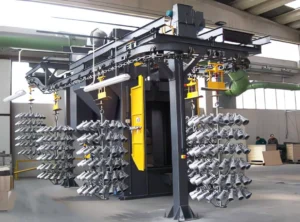
One common misconception is that automation removes all labor. In practice, skilled personnel are still required for loading control, quality inspection, maintenance, programming, and troubleshooting. Another misconception is that a new machine can simply be placed beside the old line. Without coordinated material flow, operators may continue transferring parts manually, reducing the expected productivity gain.
Automation also does not eliminate process variation if casting quality, part positioning, abrasive condition, or maintenance discipline remains unstable. Before investment, stabilize the upstream process and define standard work instructions. Where product variety is high, a semi automatic or modular solution may provide a better balance than a fully automated line.
Plan Integration with Existing Production Lines
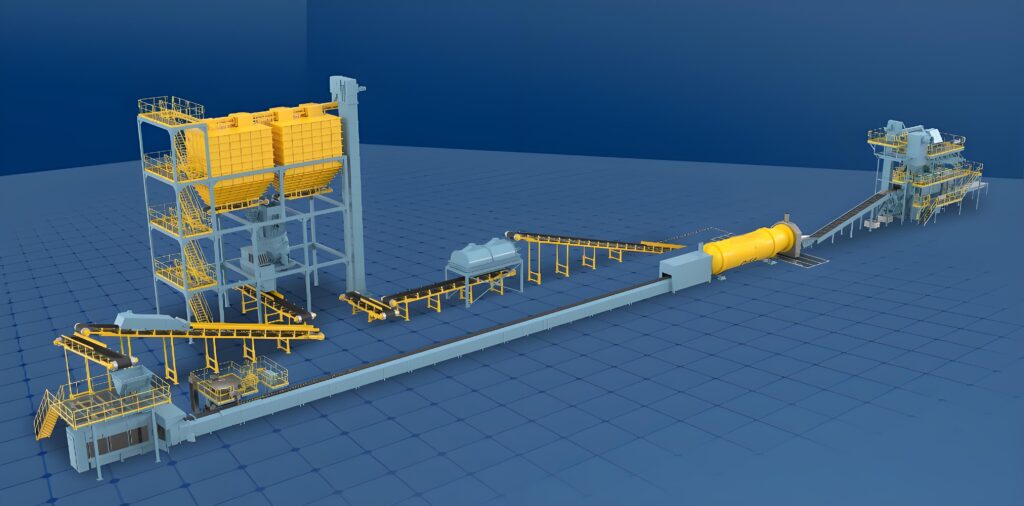
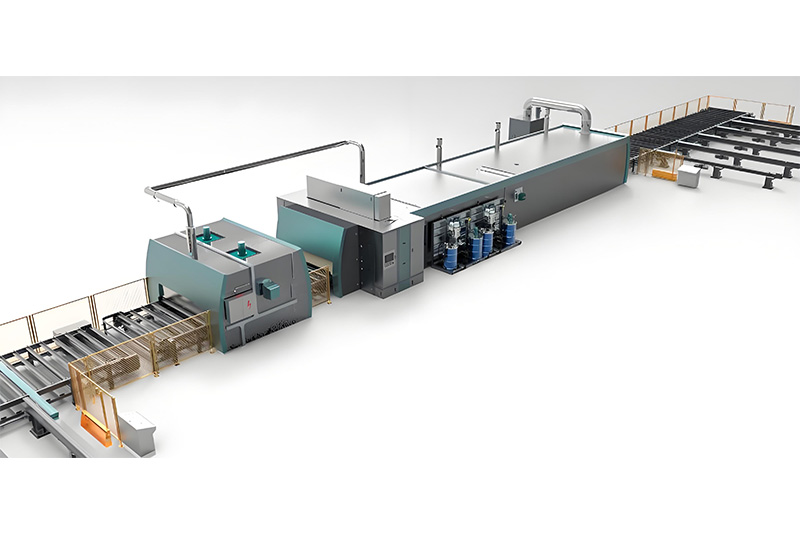
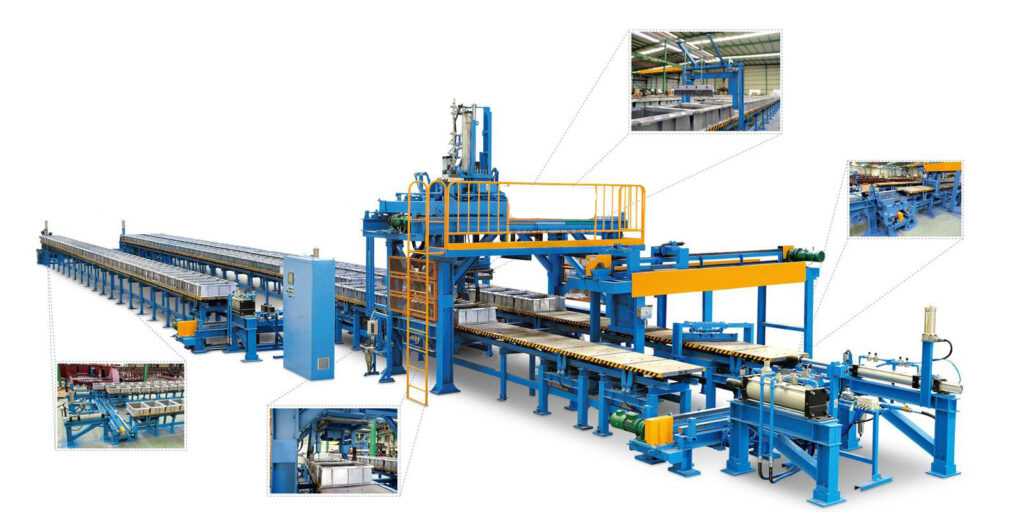
A successful upgrade should connect the new and existing production lines with minimal disruption. Review incoming part flow, buffer capacity, crane routes, inspection stations, coating preparation, and finished goods handling. The layout should allow safe access for maintenance and future expansion.
Practical retrofit checklist
- Confirm mechanical, electrical, and control system interfaces.
- Reserve space for dust collection, abrasive storage, and maintenance access.
- Define manual bypass procedures for urgent or nonstandard orders.
- Verify compatibility with existing fixtures, conveyors, cranes, and lifting tools.
- Schedule installation to protect customer delivery commitments.
- Require commissioning tests using representative production workpieces.
Our company, as an experienced Manufacturer and Supplier, provides OEM and ODM cooperation for foundry projects. We can evaluate existing lines and offer Customizable Shot Blasting Machine and Wheelblast Equipment configurations, from standalone systems to integrated production cells. The recommendation should be based on site conditions, process compatibility, order volume, and verified ROI, not on automation trends alone.
Before committing to an upgrade, request a factory assessment, workpiece trial, integration review, and total-cost calculation. Contact our team for a free feasibility consultation and a practical manual, semi automatic, or automatic blasting recommendation matched to your foundry.
 English
  Russian
  Spanish
  Portuguese
  French
  Indonesian
  Thai
Thai