Sand adhesion on castings affects quality and assembly; shot blasting with wheelblast equipment offers effective practical solutions.
This guide details practical methods for removing casting sand adhesion via shot blaster in foundries, covering wheelblast equipment setup, shot blasting parameters and operation tips.
Explore below to master key practical steps of shot blasting for casting sand removal.
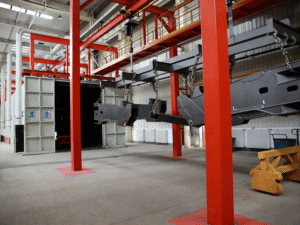
How to Select and Set Up Wheelblast Equipment for Casting Sand Adhesion Removal?
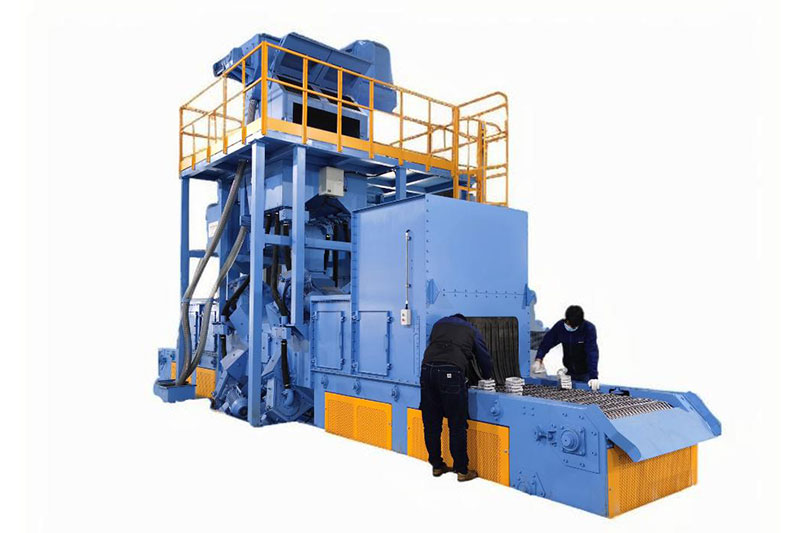
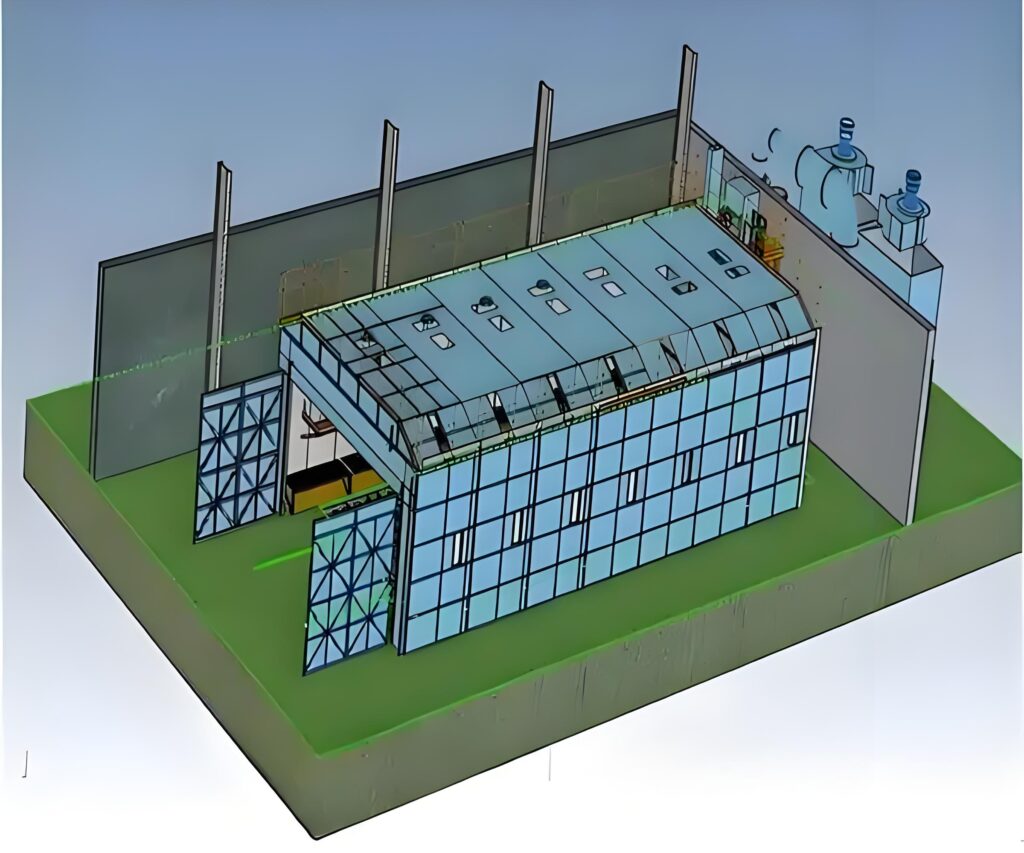
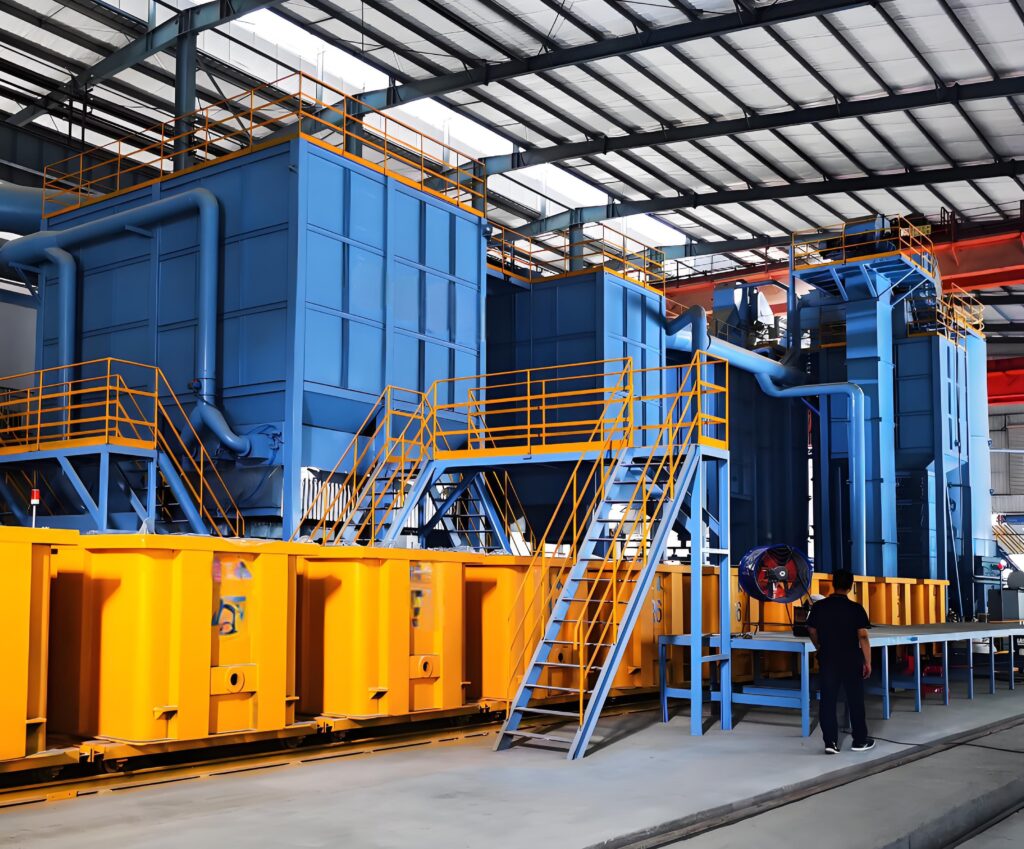
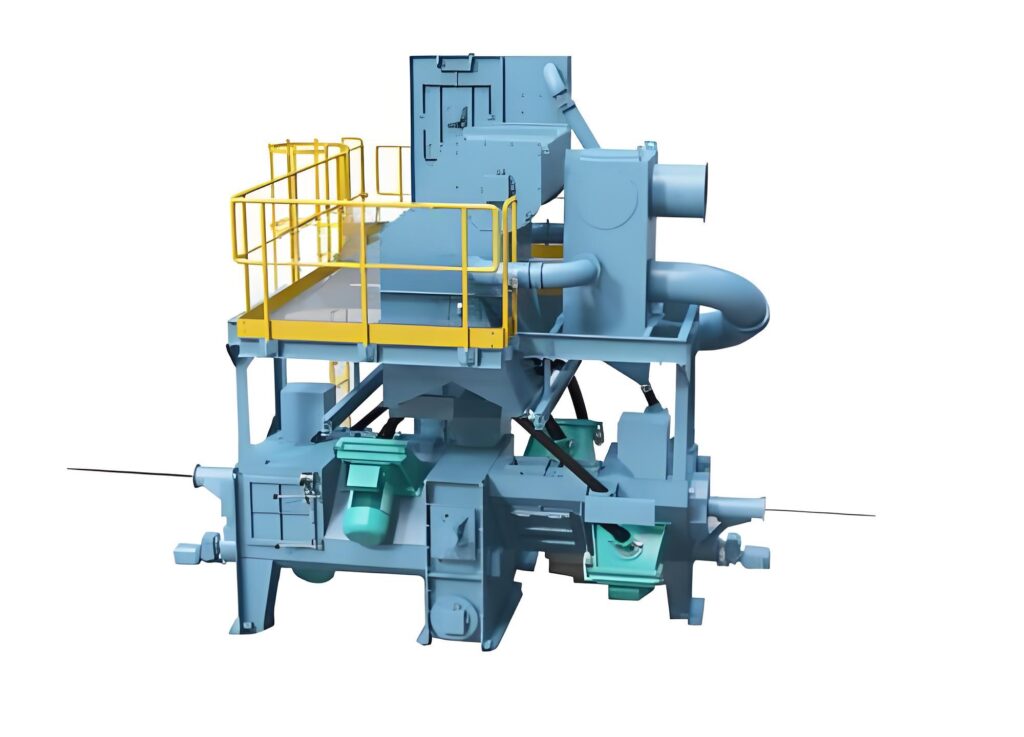
Selecting the right wheelblast equipment and proper setup are foundational for effective sand adhesion removal in foundry shot blasting. For small to medium-sized castings with light sand adhesion, a tumble belt shot blaster is recommended, as it allows castings to tumble continuously, ensuring uniform shot blasting coverage. For large, heavy castings or those with severe sand adhesion, a hook-type shot blaster is more suitable—it can suspend castings and rotate them 360 degrees, enabling targeted shot blasting on complex surfaces. During setup, first, inspect the wheelblast equipment’s blast wheel, abrasive hopper and conveyor system to ensure no blockages or wear. Then, adjust the blast wheel’s rotation speed (typically 2800-3600 rpm for sand removal) to ensure sufficient kinetic energy for shot blasting. The abrasive hopper should be filled with appropriate abrasives (steel shot with grain size 0.8-1.2mm is ideal for most castings), and the conveyor speed of the shot blaster should be set to 0.5-1.5 m/min to allow enough shot blasting time. Additionally, ensure the dust removal system of the wheelblast equipment is fully functional to collect sand dust generated during shot blasting, maintaining a clean working environment.
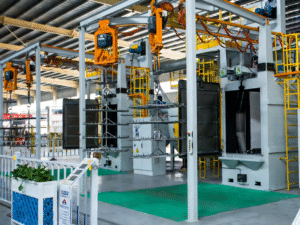
What Are the Optimal Shot Blasting Parameters for Removing Casting Sand Adhesion?
Optimizing shot blasting parameters is critical to achieving efficient sand adhesion removal without damaging castings. First, abrasive selection: in addition to steel shot, for castings with soft materials (such as aluminum alloy), ceramic shot is preferred to avoid surface scratches; for high-strength steel castings, high-hardness steel shot (HRC 58-62) is suitable for tackling tough sand adhesion. Second, shot flow rate: the flow rate of the shot blaster should be controlled at 20-50 kg/min—too low a flow rate results in incomplete sand removal, while too high may cause casting deformation. Third, shot blasting distance and angle: the distance between the blast wheel nozzle and the casting surface should be 150-250mm, and the angle should be 45°-60° to maximize the impact force of the shot. Fourth, shot blasting time: it varies based on casting size and sand adhesion severity—usually 3-8 minutes for small castings and 8-15 minutes for large ones. It’s recommended to conduct a test shot blasting on a sample casting first, adjusting parameters based on the sand removal effect to ensure optimal results. These parameters must be recorded and strictly followed during mass production to maintain consistency.
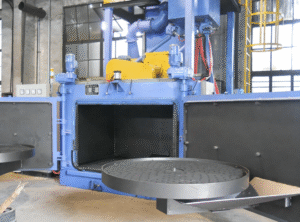
What Are the Key Operational Steps and Precautions for Shot Blasting Sand Removal?
Following standardized operational steps and precautions ensures safe and effective shot blasting for casting sand adhesion removal. Pre-operation steps: first, clean the casting surface to remove loose sand and oil stains, as impurities may affect shot blasting efficiency. Then, load castings into the shot blaster correctly—avoid overloading (no more than 80% of the equipment’s rated capacity) to prevent uneven tumbling or conveying. During operation: start the wheelblast equipment in the correct sequence (dust removal system → blast wheel → conveyor) and monitor the shot blasting process in real time. If uneven sand removal is found, adjust the casting position or shot blaster parameters promptly. Post-operation steps: stop the equipment in reverse sequence, take out castings and check the sand removal effect—any residual sand adhesion should be re-shot blasted. Key precautions: operators must wear protective gear (goggles, dust masks, protective clothing) to avoid injury from abrasive splashing and dust inhalation. Regularly inspect the wear of the shot blaster’s blast wheel and nozzles; replace worn parts in time to ensure shot blasting efficiency. Additionally, regularly maintain the wheelblast equipment, including lubricating moving parts and cleaning the abrasive recovery system, to extend its service life.
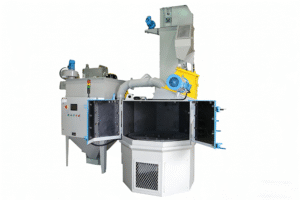
How to Handle Special Cases of Severe Sand Adhesion in Shot Blasting?
For castings with severe sand adhesion (such as deep cavity sand, metal-sand bonding), special shot blasting strategies are required to ensure complete sand removal. First, pre-treatment before shot blasting: use a high-pressure air gun to blow off loose sand in deep cavities, or use a wire brush to scrape off thick sand layers, reducing the load of shot blasting. Second, equipment adjustment: replace the blast wheel with a higher power one or increase the number of blast wheels in the shot blaster to enhance shot blasting intensity. Adjust the abrasive to a larger grain size (1.2-1.5mm) and increase the shot flow rate to 40-60 kg/min. Third, targeted shot blasting: for complex castings with deep holes or grooves, use a manual auxiliary shot blasting gun to perform targeted shot blasting on hard-to-reach areas, cooperating with the automatic shot blaster. Fourth, secondary shot blasting: after the first shot blasting, conduct a second shot blasting with smaller grain size abrasives (0.6-0.8mm) to remove residual fine sand and improve surface finish. For extremely severe sand adhesion, it’s feasible to combine shot blasting with other methods (such as thermal cleaning) but ensure the casting material can withstand the process. These special handling methods effectively solve the problem of severe sand adhesion, ensuring casting quality.
Conclusion
Proper shot blasting methods with wheelblast equipment ensure efficient casting sand removal.
If you need more details on shot blasting solutions for casting sand removal, our technical team will provide tailored advice.
Contact us at: :[email protected]