
Uncontrolled casting defects raise scrap rates and costs; targeted horizontal molding optimization solves issues.
Learn practical defect control strategies for horizontal molding, stabilize casting quality via optimized molding machine and sand molding machine operation for foundry production.
Master systematic control methods to eliminate common horizontal casting defects thoroughly.
What Are the Most Common Casting Defects in Horizontal Molding Production?
Horizontal molding is the most widely used casting molding process in modern foundries, delivering high efficiency and stable batch output, yet it is prone to typical casting defects that restrict product qualification rates.
- The most frequent flaws include sand inclusions, porosity, shrinkage cavities, cold shuts, and surface scabs, most of which originate from unstable sand treatment, inaccurate molding machine operation, and irregular process parameters. Sand inclusion defects mainly occur on casting surfaces and inner layers, caused by loose mold compaction and residual loose sand in the mold cavity during horizontal molding.
- Porosity forms due to excessive sand moisture and poor mold exhaust performance, trapping gas inside molten metal during solidification. Shrinkage cavities and shrinkage porosity appear in thick casting sections, resulting from insufficient feeding and unbalanced solidification speed. Cold shuts arise when molten metal flows discontinuously or temperature drops too fast during filling, causing incomplete fusion of metal streams.
Industry data shows that unoptimized horizontal molding lines have an average casting defect rate of 8% to 12%, with over 70% of defects directly linked to sand molding machine and molding machine operating inconsistencies. These flaws lead to high scrap rates, repeated rework, and increased raw material waste, severely reducing factory profitability and product delivery credibility.
How Unstable Sand Molding Machine Operation Triggers Horizontal Molding Defects
The sand molding machine serves as the core auxiliary equipment for horizontal molding, and unstable sand quality output is the primary source of most horizontal casting defects.
- Qualified molding sand with stable moisture, uniform particle size, and sufficient bonding strength is the foundation of flawless casting production. Many foundry defect problems stem from neglected sand molding machine maintenance and parameter misalignment rather than molding machine failure.
- When the casting sand molding machine operates with uncalibrated moisture control, excessive sand moisture vaporizes during pouring, generating massive gas and causing widespread porosity defects. Uneven sand mixing leads to inconsistent mold compactness, resulting in partial mold collapse and sand inclusion flaws during molten metal scouring.
In addition, outdated sand molding machine models lack effective impurity removal and dust filtration functions, mixing fine powder and metal debris into molding sand, which reduces mold surface smoothness and causes surface burrs and scabs. The following table clearly shows the correlation between sand quality parameters and common casting defects:
| Molding Sand Parameter | Unqualified Range | Main Triggered Defects |
| Sand Moisture | Over 4.5% | Porosity, bubble defects |
| Mold Compactness | Below 85% uniformity | Sand inclusion, mold expansion |
| Sand Fine Powder Content | Over 12% | Poor ventilation, surface scabs |
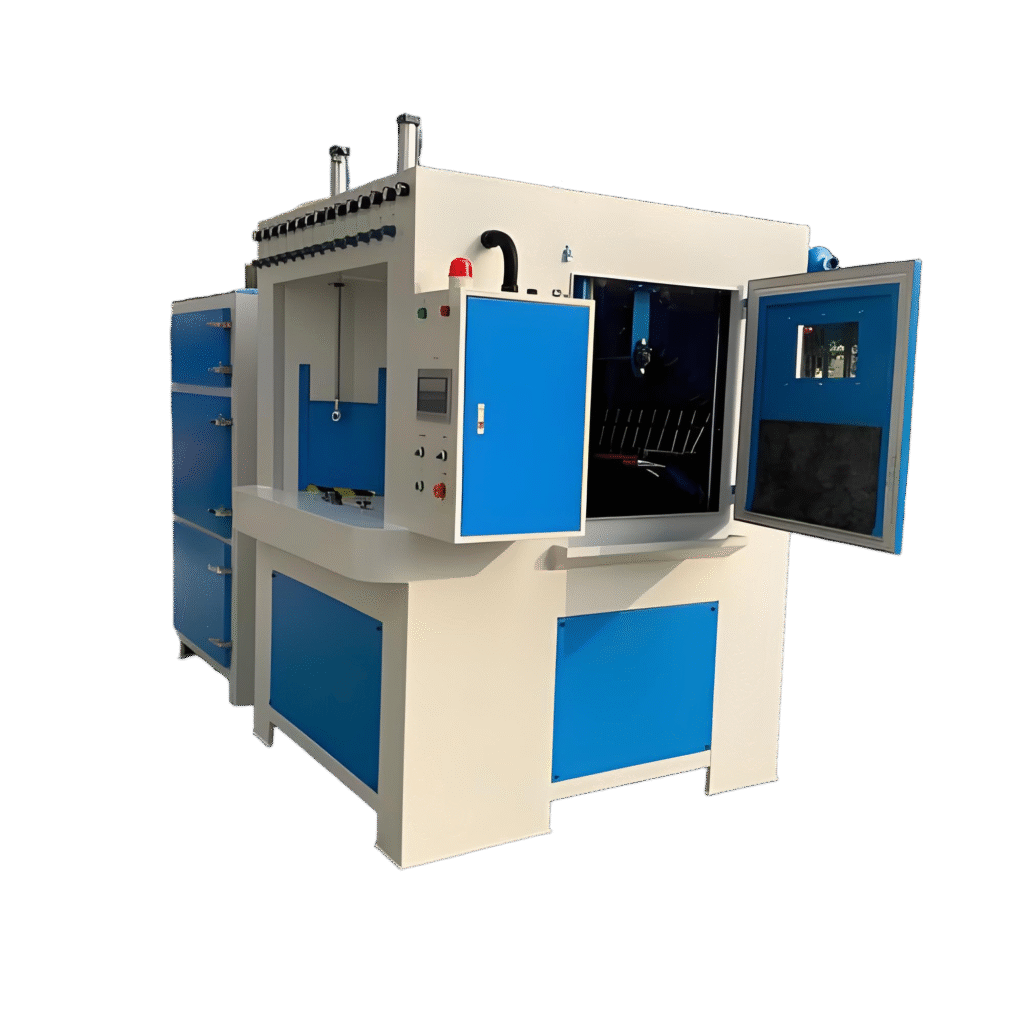
Chong Jen Machinery optimizes the internal stirring, screening, and moisture calibration systems of sand molding machine and casting sand molding machine equipment. Our upgraded units deliver consistent high-standard molding sand, fundamentally cutting sand-induced casting defects for horizontal molding lines.
How Molding Machine Precision Affects Horizontal Casting Quality Stability
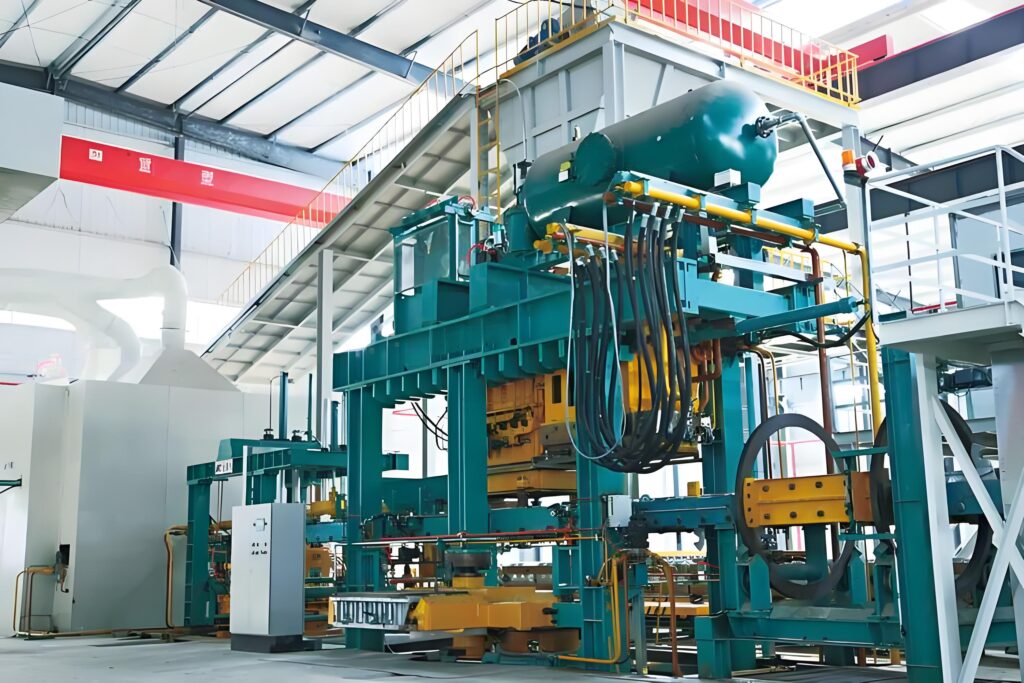
The precision and operational stability of the core molding machine directly determine mold dimensional accuracy and mold closing tightness, playing a decisive role in horizontal molding casting defect control.
- High-precision molding machine equipment ensures balanced hydraulic compaction pressure, uniform mold cavity compactness, and precise mold parting alignment, effectively avoiding flash, burr, and dimensional deviation defects. In contrast, aging or uncalibrated molding machine equipment suffers from unstable hydraulic pressure, uneven compaction force, and mold positioning deviation.
- These issues cause inconsistent mold tightness, leading to molten metal overflow and thick burrs on casting parting surfaces. Unstable mold opening and closing speed also easily disturbs preformed sand molds, causing local mold damage and sand falling before pouring.
Moreover, outdated molding machine equipment lacks synchronous exhaust design, failing to discharge cavity gas efficiently and increasing internal porosity risks. For batch horizontal molding production, minor precision deviations of the molding machine will accumulate into large-scale defective batches, bringing huge economic losses to foundries. Professional equipment calibration and structural optimization can improve mold forming consistency and reduce mechanical-induced defects by more than 80%.
Practical Process Optimization Methods to Control Horizontal Molding Defects
Systematic process optimization is the key to comprehensively suppress horizontal molding casting defects, covering sand preparation, molding operation, and pouring control.
- First, standardize sand molding machine operating parameters: strictly control sand moisture between 2.5% and 3.5%, remove fine powder and impurities regularly, and ensure stable sand bonding strength and air permeability.
- Second, calibrate molding machine hydraulic pressure and positioning accuracy daily to guarantee uniform mold compaction and precise mold closing, eliminating mold gaps and loose mold areas.
- Third, optimize horizontal molding exhaust design, set reasonable exhaust grooves and vent holes to accelerate gas discharge during pouring and prevent porosity.
- Fourth, standardize pouring temperature and speed control; excessive temperature causes over-burning and shrinkage, while low temperature leads to cold shuts and insufficient filling.
In addition, establish regular equipment inspection mechanisms to eliminate hidden faults of casting sand molding machine and molding machine in advance. These standardized operational processes form a complete defect prevention system, effectively reducing comprehensive casting scrap rates and improving batch production stability.
Long-Term Maintenance Strategies to Sustain Low Defect Rates for Horizontal Molding Lines
Stable long-term defect control for horizontal molding production relies on scientific equipment maintenance and standardized management, rather than temporary debugging and post-defect remediation.
- Most foundries experience periodic defect surges due to neglected equipment aging and parameter drift. The sand molding machine requires daily cleaning of screening nets and stirring components, weekly calibration of moisture detection sensors, and monthly replacement of worn sealing parts to ensure stable sand output quality.
- The core molding machine needs regular hydraulic oil replacement, guide rail calibration, and pressure system debugging to maintain long-term molding precision and operational stability. Meanwhile, factories should establish batch quality tracking mechanisms, recording defect types and corresponding equipment operating parameters to form targeted optimization databases.
Timely data analysis can accurately locate equipment or process abnormalities and avoid large-scale defective production. Chong Jen Machinery provides one-stop equipment maintenance and defect prevention guidance for horizontal molding lines, helping customers formulate exclusive maintenance plans for molding machine and sand molding machine equipment and sustain long-term low-defect production status.
Conclusion
Optimize equipment and processes to effectively control horizontal molding casting defects.
Contact Chong Jen Machinery
For professional horizontal molding defect control solutions and high-stability molding machine and sand molding machine equipment,
email us: [email protected]
 English
  Russian
  Spanish
  Portuguese
  French
  Indonesian
  Thai
Thai