
Could the Wrong Abrasive Disrupt Your Casting Line and Increase Cleaning Costs?
Selecting steel shot, steel grit, or glass beads without considering the molding process can cause incomplete sand removal, casting damage, excessive media consumption, and unstable downstream quality. The wrong abrasive may also overload shot blasting equipment or create bottlenecks between shakeout, desanding, inspection, and finishing. A process-integrated selection prevents avoidable rework and production losses.
The best abrasive depends on casting material, molding method, sand adhesion, required surface profile, equipment design, and downstream finish. Our company provides Customizable OEM and ODM Shot Blasting Machine solutions, matching steel shot, steel grit, or glass beads with complete foundry processes for reliable cleaning, controlled wear, and consistent production quality.
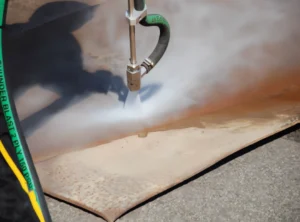
Match Abrasive Selection with the Molding Process
Abrasive selection should begin upstream with the casting and molding method. Sand type, binder strength, compaction pressure, casting geometry, and shakeout performance determine how strongly sand adheres to the casting. Downstream requirements then establish whether the process needs aggressive desanding, controlled cleaning, surface preparation, or a light cosmetic treatment.
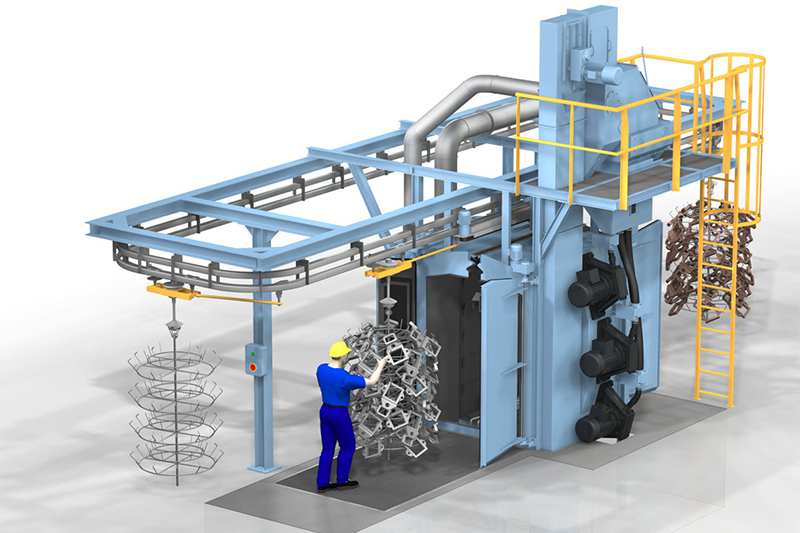
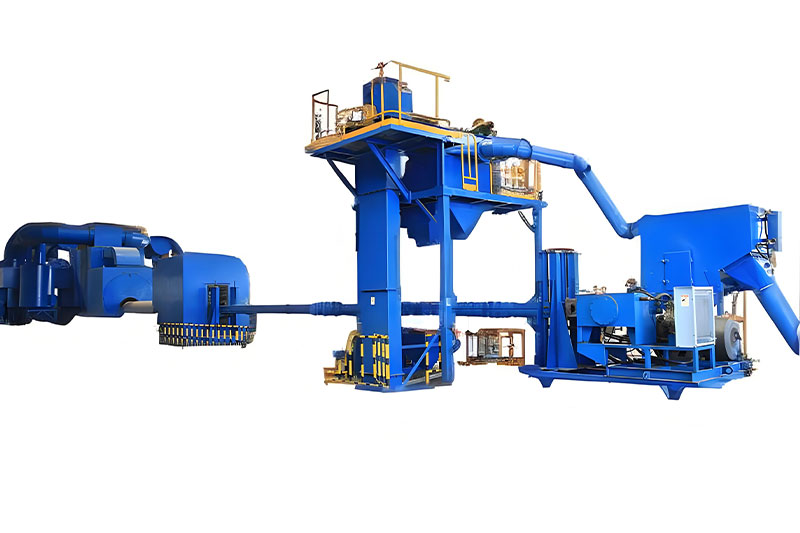
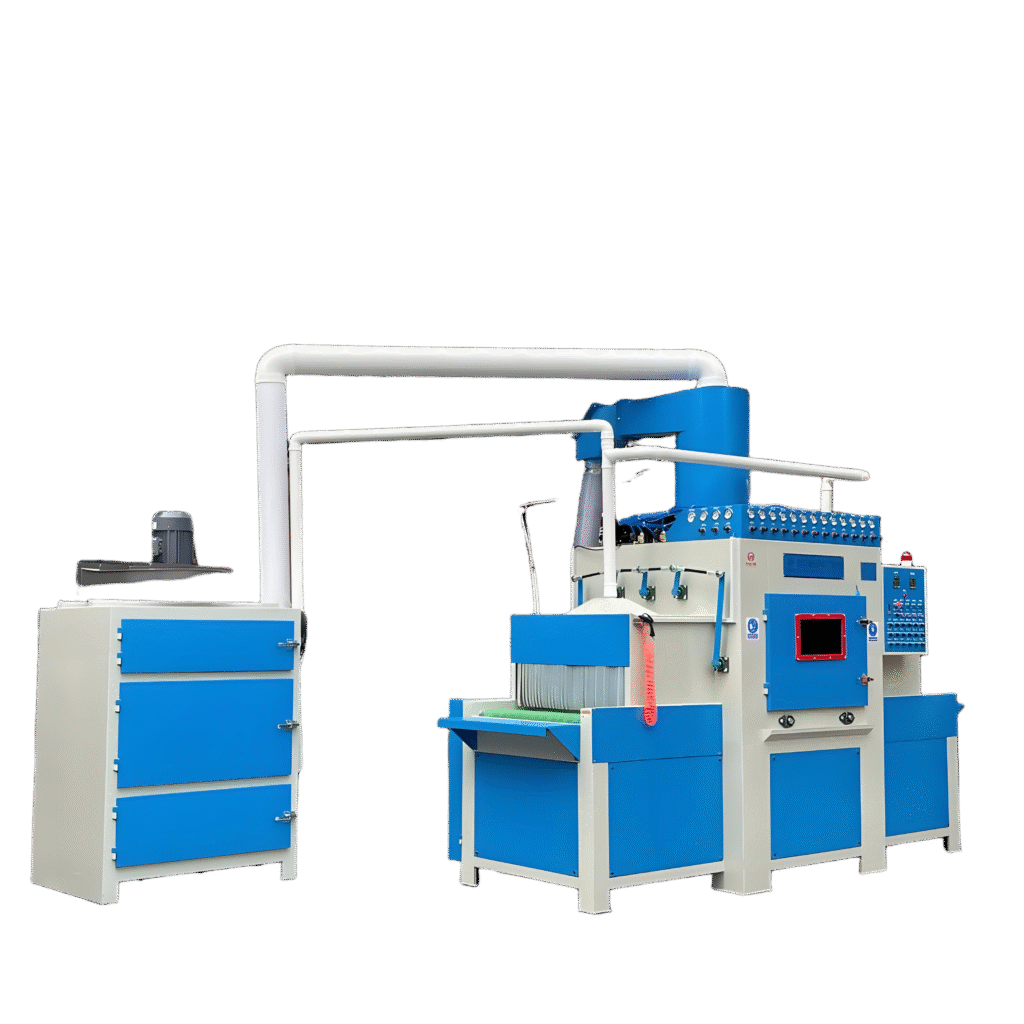
A Manufacturer or Supplier should evaluate the entire route rather than recommend media based only on nominal hardness. The same Shot Blasting Machine may require different abrasive sizes, projection energy, flow rates, and cleaning cycles for clay sand castings, boxless automatic molding castings, V-process vacuum castings, and lost-foam castings.
| Casting or molding process | Typical cleaning challenge | Initial abrasive direction |
| Clay sand castings | Residual sand, mold material, and varying adhesion across complex surfaces | Steel shot for general cleaning; steel grit for difficult adhered sand |
| Boxless automatic molding castings | High production volume and consistent cycle-time requirements | Steel shot selected for stable throughput and media recyclability |
| V-process vacuum castings | Film, sand residue, and geometry-sensitive surface requirements | Controlled steel shot or glass beads according to finish requirements |
| Lost-foam castings | Coating and residue removal from complex or thin-walled shapes | Moderate steel shot or glass beads to limit surface damage |
Clay sand castings
Clay sand castings often require reliable removal of residual sand after shakeout. Steel shot is suitable for many general-purpose applications because its rounded shape provides repeated impact with comparatively controlled surface erosion. Media size and wheel speed should be matched to casting thickness so that heavy sections are cleaned without damaging thin edges, cores, or bosses.
Boxless automatic molding castings
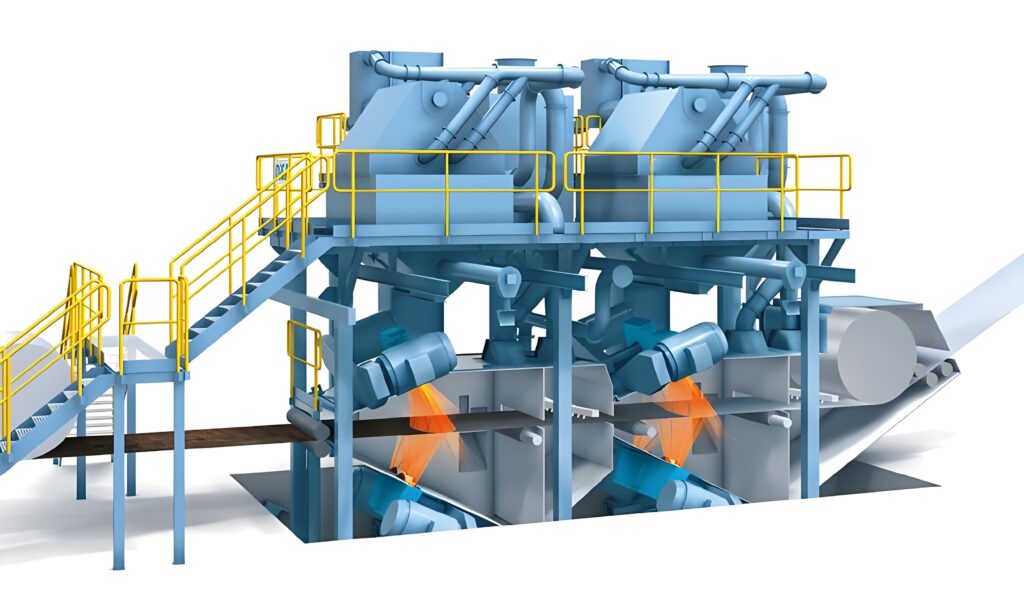
Boxless automatic molding castings place greater emphasis on cycle time, repeatability, and continuous media separation. A production line may process large quantities with narrow takt-time limits, so abrasive selection must support stable flow through the Blasting Machine. Steel shot is commonly considered where the objective is consistent desanding, high recyclability, and predictable wear in automated Wheelblast Equipment.
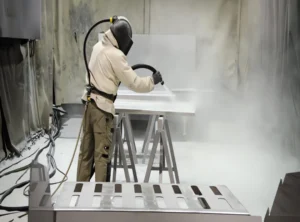
When Steel Shot Is the Practical Production Choice
Steel shot consists of rounded metallic particles that deliver repeated impact and rolling action. It is commonly selected for general desanding, surface cleaning, and removal of loosely or moderately adhered sand from durable castings. Its performance is influenced by hardness, particle size, wheel speed, projection angle, and shot flow.
Suitable steel shot application conditions
- Medium and heavy ferrous castings requiring productive general cleaning
- High-volume foundry lines with continuous abrasive recycling
- Castings where a controlled impact profile is preferred over aggressive cutting
- Applications requiring stable media classification and automated separation
- Wheelblast Equipment with established shot flow, recovery, and dust collection systems
- Processes where reduced abrasive breakdown and predictable operating cost are important
Steel shot may be unsuitable when sand adhesion is extremely strong or when a sharper cutting action is needed. In those cases, simply increasing wheel power can raise energy consumption, workpiece damage, and wear-part costs. The better approach is to assess whether steel grit is required for specific zones or process stages.
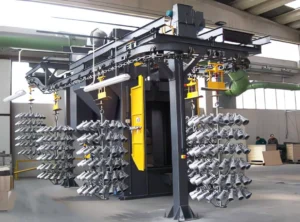
Use Steel Grit for High-Intensity Desanding
Steel grit has angular particles that cut and fracture adhered sand more aggressively than rounded shot. It can be effective for heavy-intensity desanding, stubborn mold residue, scale, and castings with strong sand adhesion. However, its sharper profile may increase surface roughness, media breakdown, machine wear, and the risk of over-treatment on delicate areas.
High-intensity desanding conditions
- Heavy clay sand adhesion that remains after normal shakeout
- Large or robust castings requiring aggressive impact and cutting action
- Localized problem areas that cannot be cleaned effectively with standard steel shot
- Castings with thick sections and sufficient surface strength to tolerate higher intensity
- Processes where stronger cleaning is more important than a low-profile cosmetic finish
Steel grit should be introduced through a controlled process trial. Evaluate grit size, hardness, projection angle, exposure time, and the effect on liners, blades, conveyors, and dust collectors. In some foundries, a staged process is more efficient: steel shot for routine cleaning followed by steel grit only where sand adhesion exceeds the normal process capability.
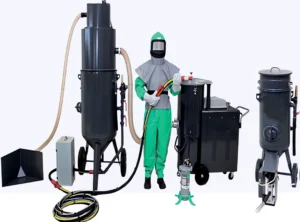
Choose Glass Beads for Precision Light Treatment
Glass beads provide a rounded, relatively gentle abrasive action for precision light treatment, visual improvement, and controlled surface cleaning. They are more appropriate when the casting has a sensitive surface, thin sections, fine details, or a downstream appearance requirement. They should not be treated as a universal replacement for steel media in heavy desanding.
Glass bead application considerations
- Light residue removal after the primary desanding stage
- Surface brightening or controlled cosmetic treatment
- Fine or delicate castings requiring reduced cutting action
- Applications where excessive surface roughness is undesirable
- Finishing operations performed after stronger cleaning has already removed adhered sand
Glass beads can break under excessive impact, so the Blasting Machine must control pressure, wheel energy, abrasive flow, and recovery conditions. Confirm compatibility with the machine’s separator, storage hopper, dust collection system, and wear-resistant lining. The Supplier should state expected media life, contamination limits, and replacement procedures.
Integrate Abrasive Choice Across the Full Casting Line
Full-line process integration connects molding, shakeout, blasting, inspection, repair, coating, and shipping. Abrasive decisions should reflect both upstream sand adhesion and downstream quality standards. A media choice that shortens blasting time may increase grinding work, rejection rates, coating consumption, or inspection failures later in the line.
- Identify the molding process and measure sand adhesion after shakeout.
- Classify castings by material, wall thickness, geometry, weight, and surface sensitivity.
- Define the required cleaning standard and downstream finish.
- Run comparative trials with steel shot, steel grit, or glass beads.
- Record cycle time, media consumption, surface condition, dust loading, and wear.
- Coordinate abrasive selection with wheel power, machine capacity, and recovery equipment.
- Confirm that the selected media supports the complete production line and quality plan.
| Evaluation factor | Steel shot | Steel grit | Glass beads |
| Particle action | Rounded impact and peening | Angular cutting and fracturing | Gentle rounded treatment |
| Best use | Routine productive desanding | High-intensity adhered-sand removal | Precision light cleaning and finish |
| Surface effect | Controlled, moderate profile | More aggressive and textured | Relatively smooth and refined |
| Production suitability | High-volume automated lines | Targeted or heavy-duty operations | Finishing or delicate applications |
For complex foundries, a Customizable OEM or ODM solution may combine different media strategies across separate machines or process stages. The final proposal should include abrasive specifications, machine settings, recovery design, dust collection requirements, spare parts, operator training, and performance acceptance criteria.
Conclusion
Choose abrasive media by integrating molding conditions, sand adhesion, casting strength, cleaning intensity, and downstream finish. Contact our team for a casting-line assessment and a Customizable OEM or ODM Shot Blasting Machine proposal using the most suitable steel shot, steel grit, or glass bead process.
 English
  Russian
  Spanish
  Portuguese
  French
  Indonesian
  Thai
Thai