
High abrasive wear increases costs; master key methods to cut waste and boost blasting equipment efficiency.
This guide details proven methods to minimize abrasive wear for shot blasting, shot blasting equipment, wheelblast equipment, and all blasting equipment, helping buyers reduce costs.
Explore practical techniques to minimize abrasive wear for your blasting equipment.
How to Select the Right Abrasive Material to Minimize Wear in Shot Blasting?
Selecting the right abrasive material is the foundational step to minimize wear in shot blasting operations, as the material’s hardness, density, friability, and particle shape directly impact wear rates for shot blasting equipment, wheelblast equipment, and all blasting equipment.
- Many buyers overlook this, choosing low-cost, low-durability abrasives that increase wear by 30-40% and raise operational costs significantly .
- According to industry research, the right abrasive can reduce wear by 25-35% while improving shot blasting quality. When selecting abrasives for shot blasting, prioritize properties like hardness (measured by Vickers HV), density, and recyclability—high-hardness, dense abrasives (e.g., high-carbon steel shot, alloy Steel Grit) are more durable, resisting fracture during shot blasting and reducing premature wear .
- Spherical abrasives (e.g., glass beads, cast steel shot) are ideal for surface conditioning and peening, as their shape minimizes impact-induced wear on both workpieces and blasting equipment components . Angular abrasives (e.g., silicon carbide, fused alumina) are better for heavy-duty profiling but require careful selection to avoid excessive wear on wheelblast equipment blades.
Additionally, match the abrasive to the workpiece material: softer workpieces need gentler abrasives to prevent both workpiece damage and unnecessary abrasive wear. Chong Jen Machinery’s experts provide personalized abrasive selection guidance, recommending options that balance durability, performance, and cost-efficiency for different shot blasting equipment and wheelblast equipment models, ensuring minimal wear and maximum abrasive lifespan.
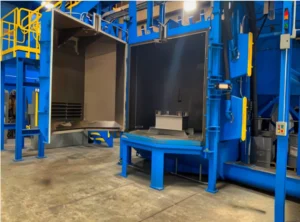
Optimizing Shot Blasting Equipment Parameters to Reduce Abrasive Wear
Optimizing the operational parameters of shot blasting equipment, wheelblast equipment, and other blasting equipment is critical to minimizing abrasive wear, as improper settings can accelerate wear by 40% or more.
- The key parameters to adjust include blast pressure, nozzle size, projection angle, and shot blasting time—each directly influencing how abrasives interact with workpieces and equipment components . For shot blasting equipment, blast pressure that is too high increases abrasive fracture and wear, while pressure that is too low requires longer processing times, leading to excessive abrasive use. Industry data shows that adjusting blast pressure to the optimal range (50-100 psi, depending on nozzle size) can reduce abrasive wear by 20% .
- Nozzle size also plays a role: larger nozzles (e.g., 3/8”) consume more abrasives per hour, while smaller nozzles (e.g., 3/32”) may require longer processing times. The table below outlines abrasive consumption rates by nozzle size at different pressures, helping B2B buyers optimize parameters for minimal wear:
| Nozzle Size | Abrasive Consumption (lbs/hr) at 90 psi | Potential Wear Reduction by Optimal Pressure |
| 3/32″ | 13 | 15-20% |
| 1/8″ | 24 | 20-25% |
| 3/16″ | 53 | 25-30% |
Additionally, adjusting the projection angle of shot blasting equipment to avoid excessive abrasive rebound and optimizing shot blasting time to prevent over-processing can further reduce wear. Chong Jen Machinery’s shot blasting equipment and wheelblast equipment are equipped with adjustable pressure and angle controls, allowing operators to fine-tune parameters for minimal abrasive wear while maintaining shot blasting efficiency.
Proper Maintenance of Blasting Equipment to Minimize Abrasive Wear
Proper maintenance of shot blasting equipment, wheelblast equipment, and all blasting equipment is essential to minimizing abrasive wear, as worn or misaligned components can increase abrasive consumption by 35% and accelerate wear .
- According to maintenance industry data, foundries with structured preventive maintenance programs reduce abrasive wear by 25% and extend equipment lifespan by 30% . Key maintenance tasks include regular inspection and replacement of wear parts (e.g., blast wheel blades, liners, nozzles) in wheelblast equipment and shot blasting equipment—these components, when worn, cause uneven abrasive distribution and excessive rebound, increasing wear . For example, worn blast wheel blades alter the projection path of abrasives, leading to inefficient shot blasting and higher wear rates.
- Additionally, cleaning the abrasive recovery system (e.g., spiral conveyors, elevators, separators) ensures that broken abrasives and debris are removed, preventing them from causing additional wear on both equipment and new abrasives . Regular lubrication of moving parts in blasting equipment also reduces friction, which can indirectly minimize abrasive wear by ensuring smooth operation.
Chong Jen Machinery offers comprehensive maintenance guidance for shot blasting equipment and wheelblast equipment, including a customized maintenance schedule and replacement parts recommendations, helping buyers keep their equipment in optimal condition and minimize abrasive wear.
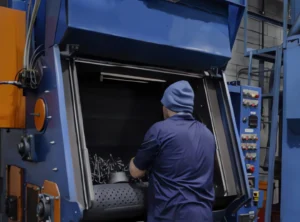
Implementing Effective Abrasive Management Practices for Shot Blasting
Implementing effective abrasive management practices is a cost-effective way to minimize wear in shot blasting operations, as poor management leads to 30% of unnecessary abrasive waste .
- The core of abrasive management is regular screening and replenishment: using vibration screens or air separators to remove broken abrasives and debris from the abrasive stream ensures that only usable abrasives are recycled back to the shot blasting equipment or wheelblast equipment .
- Industry best practices recommend replenishing new abrasives at a rate of no more than 10% of the total abrasive volume each time, maintaining a mix of 30% new abrasives and 70% recycled abrasives for optimal performance and minimal wear .
Additionally, storing abrasives in a dry environment prevents moisture-induced caking and oxidation, which can degrade abrasive quality and increase wear . For wheelblast equipment, which relies heavily on recycled abrasives, integrating a closed-loop recovery system further reduces waste by capturing and reprocessing used abrasives, ensuring consistent quality and minimizing wear. Chong Jen Machinery integrates advanced abrasive management systems into our shot blasting equipment and wheelblast equipment, including built-in screens and recovery systems, making it easy for B2B operators to implement effective abrasive management and reduce wear.
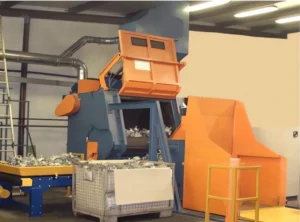
Optimizing Shot Blasting Processes to Reduce Abrasive Wear
Optimizing shot blasting processes is another key method to minimize abrasive wear, as inefficient processes lead to overuse of abrasives and increased wear on both workpieces and blasting equipment.
- One critical process optimization is workpiece pre-treatment: removing oil stain, rust, and debris from workpieces before shot blasting prevents contaminants from accelerating abrasive degradation and wear . For example, oily workpieces cause abrasives to clump, reducing their effectiveness and increasing the need for more abrasives to achieve the desired surface finish.
- Another optimization is workpiece placement: ensuring uniform workpiece coverage and using fixtures or rotating tools for complex parts reduces “empty blasting” (abrasives hitting equipment instead of workpieces), which wastes abrasives and increases wear on shot blasting equipment components .
Additionally, implementing automated shot blasting systems (integrated into modern shot blasting equipment and wheelblast equipment) ensures consistent processing times and abrasive use, reducing human error that leads to excessive wear. For high-volume operations, batch processing similar workpieces together allows for consistent parameter settings, minimizing abrasive waste and wear. Chong Jen Machinery helps buyers optimize their shot blasting processes, tailoring workflows to their specific workpiece types and blasting equipment, ensuring minimal abrasive wear and maximum efficiency.
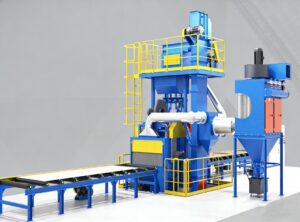
Addressing Common Causes of Excessive Abrasive Wear in Blasting Equipment
Identifying and addressing common causes of excessive abrasive wear in shot blasting equipment, wheelblast equipment, and other blasting equipment is critical to long-term wear minimization.
- One common cause is using abrasives with improper particle size: overly large abrasives cause excessive wear on equipment and workpieces, while overly small abrasives require more volume to achieve the same surface finish .
- Another common cause is misaligned blast wheels in wheelblast equipment, which leads to uneven abrasive distribution and increased rebound, accelerating wear . Environmental factors, such as high humidity, can also cause abrasive degradation, leading to increased wear—storing abrasives in dry, sealed containers and using moisture-absorbing agents can mitigate this issue.
Additionally, operator error, such as overloading the shot blasting equipment or using incorrect parameters, is a major cause of excessive wear. Training operators on proper equipment operation and abrasive management can reduce wear by 20-25% .Chong Jen Machinery’s expert team helps buyers diagnose common wear causes in their shot blasting operations, providing targeted solutions—from abrasive selection to equipment alignment—that minimize wear and reduce operational costs. Our experience with shot blasting equipment and wheelblast equipment allows us to identify hidden wear triggers that other providers may overlook.
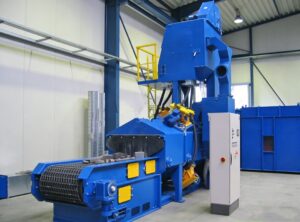
Long-Term Benefits of Minimizing Abrasive Wear for Operations
Minimizing abrasive wear in shot blasting operations delivers significant long-term benefits for B2B buyers, extending beyond immediate cost savings to improve overall operational efficiency. The most direct benefit is reduced abrasive costs—by minimizing wear, foundries and manufacturing facilities can cut abrasive expenses by 25-40%, according to industry data .
- Additionally, reduced abrasive wear extends the lifespan of shot blasting equipment, wheelblast equipment, and other blasting equipment, lowering maintenance and replacement costs by 30% . Improved shot blasting quality, a byproduct of minimal wear, reduces rework rates and enhances customer satisfaction, which is critical for operations serving industries like automotive and aerospace. Minimizing wear also reduces downtime, as well-maintained blasting equipment and efficient abrasive use ensure consistent production workflows.
- Furthermore, effective wear minimization supports sustainable operations by reducing abrasive waste and energy consumption—closed-loop abrasive recovery systems, paired with wear-minimizing practices, reduce waste by 40% or more. Chong Jen Machinery’s clients consistently experience these benefits, as our shot blasting equipment, wheelblast equipment, and wear-minimization solutions are designed to deliver long-term value, helping buyers reduce costs, improve efficiency, and stay competitive in the industry.
Conclusion
Optimize abrasive selection, equipment, and processes to minimize shot blasting wear.
Contact Chong Jen Machinery
For professional guidance on minimizing abrasive wear for shot blasting equipment, wheelblast equipment, and all blasting equipment,
email Chong Jen Machinery: [email protected].
Our experts will tailor a solution to reduce your costs and boost efficiency.
 English
  Russian
  Spanish
  Portuguese
  French
  Indonesian
  Thai
Thai