
Improper blast booth operation causes injuries and equipment damage, risking workshop safety and delays.
Standard safety protocols for blast booth and airblast equipment protect operators, prevent faults, and ensure consistent sandblasting quality for beginners.
Follow these step-by-step rules to operate blasting equipment safely and efficiently.
Pre-Operation Inspection and Preparation for Blast Booth Safety
Complete pre-operation checks are the first critical safety step for beginners using any industrial blast booth and airblast equipment.
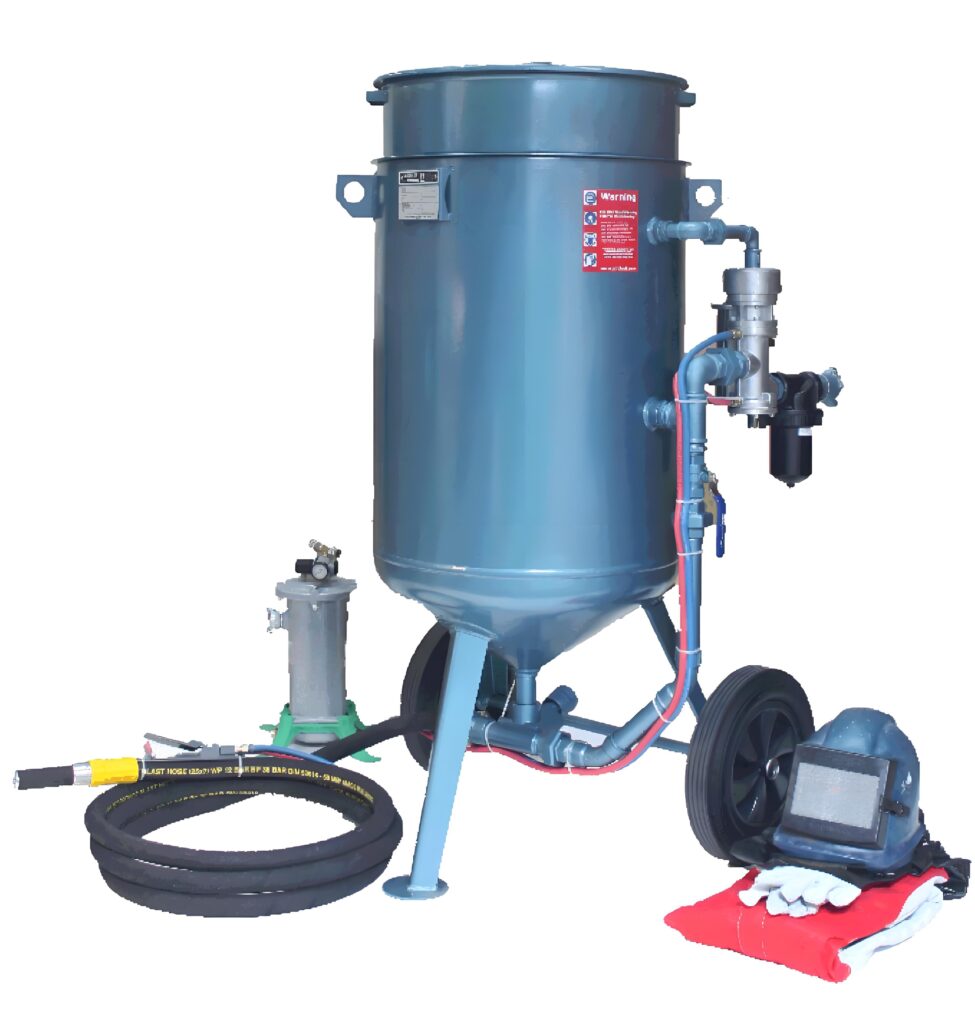
- Many safety accidents and equipment failures stem from skipped pre-use inspections, including loose sealing parts, blocked pipelines, and faulty dust removal systems. Before starting the airblast equipment, operators must check the booth’s door seals, filter cartridges, ventilation systems and nozzle conditions to ensure no air leakage or dust blockage.
- It is also necessary to verify compressed air pressure stability and confirm that all safety interlock devices function normally. Beginners must wear professional protective gear including blasting helmets, anti-wear gloves and dust-proof clothing to avoid abrasive impact and dust inhalation. Clearing redundant workpieces and sundries inside the blast booth eliminates operational obstacles, ensuring a safe and unobstructed sandblasting environment for formal processing.
Standard Operating Specifications for Airblast Equipment
Strict standardized operation of airblast equipment prevents overpressure risks, workpiece damage and equipment wear during sandblasting.
- Beginners often make mistakes such as over-adjusting air pressure, ultra-close blasting distance and fixed-point long-time spraying, which easily cause workpiece surface damage and accelerate nozzle aging.
- Operators need to set reasonable air pressure parameters according to workpiece material and rust thickness, maintaining a uniform blasting distance and stable moving speed to achieve even surface treatment. It is forbidden to aim the blast gun at human bodies or sensitive equipment to avoid safety accidents.
Meanwhile, keep the blast booth operating environment closed during working hours to prevent dust overflow and abrasive splashing. The following data shows standard parameter ranges for beginner-friendly operation:
| Operation Parameter | Standard Safe Range | Risk of Non-Compliance |
| Working Air Pressure | 0.4–0.6 MPa | Workpiece damage or weak cleaning effect |
| Blasting Distance | 30–50 cm | Uneven surface & abrasive waste |
Chong Jen Machinery provides complete operational guidance and safety training for blast booth and airblast equipment, helping beginners master standard procedures quickly and avoid safety and quality risks.
Post-Operation Maintenance and Safety Shutdown Procedures
Standard post-operation processing protects the blast booth and airblast equipment, extending service life and eliminating hidden safety hazards.
- After finishing sandblasting work, operators must first turn off the blast gun and air pressure system, then keep the dust removal system running for 3 to 5 minutes to completely exhaust residual floating dust inside the booth. Clean scattered abrasives and workpiece debris, inspect nozzle wear and pipeline blockage, and replace damaged accessories in time.
- Finally, cut off the power supply and sort out protective tools to complete standardized shutdown management. Good post-operation habits avoid accumulated dust blockage and equipment aging faults, ensuring long-term stable and safe operation of airblast equipment and blast booth systems.
Conclusion
Standard pre-check, operation and maintenance ensure safe booth blasting.
Contact Chong Jen Machinery
For high-quality blast booth and stable airblast equipment solutions,
consult Chong Jen Machinery:[email protected].
 English
  Russian
  Spanish
  Portuguese
  French
  Indonesian
  Thai
Thai