Shot Blasting Machine: Balancing Initial Price and Long-Term Running Cost
Procurement teams face tight budgets and pressure to cut capital expense. Choosing a low-cost Wheelblast Equipment often leads to higher consumable use, frequent failures, and costly downtime. Use a structured TCO approach to compare Manufacturer and Supplier options (OEM/ODM) and select a Customizable Wheel Blast Machine that fits your production plan.
The core selection criterion is total cost of ownership (TCO): our company evaluates initial purchase, abrasive consumption, electricity, maintenance, downtime losses, OEM/ODM origin, and Customizable options to recommend the best trade-off for your operation.
Initial Budget Constraints and the Procurement Dilemma
Procurement must decide between low procurement barriers and long-term value. Consider these immediate decision factors:
- Initial purchase price from Manufacturer or Supplier
- Lead time and freight for overseas OEM/ODM shipments
- Training, installation, and commissioning costs
- Customizable features required to meet throughput or regulatory needs
Temptation of Low Prices vs. Hidden Shortcomings
- Low-cost Wheelblast Equipment: lower capital outlay, faster procurement, but often minimal warranty and lower-quality wear parts.
- High-quality Shot Blasting Machine: higher upfront cost, engineered seals, wear-resistant components, and better filtration—reduces ongoing spend.
- Overseas Supplier risk: OEM/ODM labelling can disguise component origin—verify Manufacturer credentials and spare-part availability.
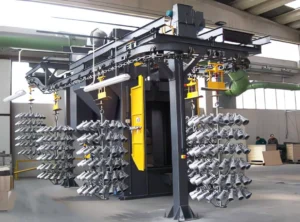
Item-by-Item Comparison: Low-Cost Model vs. Industrial-Grade Machine
Compare the most impactful cost elements over a 3–5-year horizon to quantify trade-offs.
| Cost Item | Low-Cost Wheelblast (Entry) | High-Quality Wheel Blast Machine (Industrial) |
| Initial Purchase Price | Lower (faster ROI appearance) | Higher (engineered longevity) |
| Steel shot/Abrasive consumption | Higher due to inefficient separation | Lower due to superior reclaim and separation |
| Power Consumption | Higher (older motors, poor controls) | Lower (efficient motors, variable drives) |
| Maintenance & Spare Parts | Frequent replacements, longer downtime | Durable parts, predictable maintenance schedule |
| Downtime Losses | High impact on throughput | Minimal with reliable Supplier support |
Consumable and Energy Example: Scenario Inputs
Use a scenario to estimate recurring expenses (inputs per year):
- Operating hours: 2,200 h/year
- Throughput value: revenue contribution per operating hour
- Steel shot consumption: entry 5 kg/h vs industrial 3 kg/h
- Power draw: entry 25 kW vs industrial 16 kW
| Element | Entry Model (annual) | Industrial Model (annual) |
| Abrasive cost (price/kg $0.8) | $8,800 | $5,280 |
| Energy cost (kWh $0.12) | $66,000 | $42,240 |
| Expected maintenance & downtime | $24,000 | $9,600 |
| Total recurring (approx.) | $98,800 | $57,120 |
Short-Term Savings vs. Long-Term Expense: How to Calculate 3–5 Year TCO
Follow these steps to produce a practical comparison for procurement:
- Collect vendor quotes for purchase price, warranty terms, and spare-part lead times from each Manufacturer/Supplier.
- Estimate annual abrasive usage and local abrasive (or steel shot) unit costs.
- Measure or estimate power draw and multiply by annual hours and local electricity rate.
- Estimate maintenance frequency, replacement parts cost, and probable downtime hours.
- Compute 3- and 5-year totals: purchase price + (annual recurring × years) + estimated downtime losses.
Interpreting Results and Making Flexible Decisions
Procurement recommendations depend on production plans:
- Low annual output (< 1,000 tons/year): a lower-cost Wheelblast Equipment may be acceptable if capital is constrained.
- Moderate output (1,000–5,000 tons/year): favor Customizable industrial models with better reclaim systems to cut abrasive and energy costs.
- High throughput (>5,000 tons/year): invest in premium Wheel Blast Machine with multi-seal structures, wear-resistant components, and OEM-backed service.
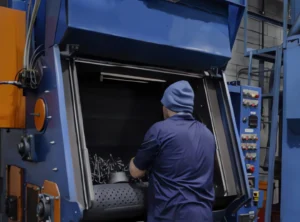
Operational Assessment and Customized Cost Comparison
For realistic budgeting, our standard analysis includes:
- Operating profile capture: hours, batches, average part size and cycle time.
- Consumable audit: current abrasive type and actual consumption rates.
- Energy audit: measured kW vs. vendor claims.
- Downtime impact modeling: cost per lost hour based on throughput.
- Recommendation: Supplier options (OEM/ODM), Customizable features, and model sizing aligned to output.
Model Recommendation Examples (by Needs)
- Budget-limited buyers: compact entry Wheelblast Equipment with clear warranty and spare list; accept higher variable costs but minimize capital.
- Mid-tier producers: Customizable Shot Blasting Machine with improved separator and dust collection to reduce abrasive loss and energy waste.
- High-volume industrial users: engineered Wheel Blast Machine from reputable Manufacturer with OEM parts, advanced controls, and local Supplier support to minimize TCO.
Conclusion
Choose based on calculated TCO and production plans, not just headline price. Contact our team for a customized 3–5 year cost comparison and model recommendation tailored to your annual output and operating conditions. Request a free TCO assessment to inform your procurement decision.
 English
  Russian
  Spanish
  Portuguese
  French
  Indonesian
  Thai
Thai