
Could an Unverified Mesin Shot Blasting Manufacturer Put Your Production at Risk?
Choosing a Manufacturer based on attractive brochures or vague quality claims can result in weak shot blasting wheels, premature wear, unstable cleaning performance, delayed spare parts, and costly downtime. Without verifiable factory capabilities and acceptance standards, procurement teams may discover critical defects only after installation. Physical evidence and documented tests are essential before selecting a Supplier.
The best selection standard combines verified manufacturing capability, wear-part test reports, proven customer cases, environmental certifications, overseas service support, factory acceptance testing, and assured spare parts availability. Our company provides transparent technical documentation and Customizable OEM and ODM shot blaster solutions based on measurable equipment performance rather than unsupported marketing claims.
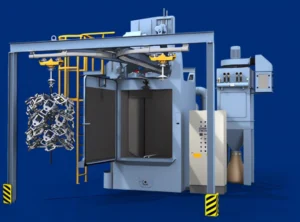
Verify Physical Manufacturing Capability Before Comparing Prices
A credible mesin blasting Manufacturer should demonstrate how its equipment is designed, produced, inspected, and supported. Procurement teams should request evidence that directly relates to machine reliability, cleaning consistency, abrasive efficiency, and maintenance access. Marketing language such as advanced, high quality, or industry leading has limited value unless supported by records, measurements, and inspection results.
Physical qualification verification checklist
- Confirm the legal company name, manufacturing address, production history, and main product range.
- Check whether the factory has machining, welding, assembly, balancing, coating, and testing facilities.
- Verify the rated capacity, chamber dimensions, wheel speed, abrasive flow, and workpiece limits.
- Review drawings showing plate thickness, structural reinforcement, access doors, liners, seals, and safety guarding.
- Ask for equipment photographs and videos that clearly show the actual production facility.
- Compare declared specifications with test records, inspection reports, and reference installations.
It is also important to distinguish a genuine Manufacturer from a trading company that only resells equipment. A qualified Supplier should explain which components are produced internally, which are sourced externally, and who is responsible for engineering changes, warranty claims, commissioning, and technical support.
Inspect Shot Blasting Wheel and Wear-Part Production
The shot blasting wheel is one of the most important performance and maintenance components in a shot blaster. In-house production of tembakan pasir wheels can provide stronger control over dimensional accuracy, dynamic balancing, blade geometry, directional components, and replacement compatibility. If the wheel is outsourced, the Manufacturer should still provide clear supplier qualification and inspection procedures.
Request material test reports for wear-resistant parts such as blades, control cages, liners, sleeves, and protective plates. Reports should identify the material grade, heat treatment, hardness range, batch number, and testing method. Where applicable, ask how the stated material properties relate to abrasive type, shot velocity, casting condition, and expected service life.
| Item to verify | Bukti yang dapat diterima | Nilai pengadaan |
| Shot blasting roda | Catatan manufaktur, hasil keseimbangan, inspeksi dimensi | Getaran lebih rendah dan proyeksi abrasif yang stabil |
| Pisau tahan aus | Laporan uji material, data kekerasan, keterlacakan batch | Siklus penggantian yang lebih dapat diprediksi |
| Lapisan pelindung | Spesifikasi material, inspeksi ketebalan, catatan kesesuaian | Mengurangi risiko kerusakan ruang dan kebocoran |
| Segel dan pengikat | Standar komponen dan catatan inspeksi masuk | Peningkatan penahanan debu dan keandalan layanan |
Pertanyaan tentang manufaktur roda
- Apakah komponen roda dikerjakan dan diseimbangkan di dalam rumah?
- Bagaimana sudut pisau dan posisi pemasangan dikendalikan?
- Toleransi keseimbangan apa yang berlaku untuk roda yang dirakit?
- Bagaimana pisau pengganti dicocokkan dengan desain roda asli?
- Apakah Pemasok dapat menyediakan sampel suku cadang aus atau hasil uji?
- Apakah desain mendukung penggantian cepat dan perakitan ulang yang dapat diulang?
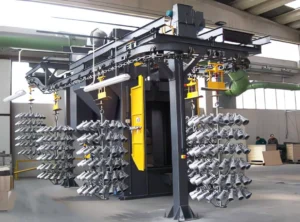
Tuntut Bukti Dunia Nyata, Bukan Klaim Umum
Studi kasus klien di dunia nyata mengungkapkan apakah peralatan berfungsi dalam kondisi yang mirip dengan milik Anda. Tanyakan referensi yang melibatkan material benda kerja yang sebanding, ukuran pengecoran, volume produksi, spesifikasi abrasif, standar pembersihan, dan jam operasional. Sebuah studi kasus harus mencakup informasi terukur seperti throughput, waktu siklus, konsumsi abrasif, frekuensi pemeliharaan, kinerja debu, dan kondisi permukaan yang dicapai.
Hubungi pelanggan referensi jika diizinkan dan konfirmasikan apakah mesin yang disuplai tetap stabil setelah commissioning. Beri perhatian khusus pada respons layanan, pengiriman suku cadang, pelatihan operator, dan penanganan ketidaksesuaian oleh Pabrikan. Sebuah foto instalasi yang dipoles saja tidak membuktikan kinerja jangka panjang.
Bukti yang diminta dari proyek referensi
- Gambar benda kerja sebelum dan sesudah dengan kondisi proses yang diidentifikasi
- Kapasitas produksi dan data waktu siklus rata-rata
- Interval penggantian roda, bilah, dan pelapis yang khas
- Catatan koleksi debu dan kinerja lingkungan
- Dokumentasi commissioning dan penerimaan
- Umpan balik pelanggan tentang pemeliharaan dan tanggapan purna jual
Periksa Kepatuhan Lingkungan dan Dukungan Layanan Internasional
Sertifikasi kepatuhan lingkungan harus sesuai dengan negara tujuan dan lingkup peralatan yang sebenarnya. Konfirmasi dokumentasi untuk emisi debu, kontrol kebisingan, keselamatan listrik, penanganan limbah cair di mana proses basah terlibat, dan pembuangan abrasif limbah atau lumpur. Sertifikasi harus berlaku, dapat dilacak, dan diterbitkan untuk entitas hukum atau kategori produk yang relevan.
Untuk pembelian luar negeri, verifikasi ketersediaan pusat layanan purna jual di luar negeri, teknisi lapangan yang terlatih, dukungan diagnostik jarak jauh, dan inventaris suku cadang regional. Tanyakan di mana komponen penting disimpan, seberapa cepat suku cadang darurat dapat dikirimkan, dan apakah mitra layanan lokal diotorisasi oleh Pabrikan.
| Area dukungan | Bukti untuk ditinjau | Risiko jika tidak ada |
| Kepatuhan lingkungan | Sertifikat yang berlaku, laporan pengujian, dan dokumen kesesuaian lokal | Denda, persetujuan yang tertunda, atau modifikasi paksa |
| Layanan luar negeri | Alamat pusat layanan, catatan teknisi, prosedur respons | Waktu henti yang lebih lama dan pemecahan masalah yang tidak pasti |
| Inventaris suku cadang | Daftar stok, waktu pengiriman, rencana pengisian kembali | Gangguan produksi selama penggantian suku cadang yang aus |
| Dokumentasi teknis | Manual, gambar, diagram kabel, jadwal pemeliharaan | Operasi yang tidak konsisten dan perbaikan yang sulit |
Mengendalikan Risiko Perantara melalui Inspeksi Pabrik dan FAT
Perantara perdagangan dapat menciptakan risiko ketika informasi teknis disaring, tanggung jawab dibagi, atau sumber produksi yang sebenarnya tidak jelas. Pembeli mungkin menerima mesin yang tidak cocok, dokumentasi yang tidak lengkap, cakupan garansi yang terbatas, atau komunikasi yang lambat setelah pengiriman. Jika seorang perantara terlibat, identifikasi pihak yang mengikat secara hukum, Produsen asli, penerbit garansi, dan pihak yang bertanggung jawab atas penerimaan kinerja.
Inspeksi pabrik di lokasi adalah salah satu metode verifikasi yang paling efektif. Inspeksi harus membandingkan kemampuan yang dinyatakan dengan bengkel yang sebenarnya, catatan peralatan, kemajuan perakitan, prosedur pengendalian kualitas, dan inventaris suku cadang. Tinjau apakah pabrik dapat memproduksi konfigurasi yang dikutip daripada hanya menampilkan model standar.
Prioritas inspeksi pabrik
- Verifikasi pendaftaran perusahaan, alamat produksi, dan kepemilikan fasilitas.
- Periksa pembuatan roda, pemrosesan, pengelasan, perakitan, dan area pengujian.
- Jejak satu bagian yang aus dari penerimaan bahan mentah hingga inspeksi akhir.
- Tinjau prosedur kualitas, catatan kalibrasi, dan penanganan ketidaksesuaian.
- Periksa penyimpanan mesin jadi, pengemasan, pemuatan, dan persiapan ekspor.
- Konfirmasi tingkat inventaris untuk bilah, liner, bantalan, segel, kontrol, dan bagian kritis lainnya.
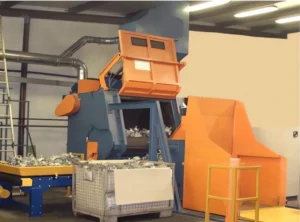
Tentukan Standar Uji Penerimaan Pabrik Peralatan
Standar uji penerimaan pabrik peralatan harus dituangkan dalam kontrak pembelian sebelum produksi dimulai. FAT harus memverifikasi dimensi, fungsi listrik, pengaman keselamatan, putaran roda, getaran, sirkulasi abrasif, pengumpulan debu, logika kontrol, penghentian darurat, dan hasil benda kerja yang representatif. Untuk proyek OEM atau ODM yang dapat disesuaikan, uji harus mencerminkan proposal teknis yang disetujui dan target produksi yang disepakati.
- Konfirmasi operasi tanpa beban dan inspeksi suara abnormal.
- Ukur getaran roda dan verifikasi catatan penyeimbangan.
- Uji pintu, pelindung, penguncian, penghentian darurat, dan perlindungan dari kelebihan beban.
- Jalankan sirkulasi abrasif dan periksa kebocoran, pemulihan, dan pemisahan.
- Proses benda kerja representatif menggunakan media dan pengaturan siklus yang disepakati.
- Catat hasil pembersihan, throughput, perilaku debu, dan konsumsi daya di mana ditentukan.
- Dokumentasikan semua penyimpangan, tindakan korektif, dan tanda tangan persetujuan akhir.
Jangan menerima pernyataan umum bahwa peralatan telah lulus inspeksi. Minta catatan uji yang ditandatangani, foto, pembacaan instrumen, gambar yang disetujui, daftar suku cadang, dan manual operasi. Dokumen-dokumen ini melindungi pembeli selama pengiriman, pemasangan, komisioning, dan diskusi garansi.
Kesimpulan
Pilih produsen mesin shot blasting melalui kemampuan pabrik yang dapat diverifikasi, tes yang terdokumentasi, kasus terbukti, catatan kepatuhan, cakupan layanan, dan jaminan suku cadang. Contact our team untuk daftar periksa inspeksi, rencana FAT, dan proposal OEM atau ODM yang dapat disesuaikan untuk aplikasi Anda.
 Indonesian
  English
  Russian
  Spanish
  Portuguese
  French
  Thai
Thai