
Garis pencetakan horizontal yang tidak dioptimalkan mengalami output rendah; peningkatan sistematis meningkatkan stabilitas garis dan profitabilitas.
Jelajahi strategi terbukti untuk mengoptimalkan alur kerja pencetakan horizontal, meningkatkan kinerja mesin pencetak, dan mencocokkan mesin pencetak pasir otomatis untuk efisiensi garis pencetakan besi horizontal yang lebih tinggi.
Baca terus untuk menemukan peningkatan yang dapat ditindaklanjuti untuk pertumbuhan produktivitas pabrik yang berkelanjutan.
What Causes Low Efficiency in Traditional Horizontal Iron Casting Molding Lines?
Sebagian besar garis pencetakan besi horizontal tradisional menghadapi kendala efisiensi yang persisten yang berakar pada pencocokan peralatan yang sudah ketinggalan zaman, alur kerja yang bergantung pada manual, dan proses pengolahan pasir yang tidak stabil, secara serius membatasi produktivitas pencetakan horizontal. Sistem produksi konvensional sangat bergantung pada unit mesin pencetak semi-otomatis dan pencampuran pasir manual, yang mengakibatkan waktu siklus pencetakan yang tidak konsisten dan kesalahan operasional yang sering.
- Masalah yang paling menonjol adalah koordinasi peralatan yang tidak cocok: banyak pabrik yang menggunakan unit mesin pencetak standar tetapi menggunakan perangkat pengolahan pasir yang sudah ketinggalan zaman yang gagal memberikan pasir cetak yang berkualitas secara stabil. Tanpa kontrol parameter pasir yang tepat, fluktuasi kelembaban dan kepadatan pasir yang tidak merata menyebabkan keruntuhan cetakan, cacat inklusi pasir, dan seringnya penghentian garis.
- Selain itu, alur kerja pencetakan horizontal tradisional melibatkan intervensi manual yang berlebihan untuk pengaturan inti, kalibrasi cetakan, dan inspeksi cacat, menciptakan ritme produksi yang tidak seimbang dan waktu tunggu yang lama. Data operasional industri menunjukkan bahwa garis yang tidak dioptimalkan jalur pengecoran besi horizontal otomatis, mempertahankan rata-rata Efektivitas Peralatan Keseluruhan (OEE) hanya 55% hingga 60%, dengan hampir 40% dari jam kerja terbuang untuk pekerjaan ulang, peralatan menunggu, dan kesalahan manual. Cacat kumulatif ini mengurangi output tahunan, meningkatkan biaya operasional, dan melemahkan daya saing pasar perusahaan pabrik kecil dan menengah.
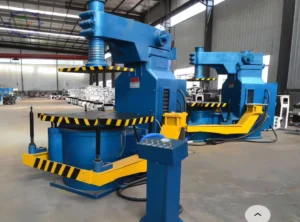
Bagaimana Mengoptimalkan Parameter Mesin Pencetakan Inti untuk Pencetakan Horizontal yang Stabil
Mengoptimalkan parameter inti dari mesin pencetak adalah peningkatan yang paling hemat biaya untuk meningkatkan presisi pencetakan horizontal dan kecepatan siklus tanpa penggantian peralatan besar-besaran.
- Kinerja mesin pencetak utama secara langsung menentukan efisiensi operasional keseluruhan dari seluruh garis pencetakan besi horizontal. Mesin pencetak yang tidak terkalibrasi secara tradisional memiliki tekanan pemadatan hidrolik yang tidak stabil, kecepatan penguncian cetakan yang tidak konsisten, dan respons pengeluaran cetakan yang tertunda, menghasilkan waktu siklus yang bervariasi dan tingkat kelayakan cetakan yang rendah.
- Optimasi parameter profesional berfokus pada tiga indikator inti: kontrol tekanan hidrolik yang konstan, akurasi posisi cetakan yang tepat, dan penyesuaian ritme siklus yang terstandarisasi.
Menstabilkan tekanan pemadatan memastikan pembentukan cetakan padat satu kali, menghilangkan operasi pemadatan yang berulang dan mengurangi pekerjaan ulang yang cacat. Meningkatkan struktur panduan empat kolom meminimalkan deviasi pemisahan cetakan, memastikan akurasi dimensi yang konsisten untuk batch. horizontal molding. Tabel data berikut menunjukkan peningkatan efisiensi yang jelas yang dihadirkan oleh penyetelan parameter mesin pencetak profesional:
| Status Mesin Pencetak | Siklus Pencetakan Tunggal | Tingkat Kualifikasi Cetakan | OEE Garis |
| Pengaturan Tradisional yang Tidak Dioptimalkan | 36–45 seconds | 91% | 58% |
| Professionally Optimized Setting | 25–32 seconds | 99% | 83% |
Chong Jen Machinery specializes in targeted molding machine parameter calibration and mechanical optimization for horizontal molding scenarios. Based on decades of foundry field experience, we adjust dynamic hydraulic parameters and program logic according to customer workpiece characteristics, helping horizontal iron casting molding lines achieve faster, more stable batch production and effectively reduce long-term defective losses.
Why Automatic Sand Molding Machine Matching Is Critical for Line Efficiency
Perfect performance matching between an automatic sand molding machine and the main molding machine is the core solution to eliminate bottlenecks in horizontal iron casting molding lines, serving as the foundation of high-quality and high-speed horizontal molding.
- Molding sand quality determines mold stability and casting finish; traditional manual or semi-automatic sand mixing equipment cannot maintain stable sand moisture, particle uniformity, and compaction density, forming the biggest production bottleneck for most foundries.
- A qualified automatic sand molding machine integrates real-time sensor detection, automatic proportioning, and intelligent stirring functions, precisely controlling sand moisture within ±1% error and filtering out fine powder and metal impurities in real time. This equipment provides continuous, high-standard molding sand for the horizontal molding process, completely solving common problems such as mold collapse, surface porosity, and line standby shutdowns caused by unqualified sand materials.
Moreover, modern automatic sand molding machine models support synchronous linkage with molding machine operating rhythm, automatically adjusting sand supply volume and speed according to line operating status. This intelligent matching eliminates sand accumulation or sand shortage, balances the working rhythm of each production node, and improves the overall continuity of the horizontal iron casting molding line. Scientific sand system matching can reduce unplanned downtime by more than 25% and stabilize batch horizontal molding quality significantly.
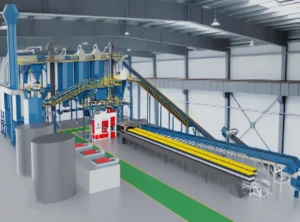
What Automation Upgrades Further Improve Horizontal Iron Casting Molding Line Productivity
Intelligent automation transformation is essential to achieve qualitative efficiency improvement for traditional horizontal molding production lines, reducing manual dependence and human-induced errors throughout the workflow.
- Most outdated horizontal iron casting molding lines rely on manual core setting, manual mold inspection, and manual workpiece handling, which occupy nearly one-third of the total production cycle and restrict maximum output. Systematic automation upgrades cover full-process optimization of molding machine operation, sand material supply, and mold conveying. Upgraded automatic core-setting stations realize parallel operation with mold compaction processes, compressing overall takt time and improving unit output.
- Intelligent conveying systems achieve seamless mold transfer from molding, pouring to cooling, eliminating manual handling waiting time and cross-operation interference. In addition, real-time data monitoring modules track the operating status of the automatic sand molding machine and main molding machine, automatically alarming and troubleshooting minor abnormalities to prevent large-scale shutdowns.
Different from single-equipment upgrades, systematic automation transformation realizes closed-loop intelligent production, ensuring every horizontal molding cycle follows standardized parameters. This upgrade not only improves hourly output but also unifies batch product precision, greatly reducing post-processing labor costs and rework losses for foundries.
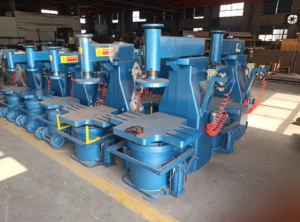
How Scientific Workshop Layout Optimizes Horizontal Molding Continuity
Reasonable workshop layout is a low-cost, high-return optimization method to maximize the performance of horizontal iron casting molding lines, effectively solving congestion and low-space-utilization problems that limit horizontal molding efficiency.
- Many foundry workshops adopt disordered equipment placement, leading to long mold conveying paths, repeated workpiece handling, and blocked equipment heat dissipation. These unreasonable layouts cause frequent line stagnation and low overall operational efficiency despite high-performance molding machine and automatic sand molding machine configurations.
- Optimized horizontal molding line layouts adopt linear streamlined arrangements, placing sand treatment systems, main molding machine units, pouring stations, and cooling tunnels in sequential production order to avoid workpiece backtracking and redundant movement. Reserved standardized maintenance spacing ensures daily equipment inspection and component replacement do not interfere with continuous production.
- Centralized layout of dust removal and sand recovery systems shortens transmission pipelines, improving sand supply response speed and negative pressure purification efficiency. Scientific layout balancing eliminates single-equipment idle bottlenecks, improves overall line coordination, and increases horizontal iron casting molding line comprehensive efficiency by 15% to 20% without additional equipment investment.
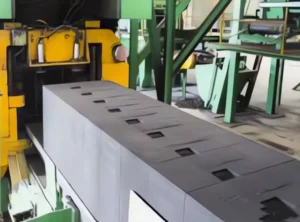
How Preventive Maintenance Sustains Long-Term Horizontal Molding Efficiency
Long-term stable high efficiency of horizontal iron casting molding lines relies entirely on standardized preventive maintenance systems, avoiding efficiency attenuation caused by equipment aging and sudden failures.
- Long-term continuous horizontal molding operation causes gradual wear on molding machine guide rails, hydraulic seals, and impeller components, while automatic sand molding machine filter screens and stirring devices are prone to blockage and performance degradation. Without regular scientific maintenance, equipment operating accuracy declines continuously, molding cycle times extend, and unplanned downtime increases sharply, offsetting previous optimization benefits.
- A complete preventive maintenance system includes daily dust cleaning and abnormality inspection, weekly component calibration, monthly parameter verification, and seasonal lubricating oil replacement.Timely replacement of worn parts ensures the molding machine and automatic sand molding machine always maintain optimal operating status. Industry data shows that standardized maintenance reduces unplanned downtime of horizontal molding lines by more than 60% and extends core equipment service life by 30%.
Chong Jen Machinery provides exclusive full-cycle maintenance guidelines for horizontal iron casting molding lines, helping customers establish standardized equipment management mechanisms to sustain long-term efficient and stable horizontal molding production.
Kesimpulan
Systematic upgrades stabilize horizontal molding efficiency and maximize foundry production profits.
Hubungi Chong Jen Machinery
For professional horizontal iron casting molding line optimization, customized molding machine tuning and automatic sand molding machine matching solutions,
hubungi Chong Jen Machinery melalui email: [email protected]
 Indonesian
  English
  Russian
  Spanish
  Portuguese
  French
  Thai
Thai