
Uncontrolled Supplier Lead Times That Threaten Industrial Project ROI
Most global industrial buyers encounter severe supply chain disruptions when sourcing surface treatment equipment. Many unvetted Supplier vendors promise fast shipping but delay delivery due to unmanaged production backlogs, complex Customizable modification workflows, and missing core components. These unpredictable delays cause production line downtime, contract penalty fees, delayed project handover, and wasted operational budgets, severely damaging long-term factory planning and cross-border cooperation credibility.
Reliable lead time negotiation requires transparent scheduling, fixed production pipelines, and enforceable contract terms. As a professional Manufacturer, we guarantee predictable delivery for Shot Blasting Machines and Wheel Blasting Machine orders.
Most procurement teams only negotiate pricing and ignore lead-time clauses. Below are exclusive industry negotiation strategies to help you eliminate delivery uncertainty and stabilize project cycles.
Why Lead Time Negotiation Determines Long-Term Procurement Value
In industrial machinery cross-border procurement, buyers often prioritize unit price advantages while underestimating the economic losses caused by delayed delivery. Unlike standardized consumer goods, Shot Blasting Machines and Wheel Blasting Machine units involve precision assembly, professional Wheel Blast system debugging, and strict quality inspection processes. Any schedule fluctuation will affect the overall progress of factory upgrading and batch production arrangement.
Even if buyers obtain extremely low equipment prices, long-term delivery delays will lead to idle workshop space, missed peak production seasons, and delayed customer order delivery. These invisible losses far exceed the cost savings from low-price purchases. For engineering contractors and large-scale manufacturing enterprises, stable delivery cycles are the core premise of controllable project profit and stable supply chain operation.
This is why experienced international purchasers regard lead time as a core negotiation indicator equal to price and quality. Formal Manufacturer teams can formulate scientific scheduling plans according to order attributes, while ordinary Supplier vendors often blindly promise short cycles and cause continuous delivery breaches, bringing serious commercial risks to buyers.
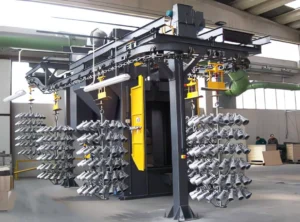
Core Factors That Extend Blasting Machine Production Cycles
To achieve effective lead time negotiation, buyers must master the key factors affecting equipment production cycles, so as to avoid being misled by suppliers’ false cycle promises. The production cycle of industrial blasting equipment is mainly affected by customization degree, component supply, and compliance audit standards.
Customization Degree and Technical Adjustment Workload
Standard off-the-shelf Shot Blasting Machines have fixed and mature production procedures with stable delivery cycles. Once Customizable requirements such as OEM logo printing, voltage conversion, and appearance modification are added, the production link will generate additional adjustment work. For in-depth ODM upgrades including Wheel Blast structural optimization and internal parameter adjustment of Wheel Blasting Machine, manufacturers need to complete drawing confirmation, trial assembly and secondary debugging, which will significantly extend the production cycle.
Many suppliers deliberately conceal the extra cycle required for customization in the early negotiation stage, resulting in delayed delivery after order confirmation. Professional Manufacturer teams will clearly distinguish the cycle difference between standard equipment and customized equipment, and list the time cost of each modification item in the quotation to ensure full transparency.
Core Component Supply and Peak Season Backlog
High-precision accessories such as blast wheels, automatic control systems and dust removal devices of Shot Blaster belong to industrial precision parts, which have fixed supply cycles. In the peak manufacturing season every year, upstream component shortages will directly delay the overall assembly progress. Small and medium-sized Supplier vendors lack stable upstream supply chain resources and cannot guarantee timely component supply.
In contrast, large-scale Manufacturer enterprises establish long-term strategic cooperation with upstream accessory factories, reserve sufficient core parts inventory all year round, and effectively avoid production stagnation caused by component shortages. This stable supply chain advantage is the key to ensuring on-time delivery of customized Wheel Blasting Machine and blasting equipment orders.
Compliance Inspection and Quality Audit Procedures
Formal cross-border export equipment must complete strict ISO9001 quality system inspection and CE safety compliance audit. These standardized testing and certification links take fixed working days and cannot be omitted or compressed at will. Many informal suppliers reduce inspection procedures to shorten the cycle, resulting in unqualified equipment quality and failed customs clearance.
Qualified manufacturers strictly implement full-process quality audit for each batch of Shot Blasting Machines. Although standardized inspection takes a certain production cycle, it avoids post-delivery quality risks and customs detention losses, which is an indispensable link for high-value cross-border equipment procurement.
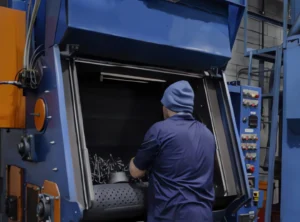
Standard Lead Time Reference: Custom vs Standard Blasting Equipment
Most buyers lack industry benchmark data and cannot judge whether the supplier’s quoted cycle is reasonable. The following table sorts out the standard delivery cycle of mainstream blasting equipment, covering standard models, conventional OEM customization and in-depth ODM upgrading, providing accurate reference for buyer negotiation:
| Equipment Type & Customization Level | Standard Production Lead Time | Negotiable Shortened Cycle | Core Restriction Factor |
| Standard Shot Blasting Machines (No modification) | 15–20 working days | 12–15 working days | Factory daily assembly scheduling |
| Conventional OEM Customized Equipment | 20–25 working days | 18–22 working days | Manual modification and debugging |
| ODM Upgraded Wheel Blasting Machine | 28–35 working days | 25–30 working days | Structural redesign & Wheel Blast calibration |
Through the benchmark data, buyers can clearly identify false short-cycle promises from suppliers. Any quoted cycle far lower than the industry standard means compressed quality inspection links or hidden delivery risks, which will bring hidden dangers to subsequent equipment operation.
Step-by-Step Lead Time Negotiation Tactics for B2B Buyers
Combined with 20 years of cross-border export negotiation experience, the following standardized step-by-step tactics can help buyers effectively compress reasonable cycles, lock in delivery guarantees, and avoid supplier default risks:
- Verify Scheduling Transparency First: Request the Supplier to provide a detailed production schedule, including component procurement time, assembly cycle, debugging time and inspection time. Formal Manufacturer teams can provide full-process scheduling nodes, while trading suppliers cannot form standardized plans.
- Classify Customization Cycle Costs: Distinguish the time required for basic OEM modification and in-depth ODM upgrading. Negotiate to merge repeated debugging links and compress invalid waiting time on the premise of ensuring equipment performance.
- Negotiate Peak Season Priority Rights: For orders placed in peak production seasons, apply for production priority from manufacturers. Long-term cooperative buyers can obtain exclusive scheduling resources and avoid being squeezed by bulk orders.
- Bind Penalty Clauses in Contracts: Clearly stipulate delivery delay penalty terms in formal contracts, formulate proportional compensation standards for overdue days, and fundamentally restrict suppliers’ arbitrary delivery delays.
- Confirm Pre-Shipment Inspection Nodes: Lock the time node of factory inspection and delivery in advance to avoid suppliers delaying delivery by prevaricating inspection and packaging links.
- How to Screen Qualified Suppliers With Reliable Lead Time Guarantee
The core of successful lead time negotiation is to select reliable cooperative partners. Many buyers fail in cycle negotiation because they cooperate with unqualified intermediate suppliers without independent production capacity. Buyers need to complete key audit milestones to screen credible Manufacturer teams:
- Production Capacity Audit: Verify the supplier’s independent workshop scale, daily assembly capacity and parts inventory reserve to confirm that it has the ability to complete orders on schedule.
- Customization Experience Audit: Check past OEM and ODM blasting equipment delivery cases to confirm that the supplier has mature experience in controlling customized order cycles.
- After-Sales Credit Audit: Understand the supplier’s historical delivery compliance rate and user evaluation to avoid long-term delayed delivery and perfunctory after-sales service.
- Supply Chain Stability Audit: Confirm the supplier’s long-term cooperative upstream accessory brands to ensure stable component supply and avoid production stagnation.
Professional Manufacturer teams always take delivery punctuality as the core service standard. Whether it is standard Shot Blasting Machines or Customizable Wheel Blasting Machine with Wheel Blast system upgrades, they can provide stable and controllable delivery cycles and enforceable service guarantees.
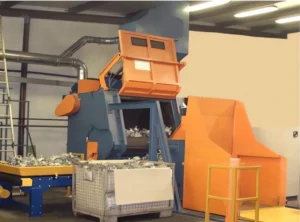
Common Lead Time Negotiation Traps and Avoidance Methods
In the blasting equipment export industry, many suppliers set hidden negotiation traps in the delivery cycle, causing buyers to suffer losses.
- The first trap is “false short-cycle commitment”. Suppliers promise ultra-fast delivery to win orders, but delay production after receiving deposits on the grounds of peak season backlog and customization adjustment.
- The second trap is “hidden cycle extension clauses”. Informal suppliers do not mark the extra time required for OEM and ODM customization in the quotation. After order confirmation, they arbitrarily extend the cycle on the grounds of modification workload increase, and attribute the delay to buyer’s adjustment demands.
- The third trap is “separate inspection cycle”. Some suppliers exclude quality inspection and customs document processing time from the production cycle, resulting in the actual delivery time being far longer than the quoted cycle. Buyers must clarify that the full cycle from material preparation to container loading is included in the contract delivery time to eliminate supply chain hidden risks.
Master professional lead time negotiation skills to stabilize your equipment project progress. Contact our trustworthy Manufacturer team to obtain accurate cycle evaluation and Customizable Shot Blasting Machines solutions today.
 English
  Russian
  Spanish
  Portuguese
  French
  Indonesian
  Thai
Thai