
Is the Wrong Shot Blasting Machine Manufacturer Limiting Your Foundry Growth?
Choosing a Shot Blasting Machine Manufacturer by price alone can leave a foundry with excessive manual handling, poor cleaning consistency, unused capacity, and expensive future upgrades. Small workshops may overinvest in automation, while large casting bases may purchase equipment that cannot support production targets. Matching the Supplier to foundry size is essential for reliable output and controlled procurement risk.
The best choice is based on foundry size, casting type, batch volume, production capacity, automation requirements, service capability, and expansion plans. Our company evaluates these factors to recommend a properly sized, compliant, and cost-effective blasting solution instead of supplying standard equipment that may not fit your operation.
Match the Manufacturer to Your Foundry Size
Foundry size segmentation provides a practical starting point for equipment selection. A small foundry workshop, medium-volume casting line, and large-scale full-process foundry base have different requirements for loading methods, chamber dimensions, automation, dust collection, shot recovery, and maintenance support. The right Manufacturer should understand the operating model behind the equipment request, not only the requested machine specification.
- Small foundry workshops typically prioritize affordable equipment, compact layouts, simple controls, and flexible batch processing.
- Medium-volume production lines require stable cycle times, reliable material flow, and integration with upstream and downstream processes.
- Large-scale foundry bases need automated transfer systems, centralized environmental controls, production data management, and coordinated line engineering.
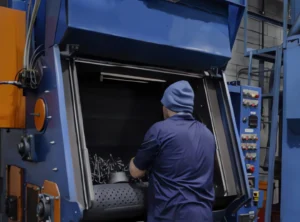
Choose Equipment for Small Foundry Workshops
Small foundries often process varied casting types in small batches. Their priority is usually flexibility rather than maximum throughput. A single shot blasting equipment Manufacturer may be suitable when the workshop needs one machine for several products, provided the chamber, hanger, table, or rotary design can accommodate the actual casting range.
Budget-matched manufacturers should offer a tiered equipment solution instead of forcing a highly automated line. Suitable options may include a compact tumble blast machine, hanger-type unit, table machine, or manual loading system with dust collection. The equipment should still provide safe access, dependable wear-part supply, clear operating instructions, and the possibility of later upgrades.
Procurement checks for small workshops
- Confirm the largest and heaviest casting to be processed.
- Compare expected batch size with chamber capacity and cycle time.
- Assess whether manual loading or basic hoist assistance is sufficient.
- Include dust collection, abrasive recovery, and safety guarding in the quotation.
- Ask whether the Supplier can provide spare parts and remote technical support.
- Verify that the selected design can handle both current and planned products.
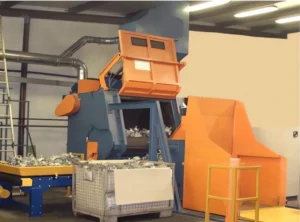
Scale Solutions for Medium-Volume Casting Production
Medium-volume casting production lines need a balance between investment and output. The best Supplier should calculate production capacity matching according to casting weight, part geometry, loading frequency, cleaning standard, shift pattern, and required cycle time. A machine that appears economical but creates a bottleneck before coating, inspection, or machining may increase total operating costs.
For small-batch and large-batch casting adaptation, a Customizable configuration is often more effective than a fixed standard model. Multiple loading modes, variable wheel settings, adjustable conveyor speeds, programmable recipes, and optional automatic separation can help the line process different products without excessive changeover time.
- List annual output, daily production, shift hours, and peak-season demand.
- Classify castings by size, weight, material, geometry, and surface contamination.
- Calculate the required batch capacity and target cycle time.
- Review loading, unloading, shot recovery, dust extraction, and inspection flow.
- Compare current demand with a realistic expansion allowance.
- Request test blasting or production data using representative castings.
| Foundry profile | Recommended equipment focus | Key procurement priority |
| Small workshop | Compact batch machine with flexible loading | Low investment, versatility, simple maintenance |
| Medium-volume line | Automated or semi-automated batch equipment | Cycle-time stability and process integration |
| Large foundry base | Complete automated blasting and conveying system | Capacity, traceability, environmental compliance |
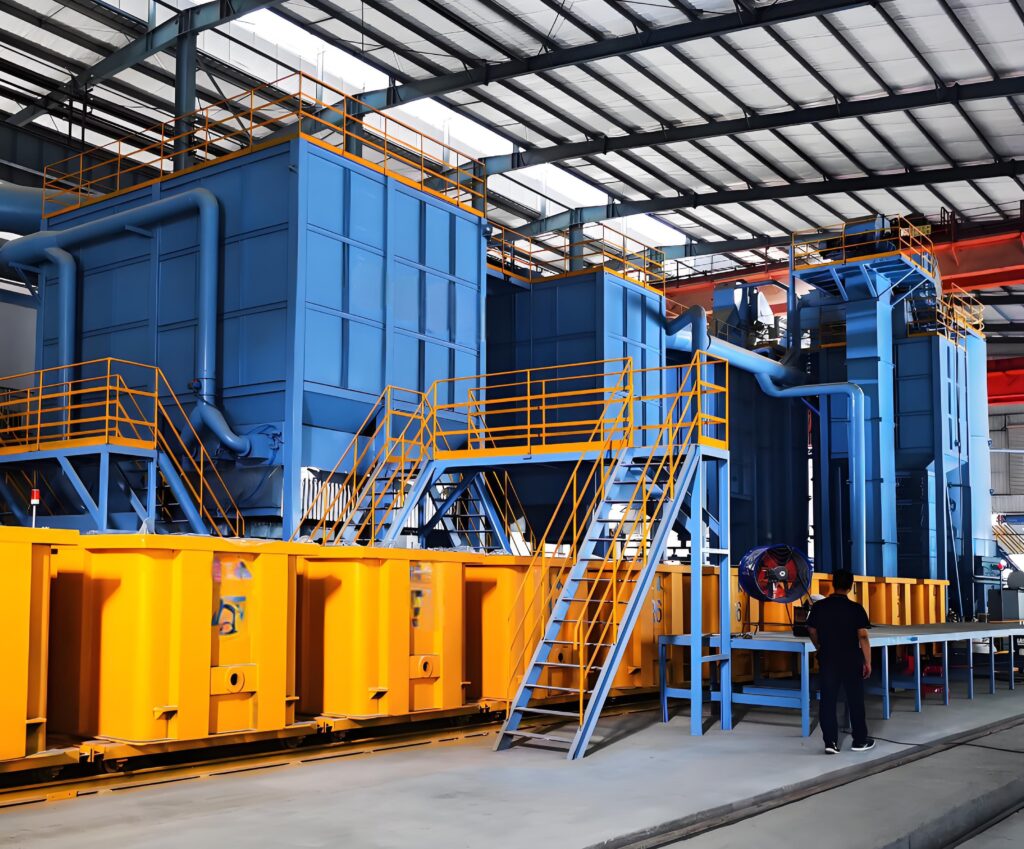
Evaluate One-Stop Foundry Line Suppliers for Large Bases
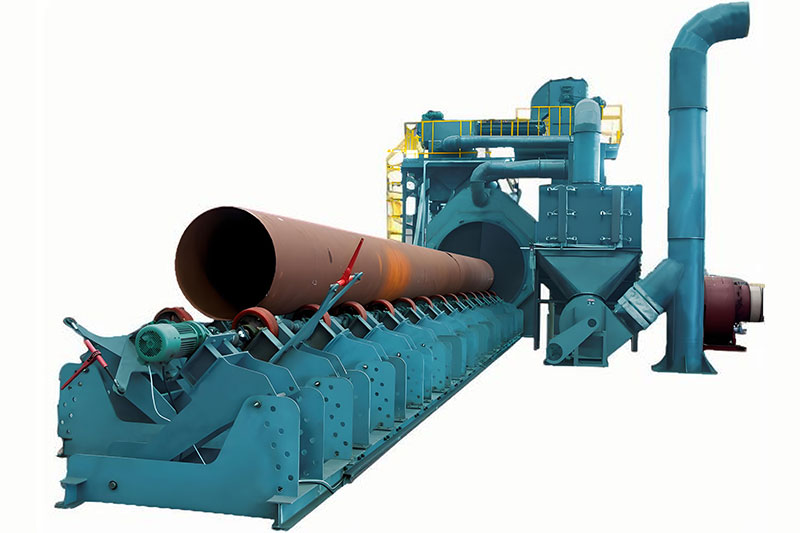
Large-scale full-process foundry bases generally need more than a single Shot Blasting Machine. They may require mold and core handling coordination, casting transfer, shakeout integration, blasting, shot separation, dust collection, surface inspection, and connection to downstream finishing. In this scenario, a one-stop foundry line Supplier can simplify engineering responsibility and reduce compatibility problems between separate vendors.
However, one-stop service should not replace technical evaluation. Confirm the Supplier’s experience with complete line design, control-system integration, commissioning, production ramp-up, worker training, environmental systems, and long-term service. Review reference projects with similar casting materials, output targets, factory constraints, and automation levels.
Questions for large-project evaluation
- Can the Supplier guarantee the required throughput and cleaning standard?
- Who is responsible for layout design, interfaces, installation, and commissioning?
- How are abrasive consumption, dust emissions, noise, and waste managed?
- Does the control system support production records and fault diagnosis?
- Are critical components available through a reliable regional service network?
- Can the line be expanded when casting volume increases?
Compare Tiered Equipment and Customization Options
A professional Manufacturer should present tiered equipment solutions according to investment level and operating needs. A basic configuration may cover essential blasting and dust control. An intermediate solution may add automatic loading, abrasive classification, and recipe management. A high-end OEM or ODM project may include complete conveying, robotic handling, centralized controls, inspection interfaces, and customized environmental treatment.
| Solution level | Typical application | Expansion potential |
| Basic | Small-batch workshop production | Manual or semi-automatic upgrades |
| Intermediate | Stable medium-volume casting lines | Additional automation and process modules |
| Advanced OEM or ODM | Large integrated foundry bases | Full line integration and digital control |
Before signing a purchase contract, compare technical scope, installation responsibility, acceptance criteria, spare parts, warranty terms, operator training, and response time. The lowest quotation is not necessarily the lowest-cost solution if it excludes dust control, foundations, conveyors, commissioning, or future capacity requirements.
Conclusion
Find the best Shot Blasting Machine Manufacturer by matching equipment scale, production capacity, casting mix, budget, and expansion plans. Contact our team for a Customizable OEM or ODM assessment, capacity calculation, and complete proposal suited to your foundry.
 English
  Russian
  Spanish
  Portuguese
  French
  Indonesian
  Thai
Thai