Mismatched shot blasting machine with workpiece causes inefficiency and damage. This guide helps select via size, material, and production matching.
This guide details how to choose a suitable shot blasting machine by matching workpiece size, material, and production demand, ensuring optimal processing efficiency and quality.
Explore below key matching criteria to find the perfect shot blasting machine for your workpieces.
How to match shot blasting machine Size with workpiece dimensions?
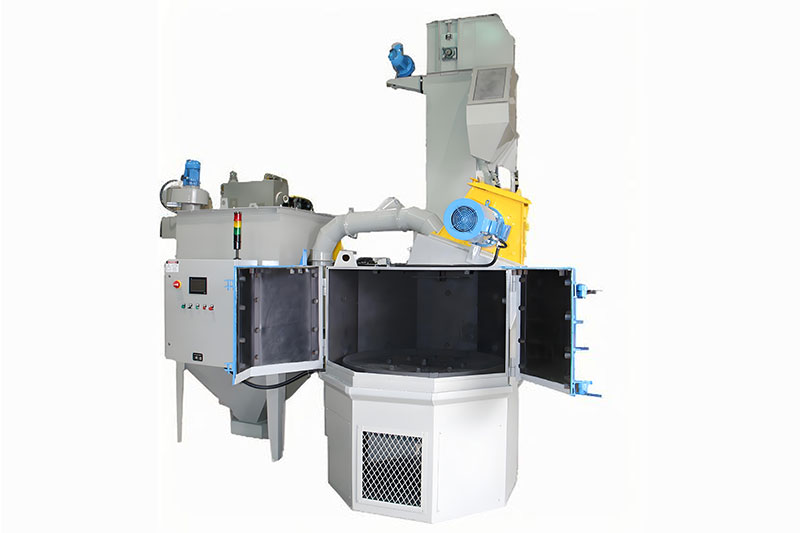
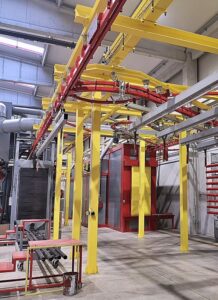
Matching shot blasting machine Size with workpiece dimensions is the foundational step to ensure comprehensive and efficient shot blasting. The core principle is to select a shot blasting machine whose chamber size, processing space, and conveying structure can fully accommodate the workpiece’s length, width, height, and weight. For small workpieces (e.g., screws, small gears, nuts with dimensions ≤100mm), compact tumblast shot blasting machines with a chamber volume of 0.1-0.5m³ are ideal—their rotating drum design enables workpieces to tumble fully, ensuring all surfaces are exposed to abrasive media. For medium-sized workpieces (e.g., auto brake discs, small castings with dimensions 100-500mm and weight ≤50kg), track-type shot blasting machines with adjustable conveyor widths are suitable, as they can stably transport workpieces through the blasting chamber. For large and heavy workpieces (e.g., steel beams, engine blocks with dimensions >500mm and weight >100kg), hook-type shot blasting machines with large chamber spaces and heavy-load lifting systems are necessary. Choosing an undersized shot blasting machine Size will lead to incomplete workpiece exposure, uneven cleaning, and even damage to the machine’s internal components; an oversized shot blasting machine Size will waste energy and increase operational costs. Therefore, accurately measuring workpiece dimensions and matching the corresponding shot blasting machine Size is critical for ensuring processing quality and economic efficiency.
How to select shot blasting machine based on workpiece material?
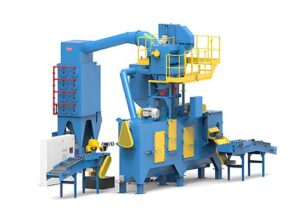
Selecting a shot blasting machine based on workpiece material is key to avoiding material damage and achieving desired surface quality. Different materials have varying hardness, toughness, and surface sensitivity, requiring targeted shot blasting machine configurations. For high-hardness materials (e.g., steel, cast iron), shot blasting machines equipped with high-power blast wheels (≥15kW) and wear-resistant components are preferred—they can generate sufficient abrasive impact force to remove rust, scale, and burrs effectively. For soft materials (e.g., aluminum, copper, plastic), low-power shot blasting machines (≤11kW) with gentle abrasive media (glass beads, ceramic beads) are suitable; their adjustable blasting intensity prevents workpiece deformation or surface scratches. For brittle materials (e.g., cast stone, precision ceramics), shot blasting machines with precise pressure control and uniform abrasive distribution systems are necessary to avoid workpiece cracking. Additionally, for workpieces requiring surface strengthening (e.g., automotive gears, spring steel), shot blasting machines with controllable abrasive velocity and peening intensity are ideal. Using a shot blasting machine unsuitable for workpiece material will not only fail to meet surface treatment requirements but also cause irreversible damage to the workpiece, resulting in increased scrap rates and production costs. Thus, fully understanding workpiece material properties is essential for selecting the right shot blasting machine.
How to achieve Production Matching between shot blasting machine and output demand?
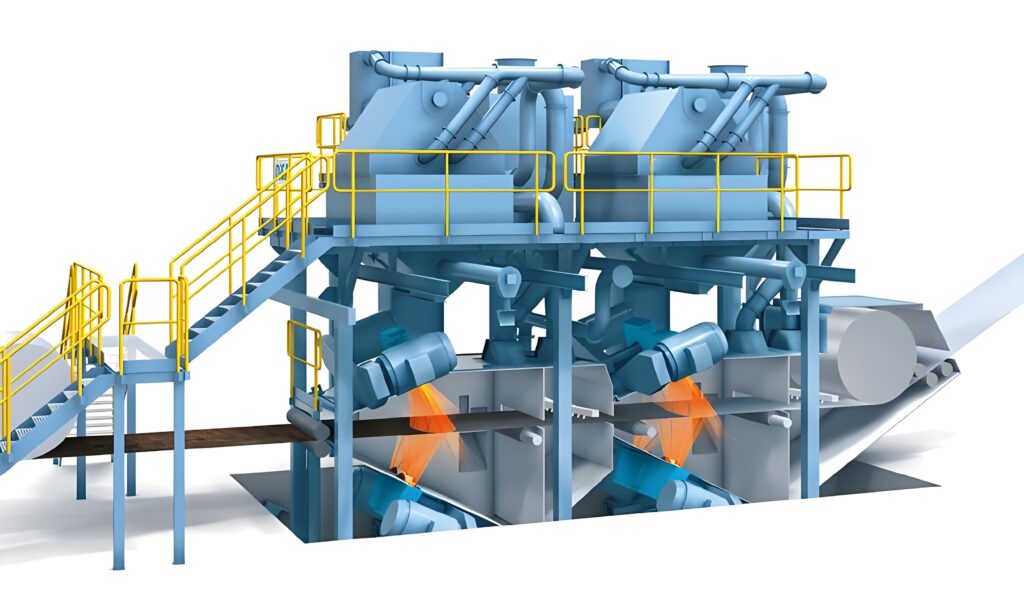
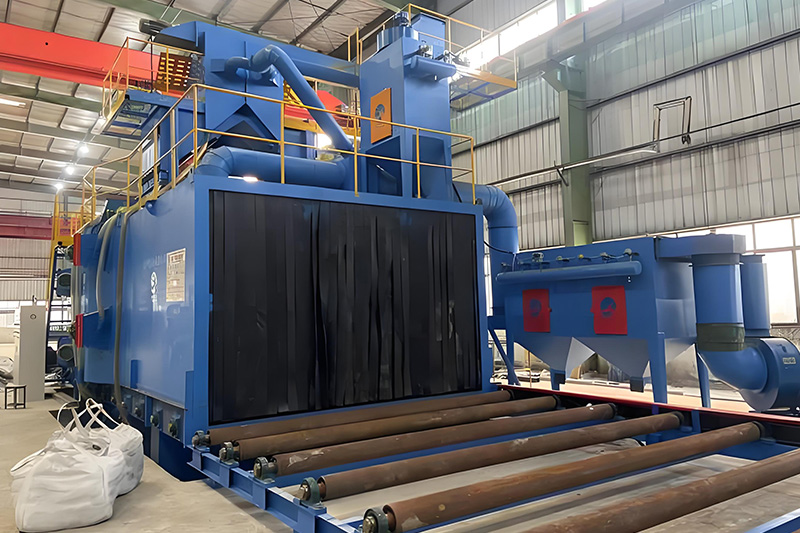
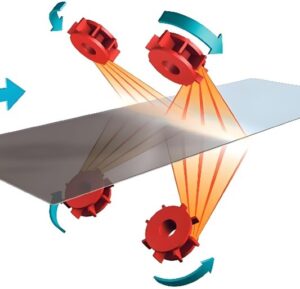
Achieving Production Matching between the shot blasting machine and production output demand is crucial to ensuring continuous and efficient production. Production Matching refers to aligning the shot blasting machine’s processing capacity (workpieces per hour or per batch) with the actual production volume. For small-batch production (output ≤500 workpieces/day), batch-type shot blasting machines (e.g., tumblast, batch hook-type) are appropriate—they offer flexible operation and easy parameter adjustment for different workpiece types. For medium-batch production (output 500-2000 workpieces/day), semi-automatic shot blasting machines with automatic loading/unloading systems can balance efficiency and flexibility. For large-batch and continuous production (output >2000 workpieces/day), fully automatic through-type shot blasting machines are the best choice—they can integrate with production lines, realizing continuous feeding, processing, and discharging without manual intervention, significantly improving production efficiency. When achieving Production Matching, it is also necessary to consider future production expansion, selecting a shot blasting machine with a certain capacity margin. If the shot blasting machine’s capacity is less than the production demand, it will become a production bottleneck; if it is excessively larger, it will cause energy waste and increase investment costs. Therefore, accurate calculation of production output and reasonable Production Matching are key to optimizing production efficiency and reducing operational costs.
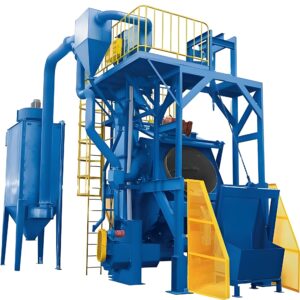
What comprehensive considerations supplement size, material, and production matching?
Beyond size, material, and Production Matching, several supplementary factors need to be considered to select the most suitable shot blasting machine. First, workpiece geometry: for complex-shaped workpieces (e.g., hollow parts, threaded components), shot blasting machines with multi-angle blast wheels and adjustable abrasive flow are needed to ensure no cleaning dead ends. Second, surface treatment requirements: workpieces requiring high surface roughness (for coating adhesion) need shot blasting machines with coarse abrasive media and high blasting intensity, while those requiring fine surface finish need fine abrasive media and precise intensity control. Third, environmental and safety requirements: choose shot blasting machines with efficient dust removal systems to meet environmental emission standards, and ensure the machine is equipped with safety interlocks (e.g., door sensors, emergency stops) to protect operators. Fourth, maintenance and after-sales service: select shot blasting machines with easily replaceable components and reliable after-sales support to reduce downtime. These supplementary factors, combined with size, material, and Production Matching, ensure the selected shot blasting machine not only meets basic processing needs but also adapts to the overall production environment and long-term operational requirements.
Conclusion
Match shot blasting machine with workpiece size, material, and production for optimal efficiency.
E-mail:[email protected]