
Improper sandblasting booth use causes flawed auto parts, ruining finish and triggering rework losses.
Master professional sandblasting booth operation tips to optimize blast system performance, ensure consistent automotive part surface quality and reduce machining defects.
Follow proven guidelines to boost precision and efficiency in auto part processing.
Optimize Blast System Parameter Settings for Automotive Component Standards
Automotive parts feature strict surface precision, roughness and uniformity requirements, making scientific blast system parameter settings the core of qualified sandblasting machining.
- Unlike ordinary industrial workpieces, auto parts including engine components, chassis parts and decorative accessories demand controlled material removal, zero micro-deformation and uniform matte finish.
- Operators must adjust air pressure, abrasive particle size and blasting distance according to part material characteristics. Thin aluminum auto parts require low-pressure blast system operation to avoid bending and surface damage, while thick steel structural parts need moderate pressure for thorough rust and oxide layer removal.
- Fixed blind settings lead to uneven surface texture, excessive abrasion or incomplete cleaning. Reasonable parameter matching stabilizes sandblasting booth output, ensures batch consistency of automotive parts and effectively reduces product defect rates in mass machining production.
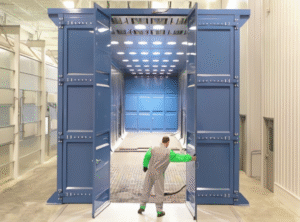
Standardize Sandblasting Booth Operation and Workpiece Placement
Standardized operation and reasonable workpiece placement directly determine the overall machining quality of automotive parts in a sandblasting booth.
- Irregular placement such as over-stacking, overlapping and shielding creates blasting dead zones, resulting in inconsistent surface treatment and unqualified finished parts. Operators need to fix and classify automotive parts by size and structure, ensuring all surfaces fully face the blast system’s abrasive coverage range.
- Meanwhile, maintaining a standard blasting angle and uniform moving speed avoids local over-blasting and surface scratches. Strict operational standardization eliminates most manual-induced quality issues. The following data shows placement standardization impacts on machining quality:
| Operation Status | Parts Qualification Rate | Rework Ratio |
| Irregular Placement & Operation | 84% | 16% |
| Standardized Booth Operation | 98.5% | 1.5% |
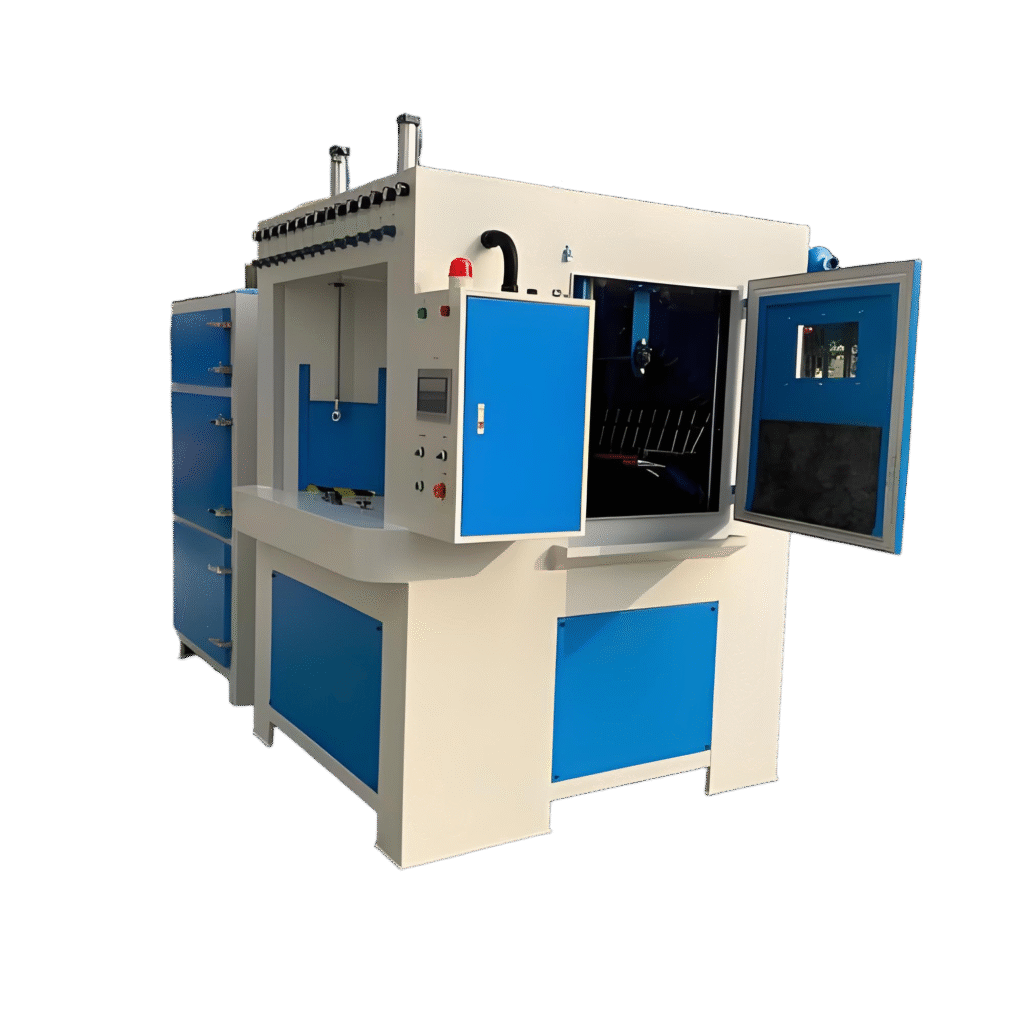
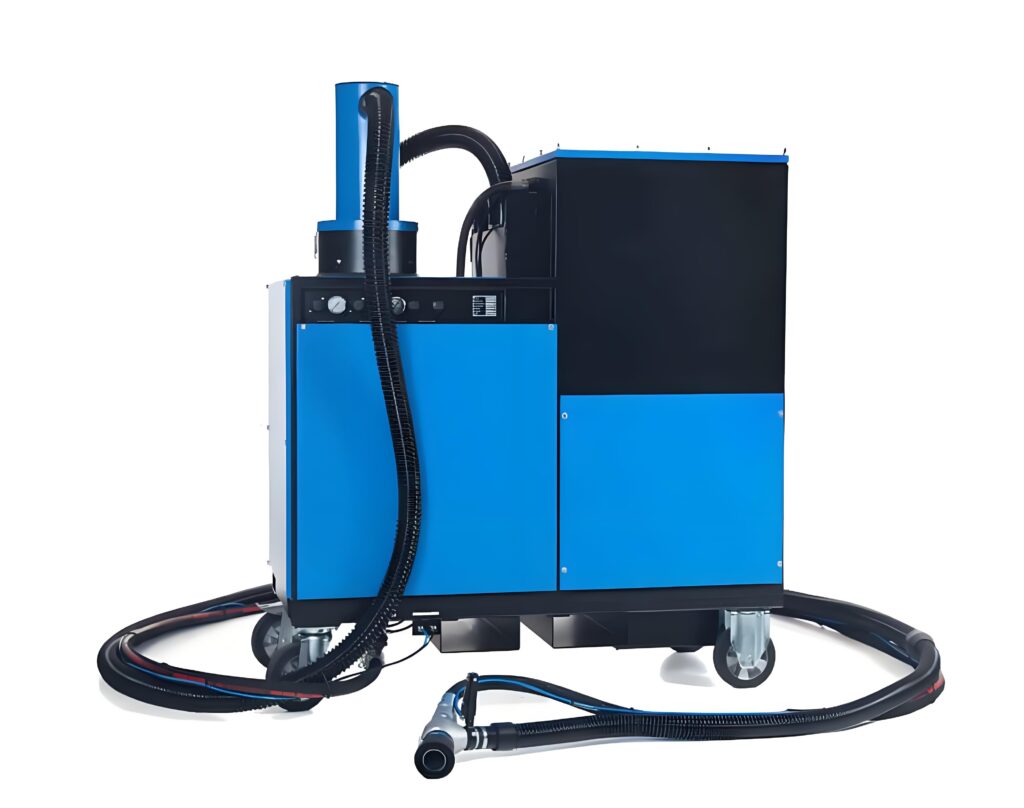
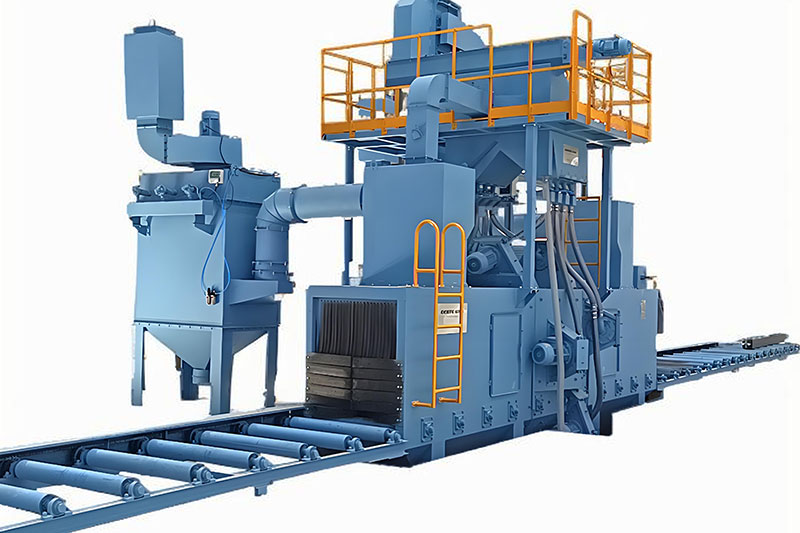
Chong Jen Machinery provides targeted sandblasting booth operation guidance and customized blast system configuration for automotive parts machining, helping factories stabilize product quality and improve production efficiency.
Daily Maintenance to Sustain Long-Term Booth Machining Stability
Regular daily maintenance is essential to keep the sandblasting booth and supporting blast system running stably for long-term automotive parts machining.
- Long-term operation leads to accumulated dust, residual abrasives and pipeline blockage, which weaken blast system pressure and reduce cleaning uniformity. Operators need to clean booth interiors, replace filter elements and inspect nozzle status daily to ensure unobstructed abrasive circulation and stable air pressure.
- Timely maintenance avoids pressure fluctuation and dead-angle blasting problems, maintaining consistent surface treatment standards for automotive parts. Regular inspection also reduces equipment failure rates, extends sandblasting booth service life, and lowers long-term production and maintenance costs for auto part processing factories.
Conclusion
Standardize parameters, operation and maintenance for optimal booth machining results.
Contact Chong Jen Machinery
For high-performance sandblasting booth and customized blast system solutions for automotive machining,
consult Chong Jen Machinery:[email protected].
 English
  Russian
  Spanish
  Portuguese
  French
  Indonesian
  Thai
Thai