
Will Poor Project Support Delay Your Roller Conveyor Machine Installation?
Buying a Roller Conveyor Machine without implementation support can create hidden risks: incorrect dimensions, difficult site installation, production-line conflicts, delayed commissioning, and untrained operators. When a Supplier provides only hardware, your team may discover too late that the equipment cannot connect with existing molds, assembly stations, or Shot Blasting Machine processes, causing costly rework and downtime.
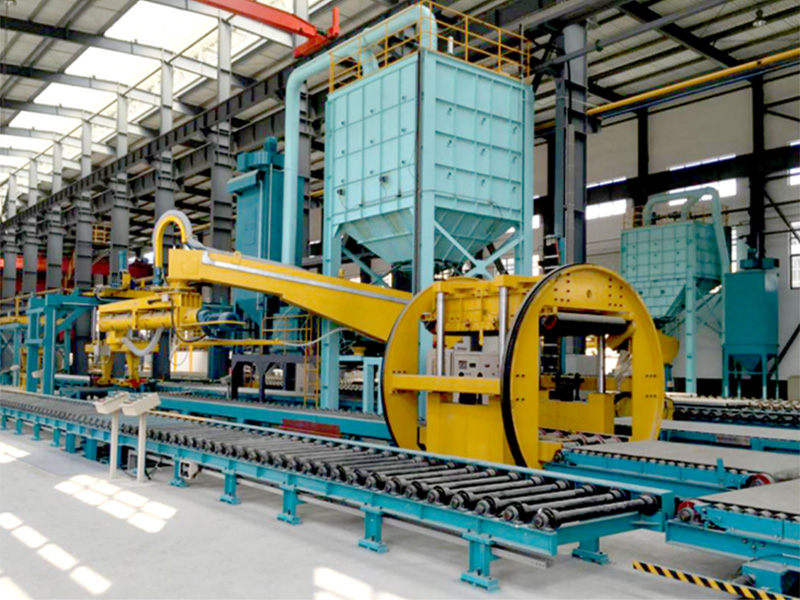
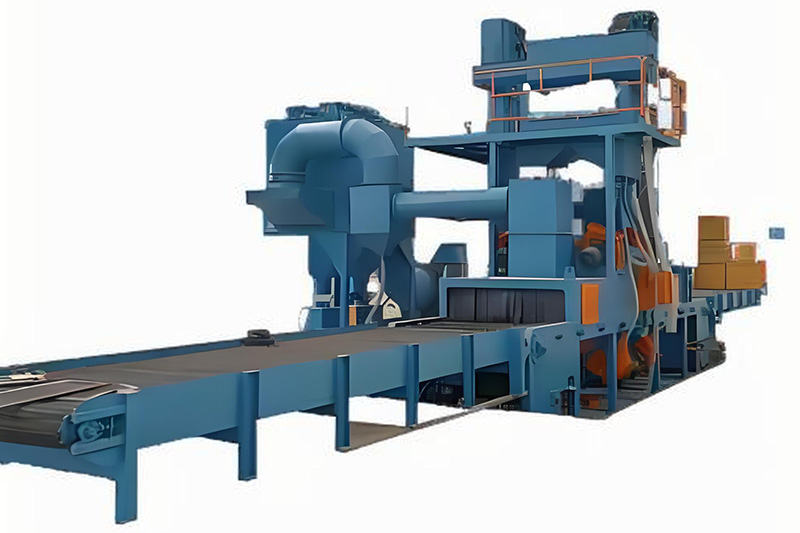
Our company supports Roller Conveyor Machine projects through factory site surveys, Customizable OEM and ODM engineering, production-line integration, commissioning, training, spare parts, and after-sales service. As an experienced Manufacturer and Supplier, we provide a complete turnkey solution for Pass-Through Shot Blast Machine material-handling systems rather than selling isolated equipment.
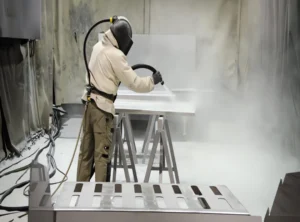
Full-Cycle Roller Conveyor Services from Planning to Maintenance
A successful project requires more than selecting a machine model. Conveyor length, roller spacing, loading method, workpiece weight, transfer height, shot blasting sequence, and factory layout must operate as one coordinated system. Our full-cycle service connects commercial planning with engineering execution, helping customers control installation risk and achieve stable production sooner.
Factory Site Surveys Before Equipment Selection
Our technical team reviews the actual production environment before recommending equipment. This assessment identifies constraints that may not appear in drawings or product specifications.
- Available floor space, ceiling height, access routes, and foundation conditions
- Workpiece dimensions, weight range, loading direction, and transfer frequency
- Existing molds, assembly lines, cranes, robots, and material-flow routes
- Electrical supply, compressed air, ventilation, dust collection, and safety requirements
- Connection points with a Shot Blasting Machine or Pass-Through Shot Blast Machine
The survey findings become a practical engineering reference for layout, capacity, safety clearances, and installation planning. This approach reduces the risk of receiving equipment that cannot enter the workshop or fit the prepared foundation.
Production Line Integration and Adaptation
Every factory has different upstream and downstream conditions. A Customizable Roller Conveyor Machine must match the existing production rhythm rather than operate as an independent unit. We review how parts arrive, how they are positioned, how they pass through blasting, and how they leave the system for inspection, painting, or assembly.
| Integration item | Project consideration | Service response |
| Workpiece handling | Weight, dimensions, orientation, and loading method | Customized roller spacing, width, and support design |
| Line connection | Existing molds, stations, cranes, and transfer equipment | Layout adaptation and interface coordination |
| Blasting process | Required exposure time and surface-treatment sequence | Speed, height, and pass-through parameters adjusted |
| Control system | Signals, sensors, interlocks, and emergency stops | Electrical and operational integration support |
Customized Parameters for Stable Material Flow
Depending on the application, we can adjust roller diameter, center distance, conveyor width, conveying speed, drive configuration, protective components, and loading height. For projects serving a Pass-Through Shot Blast Machine, the design can also consider abrasive exposure, wear protection, dust conditions, and safe access for inspection.
- Confirm workpiece and production data.
- Map the existing line and identify connection points.
- Prepare a preliminary layout and technical specification.
- Review operating risks and required safety interfaces.
- Finalize the Customizable design and implementation schedule.
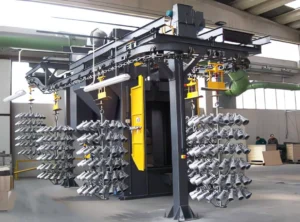
On-Site Pre-Commissioning and Project Execution
Equipment performance depends on correct installation, alignment, wiring, and operating settings. During project execution, our service team supports installation checks and on-site pre-commissioning where required. Before formal production, we verify conveyor movement, sensor response, drive operation, emergency functions, workpiece transfer, and communication with connected equipment.
Pre-commissioning checkpoints
- Confirm foundation, anchor points, leveling, and mechanical alignment
- Inspect roller rotation, chain or drive operation, and protective guards
- Test no-load and loaded conveying conditions
- Check interlocks with the Shot Blasting Machine and related equipment
- Record abnormal noise, vibration, transfer errors, or access problems
These checks help identify installation issues before they become production interruptions. They also provide the customer with a documented basis for acceptance and future maintenance.
Delivery Preparation, Packing Guidance, and Technical Support
Correct delivery preparation protects the project schedule. We provide packing guidance for equipment modules, identify lifting points, prepare installation references, and coordinate shipment information with the customer. For complex projects, pre-assembly instructions and component identification can simplify unloading and on-site installation.
After delivery, our technical team provides remote technical support for installation questions, wiring verification, parameter adjustment, and troubleshooting. When physical service is not immediately available, structured remote debugging helps operators restore production efficiently.
| Service stage | Customer deliverable | Project benefit |
| Pre-sales | Survey report, layout, technical proposal | Lower selection and compatibility risk |
| Execution | Installation guidance and commissioning records | Faster startup and clearer acceptance |
| Delivery | Packing, lifting, and installation instructions | Reduced handling and assembly problems |
| After-sales | Training, spare parts, and remote support | More reliable long-term operation |
Operator Training, Spare Parts, and Long-Term Maintenance
Reliable operation depends on trained personnel and planned maintenance. We provide operator training covering startup and shutdown procedures, safe loading, daily inspection, alarm response, cleaning, lubrication, and basic troubleshooting. Training can be arranged during commissioning or delivered through remote technical sessions.
Spare parts support is organized according to operating frequency, wear conditions, and equipment configuration. Recommended parts may include rollers, bearings, chains, seals, sensors, drive components, and protective elements. A documented spare-parts list helps customers control inventory and reduce unexpected downtime.
- Routine inspection schedules and lubrication guidance
- Wear-part identification and replacement recommendations
- Remote diagnosis for common mechanical and electrical faults
- Maintenance planning based on production volume
- Technical updates for future line expansion or modification
Turnkey Project Services Instead of Hardware-Only Supply
Our role as a Manufacturer and Supplier extends beyond equipment production. We coordinate technical communication, design adaptation, project execution, delivery preparation, commissioning, training, spare parts, and long-term support. This full-chain approach helps prevent the common outcome of purchasing a machine that cannot be installed, connected, or operated effectively.
Contact us with your factory layout, workpiece data, and production targets. Request a Customizable OEM or ODM proposal for a complete Roller Conveyor Machine project integrated with your Shot Blasting Machine or Pass-Through Shot Blast Machine.
 English
  Russian
  Spanish
  Portuguese
  French
  Indonesian
  Thai
Thai