
Could an Unvetted Shot Blasting Machine Manufacturer Turn Your Order into a Costly Risk?
Ordering from an unverified Manufacturer can create delayed delivery, incomplete equipment, unclear warranty coverage, unavailable wear parts, and lost technical support. If equipment parameters are under-specified, the delivered Wheelblast Equipment may fail to meet production requirements. Pre-order due diligence and precise contract controls help prevent financial losses before the purchase order becomes difficult to reverse.
The safest selection process verifies factory capability, delivery capacity, technical specifications, warranty obligations, spare-part costs, overseas support, and order fulfillment guarantees. Our company provides documented, Customizable OEM and ODM Shot Blasting Machine solutions with clear acceptance standards, service commitments, and after-sales fallback arrangements.
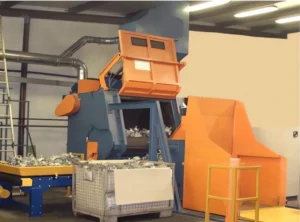
Complete Pre-Order Risk Due Diligence
Before evaluating price, confirm that the Supplier can legally, technically, and financially fulfill the project. A professional Manufacturer should provide traceable company information, production evidence, customer references, technical documents, and a clear communication structure. This assessment should cover the equipment itself and the Supplier’s ability to support it throughout its operating life.
Pre-order verification checklist
- Confirm the legal entity signing the contract and issuing the commercial invoice.
- Verify the manufacturing address, production history, export experience, and primary product range.
- Request factory photographs, inspection records, reference projects, and customer contacts where permitted.
- Identify which components are manufactured internally and which are sourced from third parties.
- Confirm responsibility for engineering, installation, commissioning, training, and warranty service.
- Check whether the Supplier has stable access to critical motors, controls, bearings, blades, liners, and seals.
- Review the Supplier’s financial and operational capacity for completing the order on schedule.
Do not rely solely on certificates or marketing materials. Compare the proposed Shot Blasting Machine with the actual workshop capability. If the Supplier claims to offer advanced Wheelblast Equipment, ask for wheel balancing records, abrasive flow data, wear-part specifications, safety-test documentation, and production results from comparable applications.
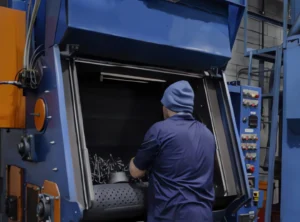
Control Delivery Timeline and Fulfillment Risk
Delivery timeline risk management begins with a detailed production schedule rather than a single estimated shipment date. The contract should identify the date for drawing approval, material procurement, fabrication, assembly, factory testing, packing, shipment, installation, and commissioning. This makes delays visible early and prevents a Supplier from treating the entire process as an undefined lead time.
- Approve the technical specification and layout by a documented deadline.
- Set milestones for raw material procurement, fabrication, assembly, and internal inspection.
- Define the equipment factory acceptance test date and required test records.
- Separate the ready-to-ship date from the estimated port arrival date.
- Include installation, commissioning, operator training, and final acceptance milestones.
- Require progress updates supported by photographs, inspection reports, or video verification.
- Establish a formal escalation process if a milestone is missed.
| Project stage | Evidence to request | Risk controlled |
| Design approval | Signed drawings, specifications, and interface list | Specification disputes and redesign delays |
| Manufacturing | Progress reports, material records, and production photographs | Hidden schedule slippage |
| Factory acceptance | Test results, inspection checklist, and corrective-action record | Shipment of nonconforming equipment |
| Shipment | Packing list, shipping documents, and dispatch confirmation | Missing components and logistics disputes |
| Commissioning | Start-up report and signed acceptance certificate | Unresolved installation and performance issues |
Compensation for late delivery
Order fulfillment guarantees should include commercially meaningful remedies for unjustified delay. The purchase contract can specify a grace period, daily or weekly liquidated damages, a maximum compensation limit, and the buyer’s right to cancel if the delay exceeds an agreed threshold. Exclusions should be clearly defined, including documented force majeure events and delays caused by buyer-approved changes.
Eliminate Ambiguity in Equipment Parameters
Under-specified equipment parameters are a major source of procurement failure. A general description such as high capacity or suitable for heavy castings does not establish whether the machine can meet your production and surface-treatment requirements. The technical schedule should connect every important parameter to the workpiece, process target, and acceptance method.
Parameters to define before ordering
- Workpiece dimensions, maximum weight, material, shape, and loading method
- Required cleaning standard, surface profile, and permissible residual contamination
- Production quantity per hour, batch size, cycle time, and operating shifts
- Wheel power, wheel quantity, abrasive type, abrasive size, and projection rate
- Chamber dimensions, conveyor speed, hanger load, table capacity, or tumble capacity
- Dust collection capacity, filtration efficiency, noise limits, and emission requirements
- Electrical standards, voltage, frequency, control-system language, and factory interfaces
- Wear-part materials, expected service intervals, and recommended spare-part quantities
For Customizable OEM and ODM equipment, approved drawings should show all critical interfaces, including foundations, duct connections, conveyors, power supply, compressed air, access clearances, and material flow. Include measurable performance requirements for throughput, cleaning results, vibration, dust behavior, and safety functions. These details make final acceptance objective instead of dependent on personal judgment.
Review Warranty, Service, and Communication Protection
Review of contract warranty clauses should cover more than the warranty duration. Specify when the warranty begins, which components are included, how defects are reported, who pays travel and replacement costs, and how quickly the Supplier must respond. Define whether the warranty covers manufacturing defects, premature wear caused by incorrect material selection, control failures, leakage, abnormal vibration, and failure to achieve agreed performance.
One significant risk is losing contact with the Supplier after purchase. Protect against this by listing multiple authorized contacts, escalation managers, service email addresses, emergency telephone numbers, and the legal service entity. Require that technical documents, software backups, wiring diagrams, parameter files, and maintenance instructions be delivered before final payment or final acceptance.
After-sales fallback agreements
- Set a maximum initial response time for urgent technical failures.
- Require remote technical support from overseas through video diagnosis, messaging, and secure document exchange.
- Define the conditions for sending replacement parts or dispatching field technicians.
- Identify an authorized regional service center or backup engineering partner.
- Specify procedures if the original Supplier ceases operations or stops supporting the model.
- Require continued access to drawings, software, manuals, and spare-part codes.
- Agree on escalation steps for unresolved warranty and performance claims.
Calculate Long-Term Wear-Part and Support Costs
The purchase price does not represent the full cost of owning a Shot Blasting Machine. Long-term procurement costs for wear-resistant parts can exceed the initial price difference between competing offers. Compare blade material, liner thickness, expected replacement frequency, abrasive consumption, labor requirements, shipping costs, and planned downtime.
| Cost category | Questions for supplier comparison | Procurement objective |
| Wear parts | What are the materials, prices, lead times, and service intervals? | Predictable maintenance budgeting |
| Energy and abrasive | What are the rated power and expected media consumption? | Lower recurring operating costs |
| Downtime | How long do routine inspections and replacements take? | Protect production availability |
| Technical service | Are remote and field-support charges defined? | Avoid unexpected after-sales expenses |
| Spare inventory | Which critical parts should be stocked locally? | Reduce failure-recovery time |
- Request a complete recommended spare-parts list for two years of operation.
- Compare quoted prices with expected replacement frequency.
- Calculate shipping and customs costs for emergency parts.
- Estimate labor and production losses during routine maintenance.
- Include a local inventory plan for blades, liners, seals, bearings, and controls.
- Use the total cost of ownership when comparing Manufacturer quotations.
Conclusion
Vet a Shot Blasting Machine Manufacturer through documented capability, precise specifications, delivery safeguards, warranty terms, service contacts, and lifetime wear-part costs. Contact our team for a risk review, contract checklist, and Customizable OEM or ODM Wheelblast Equipment proposal before placing your order.
 English
  Russian
  Spanish
  Portuguese
  French
  Indonesian
  Thai
Thai