
Why Unprofessional Maintenance Shortens Wheel Blast Machines Service Life & Ruins Finishing Quality
Most industrial factories skip standardized upkeep, triggering blade abrasion, unbalanced wheel blast pressure, dust system blockage and inconsistent surface finishing. These recurring faults raise rework rates, halt production frequently, and greatly increase long-term equipment replacement costs. Scientific standardized maintenance thoroughly solves these industrial pain points and stabilizes full-cycle operation.
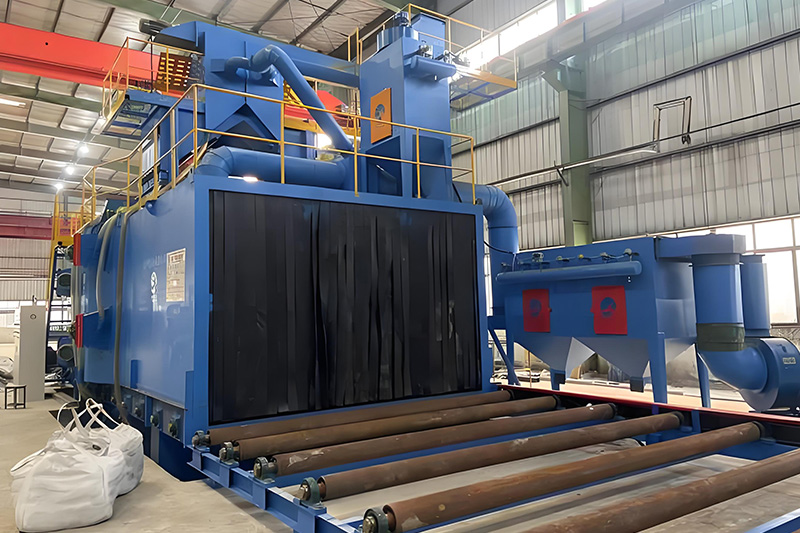
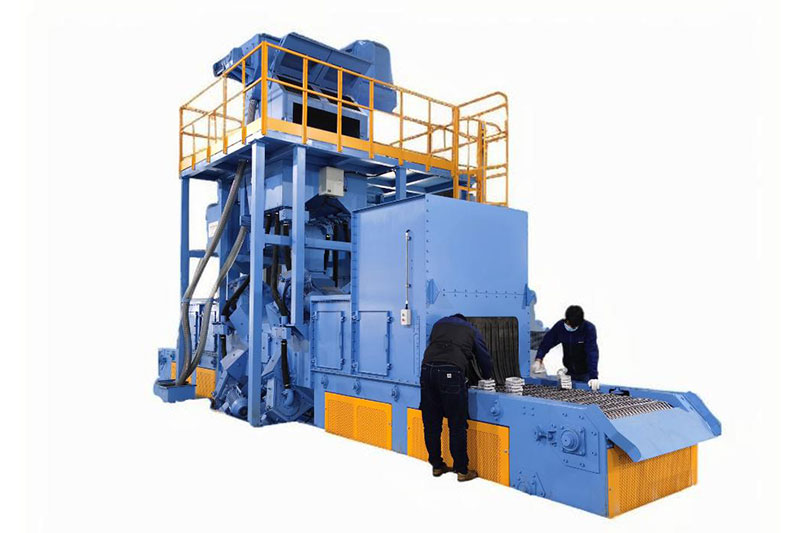
Professional Wheel Blast Machines maintenance standardizes daily inspection, abrasive management and component replacement. As a trusted Manufacturer and Supplier, Chong Jen Machinery delivers fully customizable maintenance protocols for all wheel blast equipment.
Below we break down actionable technical guidelines, common errors and parameter standards to help you maintain stable wheel blast machine performance long-term.
Daily Preventive Maintenance: Core Foundation of Stable Wheel Blast Operation
Preventive daily maintenance is the most cost-effective method to avoid sudden failure of Wheel Blast Machines. Most equipment breakdowns are not caused by quality defects, but by accumulated minor operational negligence. Professional factory maintenance teams focus on three fixed daily inspection modules to guarantee stable wheel blast output every shift.
- First, inspect La roue de projection assembly integrity. Operators must check blade wear, impeller balance and control cage alignment before startup. Worn blades cause uneven abrasive acceleration, resulting in partial over-blasting or incomplete cleaning on workpiece surfaces. Unbalanced wheel components also produce severe mechanical vibration, loosening internal bolts and accelerating liner wear.
- Second, check sealing and negative pressure stability. All cabin doors, pipeline interfaces and dust hood seals must remain intact. Air leakage directly reduces dust removal efficiency, causes abrasive overflow and pollutes the workshop, breaking the closed-loop wheel blast working environment.
- Third, clean residual abrasive dust and screen broken particles. Timely cleaning avoids pipeline blockage and ensures consistent abrasive flow, maintaining standardized wheel blast finishing uniformity for mass production.
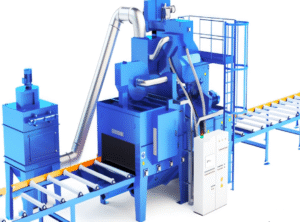
Weekly Systematic Calibration: Ensure Accurate Wheel Blast Technical Parameters
Long-term continuous operation inevitably causes parameter drift, which slowly degrades Wheel Blast Equipment processing precision. Daily inspection only solves surface faults, while weekly systematic calibration guarantees long-term parameter accuracy and operational stability.
Core calibration items include rotating speed adjustment, abrasive flow calibration and dust removal wind volume testing. Different workpieces require matched wheel blast speed and impact force; fixed parameters cannot adapt to changing production batches. Regular calibration corrects speed deviation, ensuring uniform abrasive kinetic energy and consistent surface roughness.
In addition, transmission system lubrication is mandatory every week. Bearings and driving shafts running dry generate excessive friction, leading to component heating, noise and power attenuation. Standard lubrication reduces mechanical loss, lowers failure probability and extends equipment service life significantly.
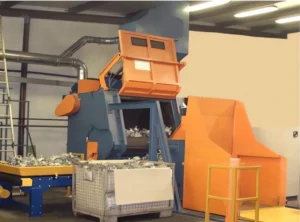
Monthly Overhaul & Consumable Replacement: Eliminate Hidden Deep Faults
Daily and weekly maintenance targets superficial operational stability, while monthly overhaul solves hidden deep-level faults for Wheel Blast Machines. As a professional Manufacturer and Supplier, we recommend fixed monthly deep maintenance for all industrial wheel blast production lines.
- Key overhaul contents include liner thickness detection, full pipeline dredging, motor load testing and electrical circuit inspection. Inner protective liners bear long-term abrasive scouring; excessive thinning will cause equipment shell wear and safety risks. Timely replacement of aging liners protects the main equipment structure.
- Consumable parts including filter cartridges, sealing strips and wear-resistant nozzles must be replaced regularly. Many factories delay replacement to save short-term costs, resulting in poor dust removal effect, pressure loss and declining wheel blast quality, which increases overall production costs instead.
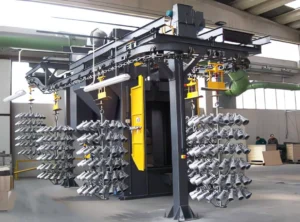
Technical Parameter Comparison: Maintained vs Neglected Wheel Blast Machines
The following professional data table clearly shows the performance gap between standardized maintenance and neglected equipment operation, providing intuitive reference for factory equipment management:
| Performance Index | Maintenance Irrégulière | Standard Professional Maintenance |
| Workpiece Qualification Rate | 82% – 87% | 98%+ |
| Weekly Downtime Duration | 8–12 hours | 1–2 hours |
| Core Component Service Life | 12–18 months | 36–48 months |
Top 3 Common Maintenance Mistakes Factory Operators Must Avoid
Overloading Continuous Operation
Blind pursuit of production output forces Wheel Blast Machines into long-term overloaded operation. Sustained high-speed rotation causes blade metal fatigue, motor overheating and parameter drift. Although short-term output increases, it leads to frequent failures and shortened equipment lifespan in the long run, seriously disrupting production schedules.
Mixing Unscreened Abrasives
Reusing mixed, broken and dust-rich abrasives is a common wrong operation. Impure abrasives reduce wheel blast impact force, cause uneven finishing, and accelerate internal component wear. Only standardized screening and regular abrasive replacement can maintain stable wheel blast processing performance.
Ignoring Dust System Maintenance
Most users only focus on the blasting host but neglect the dust removal system. Blocked filter cartridges and accumulated pipeline dust cause negative pressure insufficiency, dust overflow and unqualified workshop environment, indirectly reducing wheel blast efficiency and causing potential safety hazards.
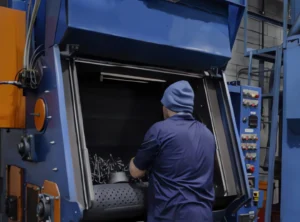
Customizable Maintenance Solutions for Different Production Scenarios
Universal maintenance modes cannot meet differentiated industrial demands. Small-batch intermittent production, large-scale assembly line operation and high-precision workpiece processing require targeted maintenance cycles and inspection standards.
Chong Jen Machinery, as an experienced Manufacturer and Supplier, provides customizable wheel blast maintenance plans based on customer production frequency, workpiece materials and equipment models. Our tailored technical solutions help each factory achieve the best balance between operational stability, maintenance cost and production efficiency.
Standard maintenance stabilizes wheel blast quality, cuts downtime and reduces long-term costs. Contact us for professional equipment inspection and customizable technical support now.
 French
  English
  Russian
  Spanish
  Portuguese
  Indonesian
  Thai
Thai