
Mismatched shot blasting machine with workpiece causes inefficiency and damage. This guide helps select via size, material, and production matching.
This guide details how to choose a suitable shot blasting machine by matching workpiece size, material, and production demand, ensuring optimal processing efficiency and quality.
Explore below key matching criteria to find the perfect shot blasting machine for your workpieces.
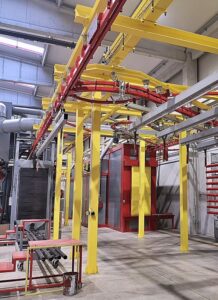
How to match shot blasting machine Size with workpiece dimensions?
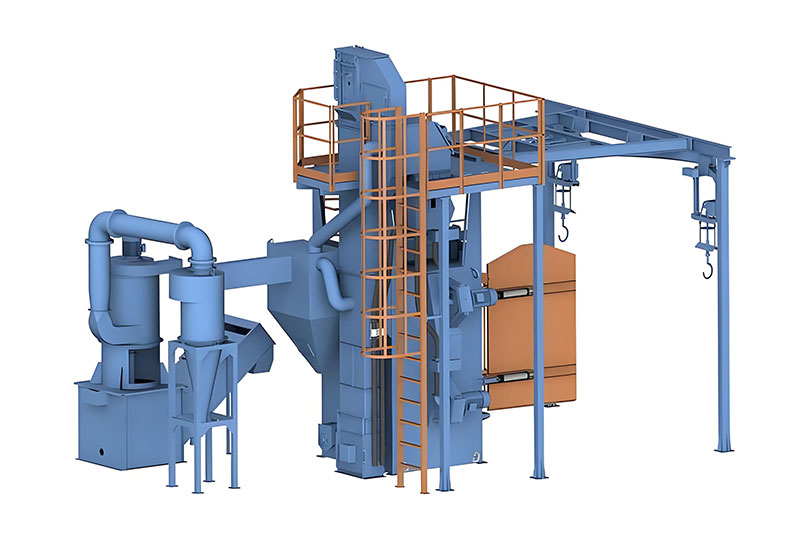
Matching shot blasting machine Size with workpiece dimensions is the foundational step to ensure comprehensive and efficient shot blasting. The core principle is to select a shot blasting machine whose chamber size, processing space, and conveying structure can fully accommodate the workpiece’s length, width, height, and weight. For small workpieces (e.g., screws, small gears, nuts with dimensions ≤100mm), compact tumblast shot blasting machines with a chamber volume of 0.1-0.5m³ are ideal—their rotating drum design enables workpieces to tumble fully, ensuring all surfaces are exposed to abrasive media. For medium-sized workpieces (e.g., auto brake discs, small castings with dimensions 100-500mm and weight ≤50kg), track-type shot blasting machines with adjustable conveyor widths are suitable, as they can stably transport workpieces through the blasting chamber. For large and heavy workpieces (e.g., steel beams, engine blocks with dimensions >500mm and weight >100kg), hook-type shot blasting machines with large chamber spaces and heavy-load lifting systems are necessary. Choosing an undersized shot blasting machine Size will lead to incomplete workpiece exposure, uneven cleaning, and even damage to the machine’s internal components; an oversized shot blasting machine Size will waste energy and increase operational costs. Therefore, accurately measuring workpiece dimensions and matching the corresponding shot blasting machine Size is critical for ensuring processing quality and economic efficiency.
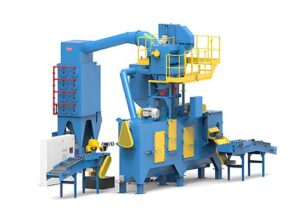
How to select shot blasting machine based on workpiece material?
Selecting a shot blasting machine based on workpiece material is key to avoiding material damage and achieving desired surface quality. Different materials have varying hardness, toughness, and surface sensitivity, requiring targeted shot blasting machine configurations. For high-hardness materials (e.g., steel, cast iron), shot blasting machines equipped with high-power blast wheels (≥15kW) and wear-resistant components are preferred—they can generate sufficient abrasive impact force to remove rust, scale, and burrs effectively. For soft materials (e.g., aluminum, copper, plastic), low-power shot blasting machines (≤11kW) with gentle abrasive media (glass beads, ceramic beads) are suitable; their adjustable blasting intensity prevents workpiece deformation or surface scratches. For brittle materials (e.g., cast stone, precision ceramics), shot blasting machines with precise pressure control and uniform abrasive distribution systems are necessary to avoid workpiece cracking. Additionally, for workpieces requiring surface strengthening (e.g., automotive gears, spring steel), shot blasting machines with controllable abrasive velocity and peening intensity are ideal. Using a shot blasting machine unsuitable for workpiece material will not only fail to meet surface treatment requirements but also cause irreversible damage to the workpiece, resulting in increased scrap rates and production costs. Thus, fully understanding workpiece material properties is essential for selecting the right shot blasting machine.
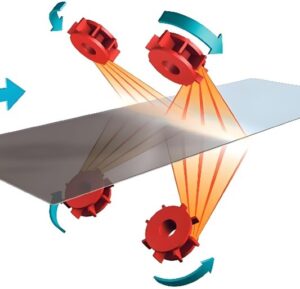
How to achieve Production Matching between shot blasting machine and output demand?
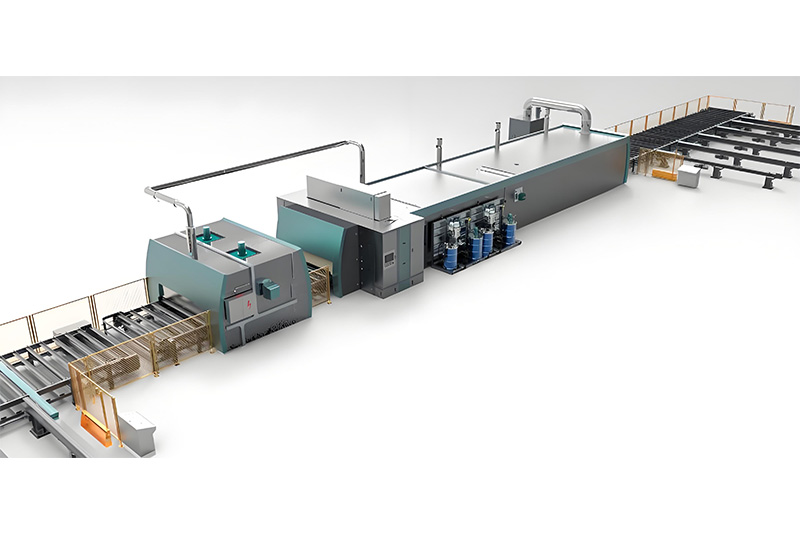
Achieving Production Matching between the shot blasting machine and production output demand is crucial to ensuring continuous and efficient production. Production Matching refers to aligning the shot blasting machine’s processing capacity (workpieces per hour or per batch) with the actual production volume. For small-batch production (output ≤500 workpieces/day), batch-type shot blasting machines (e.g., tumblast, batch hook-type) are appropriate—they offer flexible operation and easy parameter adjustment for different workpiece types. For medium-batch production (output 500-2000 workpieces/day), semi-automatic shot blasting machines with automatic loading/unloading systems can balance efficiency and flexibility. For large-batch and continuous production (output >2000 workpieces/day), machines de sablage à passage entièrement automatiques sont le meilleur choix - elles peuvent s'intégrer aux lignes de production, réalisant un chargement, un traitement et un déchargement continus sans intervention manuelle, améliorant ainsi considérablement l'efficacité de production. Lors de l'atteinte de l'adéquation de production, il est également nécessaire de considérer l'expansion future de la production, en choisissant une machine de sablage avec une certaine marge de capacité. Si la capacité de la machine de sablage est inférieure à la demande de production, elle deviendra un goulot d'étranglement de production ; si elle est excessivement plus grande, elle entraînera un gaspillage d'énergie et augmentera les coûts d'investissement. Par conséquent, un calcul précis de la production et une adéquation de production raisonnable sont essentiels pour optimiser l'efficacité de production et réduire les coûts opérationnels.
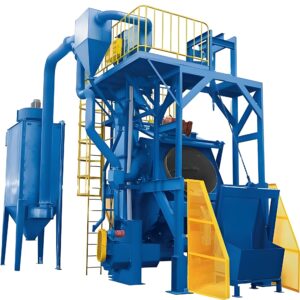
Quelles considérations globales complètent la taille, le matériau et l'adéquation de production ?
Au-delà de la taille, du matériau et de l'adéquation de production, plusieurs facteurs supplémentaires doivent être pris en compte pour sélectionner la machine de sablage la plus adaptée. Premièrement, la géométrie de la pièce: pour les pièces à forme complexe (par exemple, les pièces creuses, les composants filetés), des machines de sablage avec des roues de projection multi-angle et un flux d'abrasif ajustable sont nécessaires pour garantir qu'il n'y ait pas de zones de nettoyage négligées. Deuxièmement, les exigences de traitement de surface: les pièces nécessitant une rugosité de surface élevée (pour l'adhérence des revêtements) ont besoin de machines de sablage avec des médias abrasifs grossiers et une haute intensité de projection, tandis que celles nécessitant une finition de surface fine ont besoin de médias abrasifs fins et d'un contrôle précis de l'intensité. Troisièmement, les exigences environnementales et de sécurité: choisir des machines de sablage avec des systèmes de dépoussiérage efficaces pour répondre aux normes d'émission environnementale, et s'assurer que la machine est équipée de dispositifs de sécurité (par exemple, capteurs de porte, arrêts d'urgence) pour protéger les opérateurs. Quatrièmement, la maintenance et le service après-vente: sélectionner des machines de sablage avec des composants facilement remplaçables et un soutien après-vente fiable pour réduire le temps d'arrêt. Ces facteurs supplémentaires, combinés à la taille, au matériau et à l'adéquation de production, garantissent que la machine de sablage choisie répond non seulement aux besoins de traitement de base mais s'adapte également à l'environnement de production global et aux exigences opérationnelles à long terme.
Conclusion
Associez la machine de sablage à la taille de la pièce, au matériau et à la production pour une efficacité optimale.
E-mail :[email protected]
 French
  English
  Russian
  Spanish
  Portuguese
  Indonesian
  Thai
Thai