
Open sand blasting causes heavy pollution and safety hazards; sand blasting room offers a standardized solution.
This article analyzes the definition, core structure and industrial applications of sand blasting room (sand blasting booth/blast booth), helping you fully understand this professional surface treatment facility.
Read on to explore the structure and industrial applications of sand blasting room.
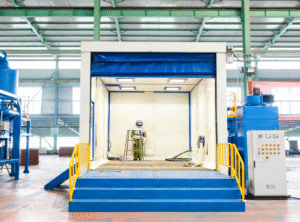
What Is the Core Definition and Structure of a Sand Blasting Room?
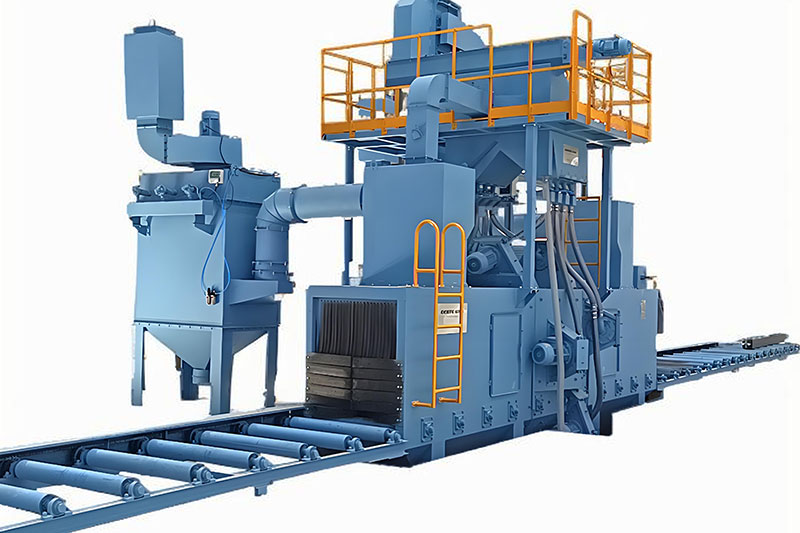
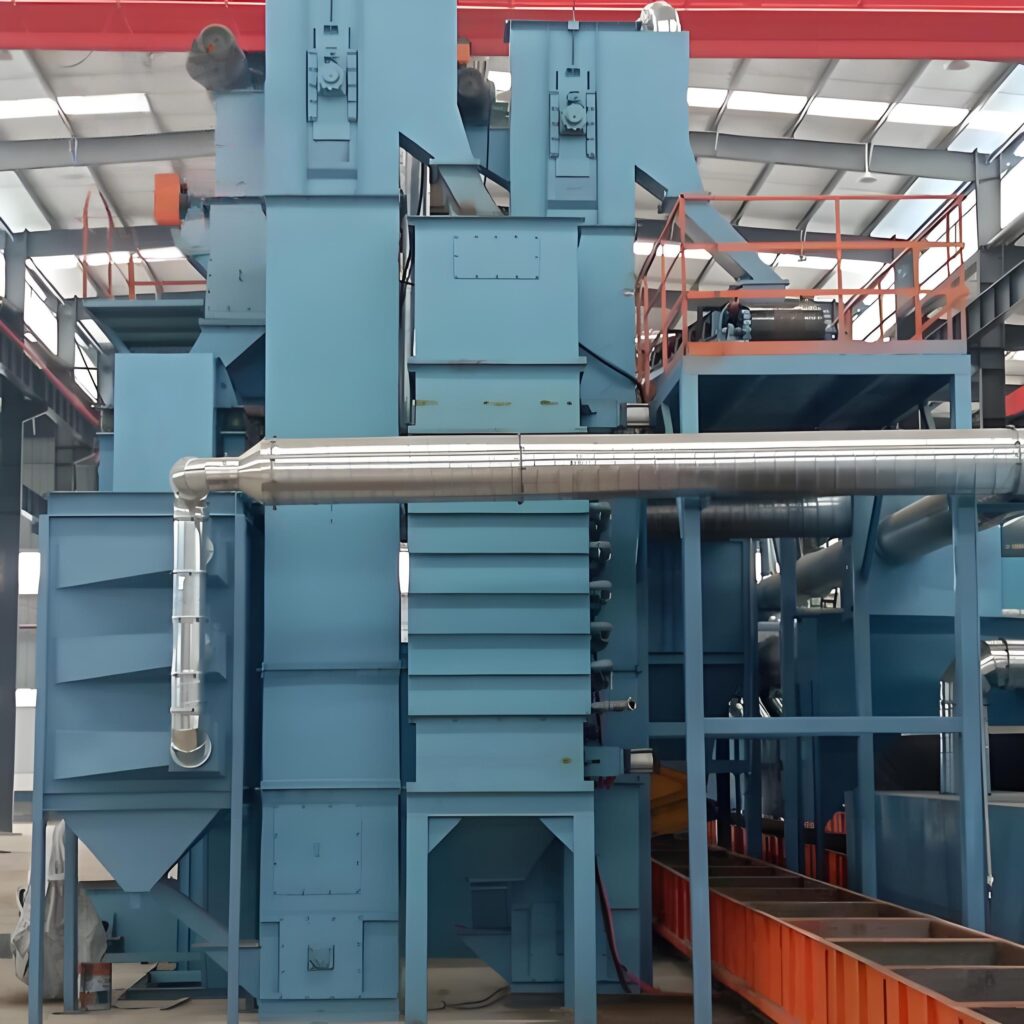
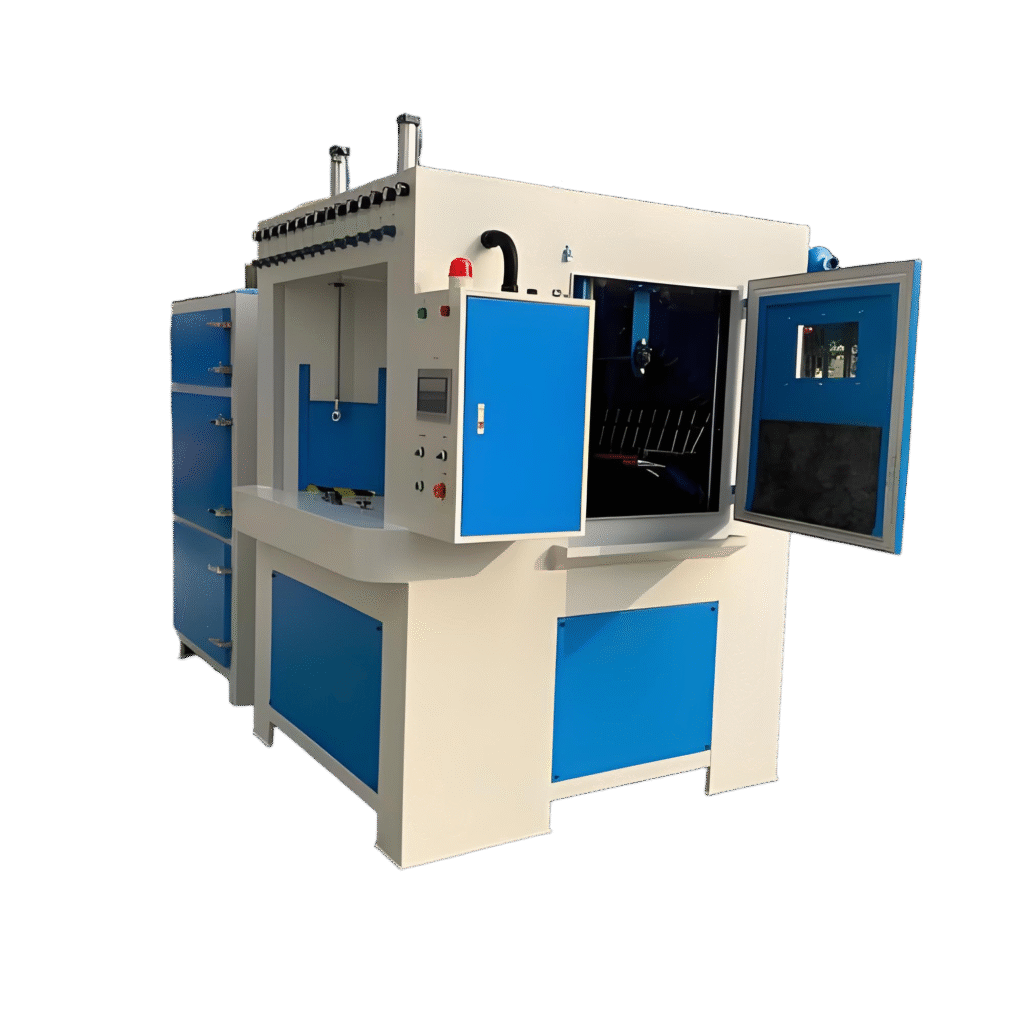
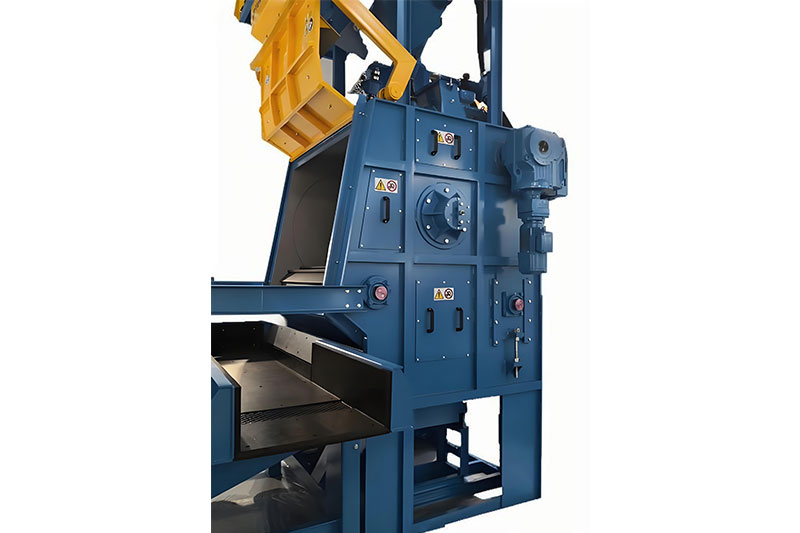
A sand blasting room, also called a sand blasting booth or blast booth, is a professional enclosed facility designed for large-scale and high-standard sand blasting operations. It integrates abrasive projection, dust collection and abrasive recovery to ensure safe and environmentally friendly operations. The core structure of a sand blasting room consists of five key components that are indispensable. First, the enclosed chamber, the main body of the sand blasting room, is made of wear-resistant steel plates or composite materials. It can resist the impact of high-speed abrasives, prevent abrasive splashing and dust leakage, and ensure the airtightness of the working space. Second, the sand blasting system, including sand blasting guns, air compressors and abrasive storage tanks, provides stable air pressure and abrasive supply for sand blasting operations, and the abrasive projection intensity can be adjusted as needed. Third, the dust removal system, the environmental protection core of the sand blasting booth, is composed of bag filters, fans and air ducts, which can efficiently collect dust and waste residue generated during operations to ensure emission compliance. Fourth, the abrasive recovery system recycles reusable abrasives through screw conveyors, bucket elevators and other components, reducing consumable waste and operating costs. Finally, the auxiliary system includes ventilation, lighting and emergency stop devices to ensure a comfortable working environment and operational safety. These components work together to make the sand blasting room (blast booth) a core facility for standardized sand blasting operations.
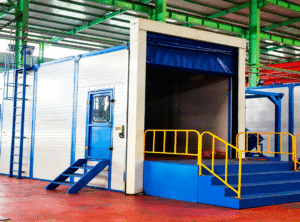
What Are the Common Types of Sand Blasting Booths and Their Adaptable Scenarios?
According to different industrial needs, sand blasting rooms (sand blasting booths/blast booths) have derived various types, each with clear adaptable scenarios to accurately match different production capacities and workpiece requirements. The first type is the batch-type sand blasting room. Adopting a fully enclosed structure, it is suitable for large workpieces or small-batch production. During operation, workpieces can be processed from multiple angles through movable sand blasting guns, with strong flexibility. It is widely used in heavy machinery and ship parts processing. The second type is the continuous sand blasting room , equipped with an automatic conveyor line to realize integrated operations of loading, sand blasting and unloading. It does not require frequent manual operations, has extremely high efficiency, and is suitable for mass workpiece processing in the automobile and hardware industries. The third type is the automatic sand blasting room, equipped with robotic arms or automatic sand blasting devices, which can realize unmanned operations. It has high sand blasting precision and uniform effect, and can effectively reduce human error. It is suitable for fields with high requirements for surface treatment such as aerospace and precision parts. The fourth type is the semi-open sand blasting room. Adopting a semi-enclosed structure, it has low construction costs and is suitable for outdoor large workpieces or temporary sand blasting operations. It needs to be equipped with additional dust removal equipment to ensure environmental compliance. Choosing the right type of sand blasting room can greatly improve surface treatment efficiency and quality.
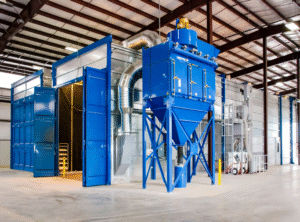
What Are the Core Applications of Blast Booths in Various Industrial Fields?
As a core surface treatment facility, sand blasting rooms are widely used in many industrial fields by virtue of their safety, efficiency and environmental protection advantages, becoming a key link to improve product quality. In the machinery manufacturing industry, sand blasting rooms are mainly used for surface treatment of machine tool beds, mechanical brackets, gears and other components. They can remove rust, oxide skin and burrs, improve the wear resistance and assembly precision of components, and extend the service life of equipment. In the automobile industry, sand blasting rooms are essential facilities for processing automobile bodies, chassis and engine parts. Sand blasting treatment enhances the surface roughness of parts, improves the adhesion of subsequent coating processes, and ensures the durability of automobile products. In the shipbuilding industry, large sand blasting rooms are used for surface treatment of hulls, decks, marine pipe fittings and other components. They can efficiently remove rust and old coatings on the hull surface, lay a foundation for anti-corrosion treatment, and ensure ship navigation safety. In the aerospace field, high-precision sand blasting rooms se utilizan para el tratamiento de endurecimiento superficial de piezas de aviación. El chorro de arena de precisión mejora la resistencia a la fatiga de las piezas para cumplir con los estrictos requisitos de los productos aeroespaciales. Además, las salas de chorro de arena también juegan un papel importante en las industrias de hardware, construcción, fundición y otras, satisfaciendo las necesidades de eliminación de óxido, descontaminación y embellecimiento superficial de diferentes piezas de trabajo, y promoviendo la mejora de la calidad de los productos industriales.
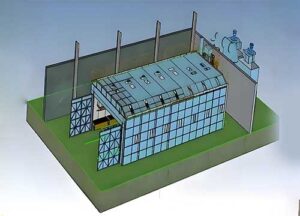
¿Cuáles son las ventajas clave de utilizar una sala de chorro de arena en comparación con el chorro de arena tradicional?
En comparación con las operaciones de chorro de arena abierto tradicionales, las salas de chorro de arena tienen ventajas significativas y se convierten en la primera opción para el tratamiento superficial industrial moderno. Primero, la ventaja de protección ambiental: la estructura cerrada y el sistema eficiente de eliminación de polvo de la sala de chorro de arena pueden controlar efectivamente la difusión de polvo, evitar la contaminación del aire, cumplir con los requisitos de políticas ambientales y reducir el daño a la salud de los operadores. Segundo, la ventaja de seguridad: la sala de chorro de arena aísla la operación de chorro de arena del entorno externo, previene accidentes de seguridad causados por el salpicado de abrasivos y está equipada con dispositivos de parada de emergencia para mejorar aún más la seguridad operacional. Tercero, la ventaja de calidad: el espacio de trabajo estandarizado y el sistema de chorro de arena preciso pueden asegurar un tratamiento superficial uniforme de las piezas de trabajo, evitar errores en el chorro de arena manual tradicional y mejorar la tasa de calificación del producto.. Cuarta, la ventaja de costo: el sistema de recuperación de abrasivos puede realizar el reciclaje de abrasivos, reducir el desperdicio de consumibles, y la sala de chorro de arena automática también puede reducir los costos laborales y mejorar la eficiencia de producción. Quinta, la ventaja de adaptabilidad: la sala de chorro de arena se puede personalizar según el tamaño de la pieza de trabajo y los requisitos de capacidad de producción, adaptándose a diversas necesidades de chorro de arena desde piezas de precisión hasta equipos grandes, con una versatilidad extremadamente fuerte. Estas ventajas hacen de la sala de chorro de arena una instalación central en el campo del tratamiento superficial industrial, ayudando a la industria a desarrollarse de manera verde y eficiente.
Conclusión
La sala de chorro de arena es una instalación ecológica y eficiente, impulsando el tratamiento superficial en diversas industrias.
Correo electrónico:[email protected]
 Spanish
  English
  Russian
  Portuguese
  French
  Indonesian
  Thai
Thai