
Why Low-Cost Chorreado de granalla Quotations Create EHS Risks
Large price differences between shot blasting quotations can mislead procurement teams. A low initial price may exclude dust collection, guarding, interlocks, or compliant exhaust systems. These omissions reduce purchase cost but transfer risk to the buyer through retrofits, production stoppages, audit findings, and maintenance expense. The solution is to compare complete EHS scope, not equipment price alone.
The best quotation identifies every environmental and safety component, defines measurable delivery standards, states testing responsibilities, and includes warranty coverage for critical systems. Our company provides Customizable OEM and ODM solutions with transparent scope documents, helping buyers compare suppliers by total lifecycle cost, compliance readiness, and long-term operational support.
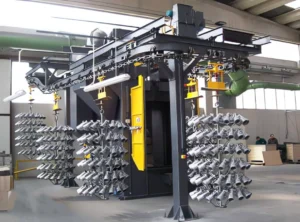
Why Máquina de Granallado Quotes Differ So Widely
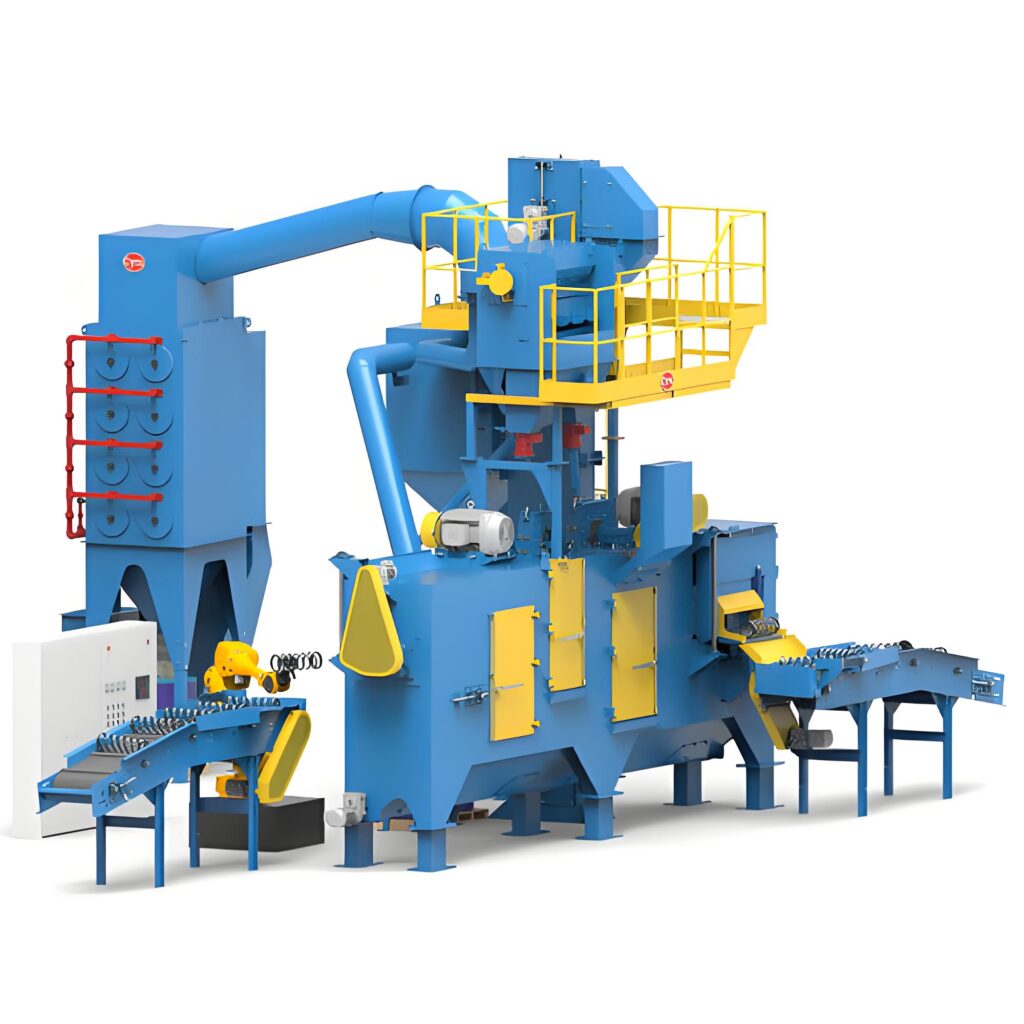
Quotation prices are often difficult to compare because suppliers use different boundaries for the equipment package. One Supplier may include the dust collector, ductwork, safety guarding, installation, testing, and training. Another may quote only the blasting chamber and basic controls.
- Different workpiece dimensions, loading methods, cycle times, and automation levels
- Different blast wheel quantities, abrasive recovery designs, and wear-part specifications
- Different dust collection capacity, filtration grades, fan pressure, and exhaust arrangements
- Different electrical standards, control components, sensors, and safety circuit architecture
- Different installation, commissioning, civil work, freight, training, and documentation scope
- Different warranty periods, spare-parts policies, response times, and service exclusions
Procurement teams should request a line-by-line quotation and a clear list of exclusions. A professional Manufacturer should state whether each EHS item is included, optional, supplied by others, or subject to site confirmation.
| Quotation area | Questions for comparison | Risk if unclear |
| Recogida de polvo | Are the collector, fan, filters, ductwork, controls, and exhaust outlet included | Unplanned retrofit cost or unstable dust control |
| Safety system | Are guards, interlocks, emergency stops, alarms, and access platforms included | Audit findings and unsafe operation |
| Instalación | Who handles foundations, wiring, duct installation, testing, and commissioning | Delays, disputed responsibilities, and incomplete handover |
| Documentation | Are drawings, risk assessments, manuals, test records, and training included | Insufficient evidence during customer or EHS audits |
| Garantía | Which components, labor, travel, filters, seals, and wear parts are covered | Unexpected service expenditure |
Environmental Components That Must Be Visible in the Quote
Low-price quotations frequently simplify environmental systems by selecting a smaller collector, using generic filters, or excluding ductwork and exhaust verification. These choices may appear acceptable during initial operation but can create leakage, poor airflow, excessive filter loading, and failed emission inspections.
Confirm the following environmental scope
- Dust collection airflow and static-pressure calculations
- Collector type, filter media, filtration efficiency, and replacement method
- Fan capacity, motor rating, sound control, and electrical protection
- Complete ductwork, elbows, flexible connections, flanges, supports, and access covers
- Sealed machine doors, inspection panels, abrasive transfer points, and recovery sections
- Dust discharge equipment and safe handling of collected material
- Exhaust stack arrangement, monitoring points, and connection to site systems
- Commissioning measurements for airflow, leakage, differential pressure, and emissions where applicable
Environmental requirements should be linked to the actual process. Abrasive type, workpiece contamination, operating hours, humidity, workshop ventilation, and local regulations can affect collector selection. The Supplier should identify assumptions and provide a written engineering basis instead of relying on nominal fan power alone.
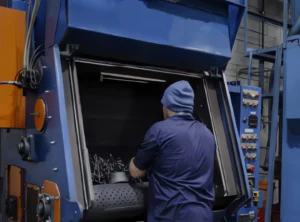
Safety Components That Should Never Be Omitted
Safety devices are not optional accessories. They are part of the machine architecture and should be specified before commercial comparison. A lower price is not beneficial if the delivered system cannot be accepted by the factory safety team or customer auditor.
- Fixed guards around rotating blast wheels, conveyors, elevators, shafts, and drive components
- Interlocked loading doors, inspection doors, access covers, and maintenance openings
- Clearly positioned emergency-stop devices and reset controls
- Safety relays or safety-rated control functions appropriate to the risk assessment
- Mechanical isolation and lockout provisions for maintenance activities
- Safe platforms, stairs, handrails, toe boards, lighting, and access clearance
- Warning labels, operating signs, residual-risk notices, and start-up alarms
- Electrical grounding, short-circuit protection, cable protection, and panel safety
- Overload, overspeed, temperature, airflow, and filter-condition monitoring where required
- Fire and combustible-dust risk controls based on site assessment and applicable standards
Ask the Manufacturer to provide a risk assessment and safety-device list before purchase order approval. If a component is described as optional, procurement should obtain a written explanation of the risk, compliance basis, and responsibility for supplying it.
Calculate the Full Lifecycle Cost and EHS Risk
The correct comparison is not the lowest purchase price. Procurement should calculate the full cost of ownership across the expected operating period.
| Lifecycle cost category | Typical items to include |
| Initial procurement | Machine, dust collector, safety hardware, controls, freight, taxes, installation, and commissioning |
| Infraestructura | Foundations, electrical supply, exhaust routing, ventilation, platforms, fire protection, and civil work |
| Retrofit exposure | Additional filtration, guarding, interlocks, ductwork, noise treatment, emission controls, and audit remediation |
| Costes de explotación | Electricity, abrasive, filters, seals, lubricants, cleaning, labor, and waste handling |
| Failure and compliance risk | Production stoppage, customer rejection, fines, reinspection, emergency repair, and lost delivery capacity |
| Long-term support | Preventive maintenance, technical service, spare parts, travel, training, and system upgrades |
A practical evaluation method is to calculate:
Full lifecycle cost = initial procurement cost + infrastructure cost + expected retrofit cost + operating cost + maintenance cost + estimated compliance and downtime exposure
When exact risk values are unavailable, procurement can compare scenarios such as compliant installation, partial retrofit, and delayed corrective action. This makes the financial effect of omitted EHS components visible to management.
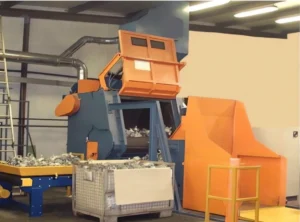
Contract Clauses, Warranty Scope, and Supplier Communication
EHS expectations should be written into the purchase contract, technical annex, and acceptance protocol. General statements such as compliant design or safe operation are difficult to enforce unless supported by measurable requirements.
Recommended contract provisions
- Complete equipment and EHS component list attached to the contract
- Defined airflow, pressure, leakage, noise, guarding, interlock, and emergency-stop criteria
- Supplier responsibility for design calculations, installation support, testing, and documentation
- Factory acceptance and site acceptance procedures with defined corrective-action deadlines
- Requirement to notify the buyer before substituting filters, motors, sensors, controls, or safety devices
- Warranty coverage for dust collectors, fans, filters, seals, interlocks, safety relays, and control components
- Clear distinction between normal wear, premature failure, incorrect operation, and design deficiency
- Response time, spare-parts availability, remote support, and on-site service requirements
Warranty discussions should be specific. Confirm whether dust collector performance, fan vibration, filter housing leakage, door seals, interlock switches, emergency-stop circuits, and safety-critical wear parts are covered. Ask for warranty duration, exclusions, labor coverage, travel responsibility, replacement timing, and required maintenance records.
How to communicate requirements to Suppliers
- Send a standardized technical questionnaire to every bidder.
- Provide workpiece data, production targets, abrasive information, layout drawings, utilities, and site EHS rules.
- Request marked-up drawings showing extraction points, guards, access areas, and emergency devices.
- Require a compliance matrix identifying included, excluded, optional, and buyer-supplied items.
- Hold a technical clarification meeting before commercial negotiation.
- Record every agreed change in the quotation, contract, and final acceptance documents.
Choose a Manufacturer and Supplier that can explain both equipment performance and EHS responsibilities. A transparent proposal is usually more valuable than a low headline price that leaves essential safeguards undefined.
Protect the Budget Before Approving the Quotation
Do not compare shot blasting quotations by price alone. Request a complete EHS scope, lifecycle-cost model, measurable acceptance criteria, and precise warranty terms. Contact our team for a technical quotation review and a Customizable OEM or ODM solution that reduces retrofit, audit, and downtime risks.
 Spanish
 English
 Russian
 Portuguese
 French
 Indonesian
 Thai