
Automatic vs Manual Blasting: Prevent Inconsistent Finishes and Rising Production Costs
Manual blasting may appear economical, but variation between operators can create uneven surface profiles, higher defect rates, and costly rework. As labor costs rise and recruitment becomes more difficult, production output may fall below target. Choosing automation without evaluating volume, workpiece variety, and budget can also cause underused equipment and unnecessary capital expenditure.
The best choice depends on required surface consistency, production volume, workpiece size, batch frequency, labor availability, and total ownership cost. Our company evaluates these conditions before recommending a manual or automatic Shot Blasting Machine, including Customizable systems, OEM solutions, and Wheelblast Equipment for specific factory requirements.
Choose the Process According to Operating Conditions
Automatic and manual blasting are not competing solutions for every application. Each is suitable for different production environments. Procurement teams should assess how frequently parts are processed, how consistent the finish must be, and whether the workshop can support investment in automation, maintenance, and operator training.
Manual blasting is suitable when
- Workpieces vary significantly in shape, size, and contamination.
- Production is low volume or project based.
- Parts are too large or irregular for a standard automatic chamber.
- Frequent product changes make fixed automation difficult to justify.
- Initial equipment investment must remain limited.
Automatic blasting is suitable when
- The same or similar workpieces are processed repeatedly.
- Surface consistency is critical for painting, coating, or downstream machining.
- Production output must meet a stable takt time.
- Batch processing can reduce loading and unloading labor.
- Recruitment challenges and labor costs threaten production continuity.
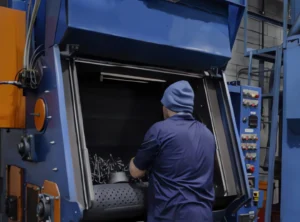
How Automation Improves Surface Consistency
Manual blasting depends heavily on operator experience, movement speed, blasting distance, abrasive flow, and coverage. Two operators may process the same part differently, producing variations in surface roughness, remaining scale, edge treatment, and paint adhesion. Fatigue can further increase inconsistency during long shifts.
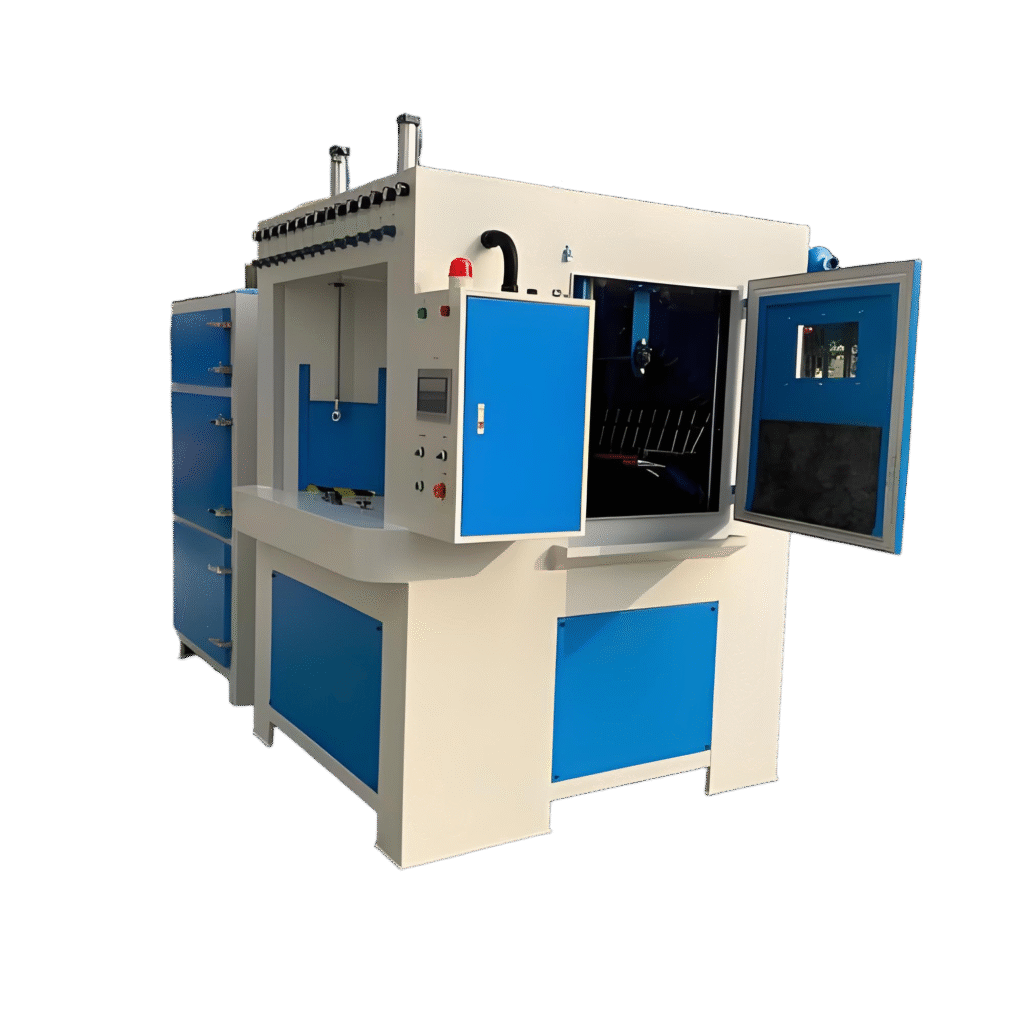
Automatic systems control important process variables through programmed cycles, fixed nozzle paths, controlled turbine speed, or repeatable part rotation. This can lower defect rates and simplify quality management. However, automation does not automatically guarantee quality. Incorrect loading, unsuitable abrasive selection, poor maintenance, or an unsuitable machine design can still produce defective results.
| Performance factor | Manual blasting | Automatic blasting |
| Surface consistency | Highly dependent on operator technique and fatigue | More repeatable after correct programming and setup |
| Production output | Flexible but usually limited by operator availability | Higher and more stable for repetitive work |
| Batch processing | Suitable for mixed, low volume batches | Efficient for standardized batch production |
| Labor requirement | Higher direct labor and training dependence | Lower direct labor, with added programming and maintenance needs |
| Initial investment | Generally lower | Generally higher due to automation and integration |
| Quality risk | Greater variation between operators and shifts | Lower variation when process parameters remain controlled |
Compare Investment with Total Ownership Cost
A low initial price should not be the only procurement criterion. Manual equipment may require more operators, supervision, training, and rework. Automatic equipment requires greater capital investment, but it may reduce labor costs and increase production utilization rate over time.
- Initial equipment investment: chamber, turbine or nozzle system, controls, conveyors, dust collection, and installation.
- Labor costs: operators, loading staff, inspection personnel, supervision, and training.
- O&M costs: abrasive replacement, filters, wear parts, lubrication, calibration, and preventive maintenance.
- Quality costs: rework, rejected parts, coating failures, customer claims, and production delays.
- Capacity costs: overtime, additional shifts, outsourced processing, and missed delivery commitments.
Automation is normally more attractive when production volume is stable and machine utilization is high. If an automatic line operates only a few hours per week, depreciation and maintenance may outweigh labor savings. A manual system may remain more economical for prototypes, repair work, and highly diverse orders.
Evaluate Production Utilization and Workpiece Flow
Buyers should measure actual production requirements instead of relying on theoretical machine capacity. The relevant question is not how many parts a Shot Blasting Machine can process per hour under ideal conditions, but how efficiently the complete workflow operates.
- List workpiece dimensions, weights, materials, contamination, and required finish.
- Record daily and monthly quantities, batch sizes, changeover frequency, and peak demand.
- Calculate loading, unloading, inspection, abrasive replenishment, and cleaning time.
- Estimate the expected production utilization rate under normal operating conditions.
- Compare manual labor hours with the automated line staffing requirement.
- Review future product growth, customer quality standards, and planned factory expansion.
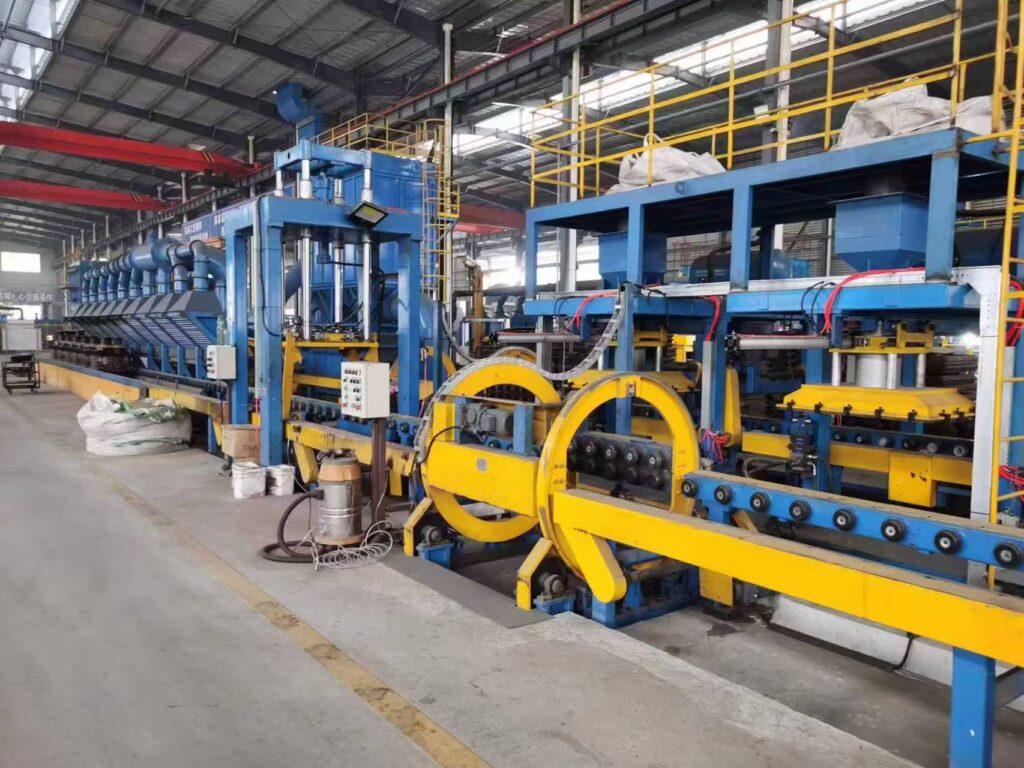
Batch processing can substantially improve automatic equipment utilization. Hangers, tumbling systems, roller conveyors, mesh belts, and rotary tables may allow multiple parts to be processed in organized cycles. For foundry upgrades and renovations, the machine should also fit existing floor layouts, material flow, cranes, ventilation, and downstream coating operations.
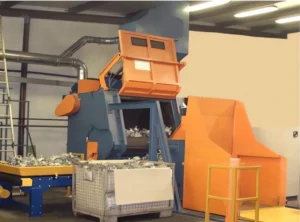
Decision Checklist for Manual or Automatic Blasting
Select manual equipment when flexibility is the priority
- Product mix changes frequently.
- Workpieces require direct operator access or variable treatment.
- Annual volume is uncertain or seasonal.
- Capital budget is restricted.
- The factory already has skilled blasting operators.
Select automatic equipment when repeatability is the priority
- Customers require consistent surface preparation records.
- Production volume supports high equipment utilization.
- Labor recruitment is difficult or turnover is high.
- Defect rate comparisons show that manual variation is costly.
- Parts can be standardized for loading and programmed processing.
During supplier evaluation, request sample processing, cycle-time verification, abrasive recommendations, maintenance schedules, and a projected five-year cost model. A reliable Manufacturer or Supplier should explain both the advantages and limitations of each option instead of promoting automation without examining the factory conditions.
Build a Customizable Automation Strategy
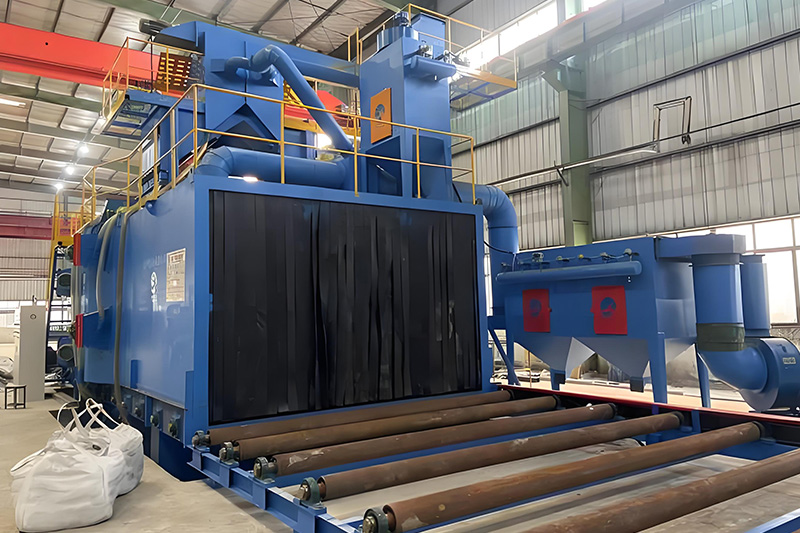
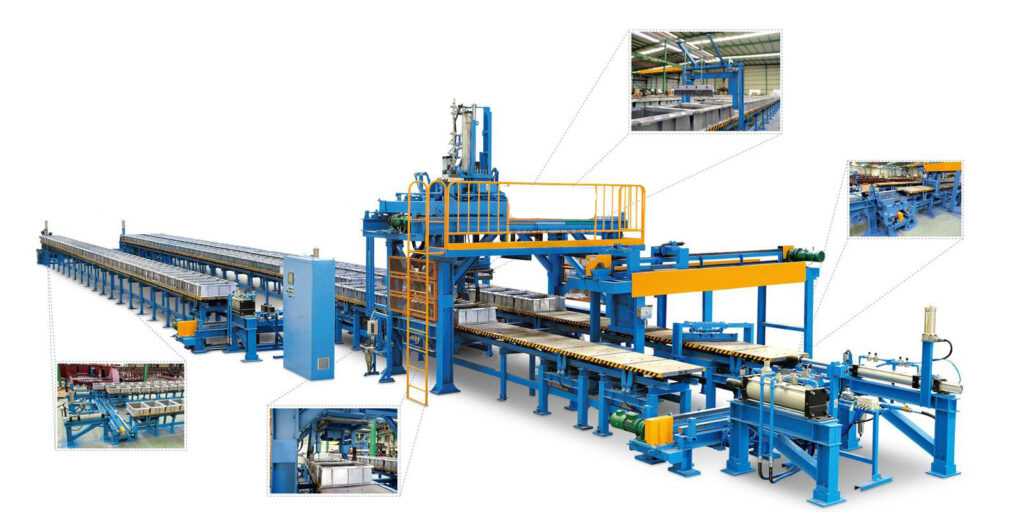
Modern Wheelblast Equipment can include hanger, tumble, continuous, roller conveyor, and rotary table configurations. A Customizable system may integrate automatic loading, unloading, part identification, recipe control, dust collection, abrasive recycling, inspection, and production data tracking.
For distributors and industrial brands, our company supports OEM and ODM cooperation, private labeling, special chamber dimensions, customized controls, and complete line integration. We can also adapt equipment for foundry upgrades, plant renovations, and connection with existing painting or machining systems.
The right solution balances labor costs, surface consistency, production output, defect rates, utilization, initial investment, and O&M costs. Request a workpiece trial and factory assessment today to receive a customized manual or automatic blasting recommendation, capacity calculation, and total ownership cost analysis.
 English
  Russian
  Spanish
  Portuguese
  French
  Indonesian
  Thai
Thai