
Shot blasting equipment noise/vibration harms workers and equipment; custom solutions ensure compliance and efficiency.
This guide details industrial noise and vibration reduction solutions for shot blasting, shot blasting equipment, wheelblast equipment, and all blasting equipment, including custom options for buyers.
Explore proven, practical solutions to reduce noise and vibration in your blasting equipment.
What Are the Main Sources of Noise and Vibration in Shot Blasting Equipment?
To implement effective noise and vibration reduction for shot blasting equipment, it is first critical to identify their primary sources—this foundational step ensures targeted solutions that address root causes rather than just symptoms. Shot blasting equipment, including wheelblast equipment, generates noise and vibration from three core sources during shot blasting operations, with each contributing differently to overall disruption.
- The first and most prominent source is the impact of high-velocity abrasives: when abrasives are propelled by wheelblast equipment’s impellers (rotating at 2000-3500 rpm) onto workpieces or the equipment’s inner liners, they create intense impact noise (ranging from 90-110 dB(A) for unprocessed equipment) and vibration .According to industry measurements, this impact accounts for 60-70% of total noise from shot blasting equipment.
- The second source is mechanical operation: motors, fans, conveyors, and rotating components in blasting equipment generate continuous mechanical noise and vibration, especially when parts are worn or misaligned. For wheelblast equipment, unbalanced impellers or worn blades (a common issue in high-volume shot blasting) amplify vibration, leading to secondary noise and equipment damage.
- The third source is auxiliary systems, such as dust collectors and air compressors, which add 15-20% of total noise, per HSE guidelines for shot blasting operations . Understanding these sources is key to crafting effective solutions—Chong Jen Machinery’s expert team conducts on-site assessments to pinpoint specific noise/vibration triggers in shot blasting equipment, ensuring our custom solutions address each unique source for maximum reduction.
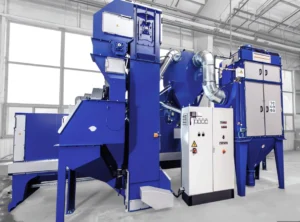
What Industry Standards Govern Noise and Vibration for Blasting Equipment?
Compliance with global industry standards is non-negotiable for industrial operations using shot blasting equipment, wheelblast equipment, or any blasting equipment, as noise and vibration exceeding limits pose legal risks, worker health hazards, and operational disruptions.
- Several key standards define acceptable levels for shot blasting equipment, including ISO 23779:2024, which outlines noise emission measurement and declaration requirements for shot blasting machinery . The EU’s 2006/42/ECMachinery Directive mandates that shot blasting equipment must not exceed 85 dB(A) at the operator’s workstation and 115 dB(A) in terms of sound power level, while China’s GB 24390-2009 sets similar limits (90 dB(A) for single shot blasting equipment, 93 dB(A) for multiple shot blaster models) .
- HSE guidelines further require noise assessments per the Noise at Work Regulations 1989, including monitoring exposure from communication headsets used with shot blasting equipment . Non-compliance can result in fines, production shutdowns, and worker compensation claims—costs that far exceed the investment in noise/vibration reduction. The table below summarizes key standards for shot blasting equipment noise limits, helping B2B buyers ensure compliance:
| Standard | Noise Limit (dB(A)) – Operator Workstation | Key Requirement |
| ISO 23779:2024 | ≤85 | Noise emission measurement and declaration |
| 2006/42/EC (EU) | ≤85 | Mechanical safety and noise control |
| GB 24390-2009 (China) | ≤90 (single shot blaster), ≤93 (multiple shot blaster | Industrial shot blasting equipment noise limits |
Chong Jen Machinery’s shot blasting equipment and wheelblast equipment are engineered to meet or exceed these standards, with built-in noise/vibration reduction features that eliminate compliance risks for B2B clients.
How to Implement Source Control for Shot Blasting Equipment Noise Reduction?
Source control is the most effective and cost-efficient strategy for reducing noise from shot blasting equipment, wheelblast equipment, and all blasting equipment, as it addresses noise at its origin rather than mitigating its propagation.
- The first step in source control is optimizing the design of shot blasting equipment components, particularly for wheelblast equipment—the core of shot blasting operations. For example, replacing traditional straight-line impeller blades with Involute type designs (as used in advanced wheelblast equipment) reduces abrasive collision noise by 10-15 dB(A), as it allows smoother abrasive transition . Using polyurethane or rubber liners instead of metal liners in shot blasting equipment also minimizes impact noise, as these materials absorb rather than reflect abrasive impact—reducing noise by 15-20 dB(A) compared to metal liners .
- Another key source control measure is optimizing abrasive selection: using spherical abrasives (e.g., steel shot) instead of angular grit reduces impact noise and vibration, as they create less intense collisions with workpieces and equipment liners.
Additionally, ensuring proper alignment and balancing of wheelblast equipment’s impellers (with blade weight tolerances within 3 grams, per industry best practices) eliminates vibration caused by imbalance, which in turn reduces secondary noise . Chong Jen Machinery integrates these source control features into our custom shot blasting equipment and wheelblast equipment, tailoring component designs to each client’s shot blasting needs—our engineering team optimizes impeller, liner, and abrasive selection to minimize noise at the source, delivering long-term, cost-effective results.
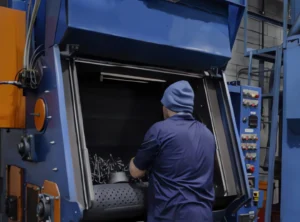
What Vibration Reduction Solutions Work for Industrial Shot Blasting Equipment?
Vibration from shot blasting equipment and wheelblast equipment not only causes noise but also accelerates equipment wear, shortens lifespan, and damages industrial floors—making effective vibration reduction critical for operations.
- The most impactful vibration reduction solution is installing proper isolation systems between shot blasting equipment and the facility floor. This includes using rubber or spring isolators (with vibration transmission rates controlled below 5%) to absorb vibration and prevent it from spreading to the building structure . For heavy-duty shot blasting equipment, constructing an independent concrete foundation with a 200mm+ vibration gap further isolates vibration, reducing transmission to surrounding areas by 40-50% .
- Another key solution is regular maintenance of shot blasting equipment components: worn bearings, misaligned shafts, and loose fasteners amplify vibration, so a structured maintenance schedule (including weekly inspections of wheelblast equipment impellers and motors) is essential.
Additionally, integrating damping materials (e.g., viscoelastic polymers) into shot blasting equipment frames absorbs vibration energy, reducing both vibration and associated noise. For custom shot blasting equipment, Chong Jen Machinery designs vibration reduction systems tailored to the equipment’s size, weight, and operational load—our solutions include custom isolation foundations, damping components, and maintenance schedules, ensuring that vibration is minimized without compromising shot blasting efficiency. This approach not only reduces noise but also extends the lifespan of shot blasting equipment by 30%, lowering long-term operational costs.
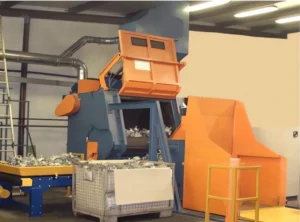
How to Mitigate Noise Propagation from Blasting Equipment in Industrial Settings?
Even with source control, some noise from shot blasting equipment and wheelblast equipment will propagate—mitigating this spread is critical to protecting workers and complying with industry standards.
- The most effective method to reduce noise propagation is installing sound insulation enclosures around shot blasting equipment. These enclosures, made of double-layer 12mm damping sound insulation board with 100mm centrifugal glass wool filling, can reduce noise propagation by 35-40 dB(A) . For wheelblast equipment and large shot blasting systems, full enclosed Sound Insulation Room with three-layer Laminated Glass observation windows (to maintain visibility) and maze-style entry/exit points (to prevent noise leakage) are ideal.
- Another effective measure is optimizing the layout of shot blasting equipment: placing blasting equipment in remote areas of the facility, away from worker stations and sensitive equipment, reduces noise exposure. For auxiliary systems like dust collectors (a major noise source), installing silencers on exhaust valves and ducting (per HSE recommendations) or relocating them outdoors further reduces noise propagation .
Additionally, applying sound-absorbing materials (25-50mm porous materials, optimal for 500-4000Hz shot blasting noise) to the walls and ceiling of the shot blasting area reduces reverberation, lowering overall noise levels by 10-15 dB(A) . Chong Jen Machinery offers custom noise propagation solutions for shot blasting equipment, designing sound insulation enclosures and facility layouts tailored to each client’s industrial space—our solutions ensure that noise is contained, protecting workers and ensuring compliance with global standards.
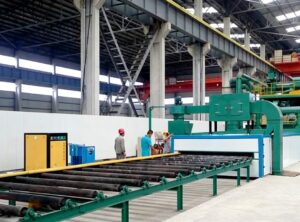
Why Are Custom Solutions Critical for Shot Blasting Equipment Noise and Vibration Reduction?
Every industrial facility has unique needs—from shot blasting equipment size and operational volume to facility layout and compliance requirements—making custom solutions essential for effective noise and vibration reduction.
- Standard, one-size-fits-all solutions often fail to address specific challenges, such as limited space for sound insulation enclosures or high-volume shot blasting operations that generate excessive noise. Custom solutions, tailored to a client’s specific shot blasting equipment (including wheelblast equipment) and industrial scene, ensure that reduction measures are both effective and practical. For example, a small facility with limited space may benefit from a custom compact sound insulation enclosure for their shot blasting equipment, while a large manufacturing plant with high-volume wheelblast equipment may require a custom isolation foundation and multi-stage noise absorption system .
- Custom solutions also allow for integration with existing shot blasting processes, ensuring that noise/vibration reduction does not compromise efficiency. Chong Jen Machinery specializes in custom noise and vibration reduction solutions for shot blasting equipment and wheelblast equipment—our team conducts on-site assessments to understand each client’s unique needs, designing tailored solutions that balance noise reduction, compliance, and operational efficiency. Our custom approach ensures that clients achieve optimal noise/vibration reduction (often 30-50% reduction) while maintaining the productivity of their shot blasting operations, delivering superior value compared to standard solutions.
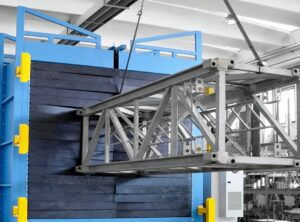
How Does Chong Jen Machinery Support Noise and Vibration Reduction for Shot Blasting Equipment?
Chong Jen Machinery combines decades of expertise in shot blasting equipment, wheelblast equipment, and industrial noise/vibration control to provide comprehensive support forclients seeking to reduce noise and vibration.
- Our approach starts with a free on-site assessment, where our experts identify noise/vibration sources, evaluate compliance gaps, and understand the client’s operational needs. We then design custom solutions tailored to their shot blasting equipment—this may include optimizing wheelblast equipment impeller designs, installing custom enclosures, integrating vibration isolation systems, or upgrading to low-noise components .
- Our shot blasting equipment and wheelblast equipment are engineered with built-in noise/vibration reduction features, such as precision-balanced impellers (to minimize vibration), polyurethane liners (to reduce impact noise), and integrated silencers for auxiliary systems—all designed to meet or exceed ISO, EU, and local standards.
Additionally, we provide on-site installation, operator training (on maintenance and noise control best practices), and ongoing support to ensure long-term effectiveness. Clients who partner with Chong Jen Machinery for custom noise/vibration solutions report a 30-50% reduction in noise levels, 40% reduction in equipment vibration, and full compliance with industry standards—all while maintaining or improving shot blasting efficiency. Our expertise in custom solutions ensures that we address even the most complex noise/vibration challenges, helping clients protect workers, extend equipment lifespan, and avoid compliance penalties.
Conclusion
Custom solutions reduce shot blasting equipment noise/vibration, ensuring compliance and efficiency.
Contact Chong Jen Machinery
For custom noise and vibration reduction solutions for shot blasting equipment, wheelblast equipment, and all blasting equipment,
email Chong Jen Machinery: [email protected].
Our experts will tailor a plan to meet your industrial needs.
 English
  Russian
  Spanish
  Portuguese
  French
  Indonesian
  Thai
Thai