
Wet Blasting vs Dry Blasting: Avoid Costly Workpiece and Workshop Failures
Choosing the wrong blasting process can create scratches, oxidation, poor paint adhesion, dust compliance penalties, and missed production targets. A low equipment price may become an expensive operational problem when the workpiece material, workshop conditions, and finishing standard are ignored. Selecting wet or dry blasting by application is essential for reliable quality, safe production, and controlled procurement costs.
The best choice depends on workpiece material, required surface finish, production capacity, workshop environmental standards, and available utilities. Our company evaluates these conditions before recommending a customizable dry or wet Shot Blasting Machine, helping customers select compliant equipment rather than simply the lowest priced model.
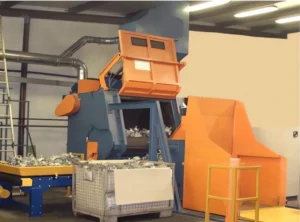
Start with the Workpiece, Not the Equipment Price
The most common procurement mistake is comparing machine prices before defining the process requirement. A professional Manufacturer or Supplier should first review the workpiece, contamination type, required surface roughness, production volume, operator environment, and local regulations. Inappropriate process selection can cause scratches on precision workpieces, oxidation and rust on aluminum alloys, inadequate descaling, excessive dust, or substandard paint adhesion.
- Workpiece materials: carbon steel, cast iron, stainless steel, aluminum, magnesium, composites, medical alloys, or electronic parts.
- Contamination: mill scale, rust, paint, casting sand, flash, burrs, or light surface residue.
- Finish requirements: aggressive cleaning, rough deburring, controlled profile, cosmetic finishing, or preparation for coating.
- Workshop conditions: indoor cleanrooms, outdoor construction sites, water availability, ventilation, noise limits, and wastewater rules.
- Production capacity: batch size, takt time, labor availability, automation requirements, and future expansion.
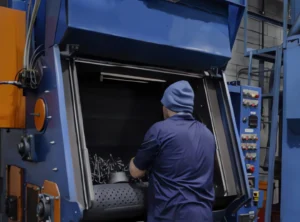
When Dry Blasting Is the Practical Choice
Dry blasting is usually the preferred solution for heavy duty steel structures, rough deburring of castings, and applications requiring high throughput. It is also suitable for outdoor construction sites and facilities with limited water supply. H section steel structures, fabricated frames, ship components, pipelines, and large castings can often be processed efficiently with dry abrasive systems.
Typical dry blasting scenarios
- H section steel structures requiring rapid mill scale and rust removal.
- Descaling of heavy castings before machining, welding, or painting.
- Outdoor workshops where water recovery and wastewater treatment are impractical.
- Facilities with limited water supply or strict restrictions on liquid discharge.
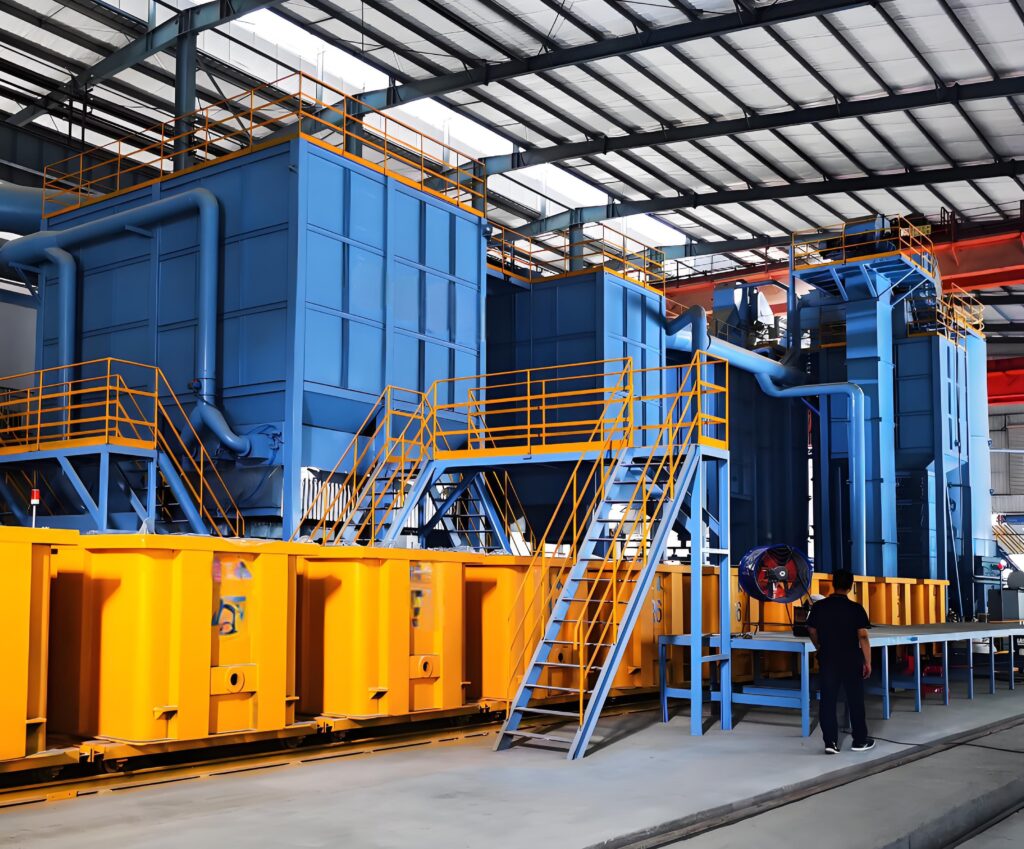
- High volume production requiring fully automatic dry shot blasting lines.
Dry systems generally provide strong production capacity and a clear, mechanically prepared surface. However, they generate airborne dust and require effective enclosure, ventilation, abrasive separation, and dust collection. A dry process may be unsuitable for delicate surfaces if abrasive impact is too aggressive. The procurement package should therefore include dust control and safe material handling, not only the main machine.
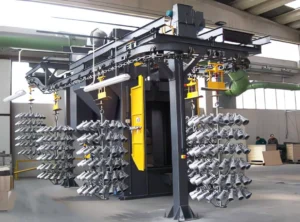
When Wet Blasting Is Essential
Wet blasting combines abrasive media and liquid to reduce airborne dust and moderate impact energy. It is essential for precision aerospace components, stainless steel and aluminum parts, medical and food grade components, and small semiconductor parts where surface protection and cleanliness are critical. Indoor facilities with strict environmental controls can benefit from eco friendly wet equipment when the wastewater system is correctly designed.
Typical wet blasting scenarios
- Precision aerospace components requiring uniform finishing without aggressive scratching.
- Aluminum magnesium alloys that may oxidize, discolor, or rust after unsuitable treatment.
- Medical and food grade components requiring controlled contamination and easy cleaning.
- Small semiconductor parts and sensitive components processed in cleanrooms.
- Stainless steel or aluminum parts requiring a consistent, refined surface profile.
Wet blasting can improve dust control and protect sensitive workpieces, but it introduces water management responsibilities. The system may require filtration, sludge separation, corrosion prevention, drying, and compliant wastewater treatment. Buyers should confirm whether the supplier can provide an integrated wastewater treatment system rather than leaving the facility to solve liquid discharge problems after installation.
Dry and Wet Blasting Compared by Procurement Criteria
| Procurement criterion | Dry blasting | Wet blasting |
| Best suited workpieces | Heavy steel, castings, structural parts, and robust components | Aerospace, aluminum, stainless steel, medical, food grade, and electronic parts |
| Dust control | Requires enclosed equipment and high performance dust collection | Significantly reduces airborne dust when correctly operated |
| Surface effect | Strong cleaning, descaling, and rough deburring capability | More controlled finishing with lower risk of surface damage |
| Production capacity | Often ideal for high throughput and fully automatic lines | Suitable for precision batches and controlled production environments |
| Utility requirements | Compressed air or mechanical blasting, electricity, and dust extraction | Water supply, filtration, drying, and wastewater treatment |
| Primary compliance concern | Dust, noise, abrasive handling, and worker exposure | Water consumption, sludge disposal, corrosion prevention, and discharge compliance |
Match the Process to Factory Conditions and Capacity
Workshop environmental standards can be as important as the material itself. An outdoor facility may prioritize mobility, rugged construction, simple maintenance, and low water dependence. An indoor aerospace or medical facility may prioritize dust suppression, controlled cleanliness, drying performance, traceability, and integration with existing production systems.
- Define the workpiece dimensions, material, weight, geometry, and loading method.
- Identify the contamination and the required surface finish or coating adhesion standard.
- Measure daily volume, batch size, cycle time, labor availability, and expected future demand.
- Review local dust, noise, water, wastewater, and occupational safety regulations.
- Compare a complete system cost, including auxiliaries, installation, maintenance, utilities, and consumables.
- Request trials using representative workpieces before approving the final configuration.
For structural steel and heavy casting operations, a fully automatic dry shot blasting line may deliver the best balance of capacity and labor efficiency. For sensitive parts, a wet system with automated loading, filtration, drying, and wastewater management may produce a more stable result. Neither process is universally superior; suitability depends on the complete operating condition.
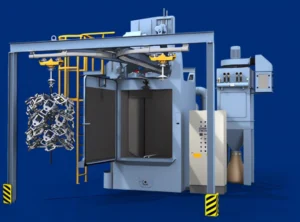
Specify a Complete and Customizable Equipment Package
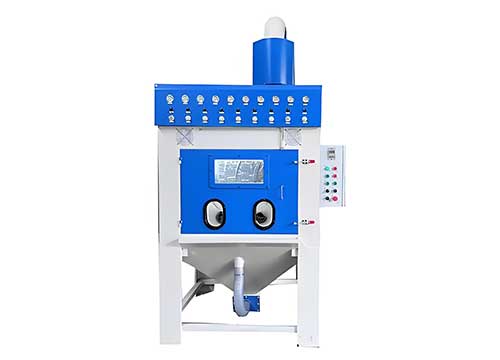
A qualified Supplier should offer a full range of dry and wet sandblasting models rather than force every application into one standard machine. Options may include cabinet systems, tumble or hanger machines, pass through equipment, rotary tables, continuous lines, Wheelblast Equipment, and precision wet blasting systems.
Questions to include in the purchasing specification
- Can the equipment process the customer’s actual materials without scratches, deformation, or oxidation?
- Does the system meet the required production capacity and surface finish requirements?
- Are dust collection, abrasive recovery, filtration, drying, and wastewater treatment integrated?
- Can controls, loading systems, chamber dimensions, and automation be customized?
- Is technical support available for installation, operator training, spare parts, and validation?
Experienced manufacturers can also provide OEM and ODM cooperation for distributors, engineering contractors, and established industrial brands. A Customizable solution may include special chamber dimensions, robotic handling, conveyor integration, recipe management, automatic inspection, or connection to an existing line. Whether the specification calls for a compact wheel blast equipment unit or a complete automated plant, the design should reflect the customer’s workpiece conditions.
Why a One Stop Evaluation Reduces Procurement Risk
Buying the machine alone does not guarantee a compliant process. A one stop equipment Manufacturer should assess abrasive selection, ventilation, dust collection, water circulation, wastewater treatment, drying, loading, maintenance access, and operator safety as one system. This approach reduces hidden costs and helps prevent later modifications caused by insufficient production capacity or poor paint adhesion.
Our team supplies complete dry and wet surface treatment equipment and provides a free operational condition evaluation. We offer free customized solutions based on products, workshop conditions, production targets, and local environmental regulations. This includes dry Wheelblast Equipment, wet blasting systems, automatic lines, integrated dust collection, and integrated wastewater treatment systems.
Choose the process that protects your workpieces and supports your factory goals. Contact our team for a free operational condition evaluation, representative workpiece assessment, and customized quotation for a compliant dry or wet blasting solution.
 English
  Russian
  Spanish
  Portuguese
  French
  Indonesian
  Thai
Thai