
How to Buy a เครื่องยิงทราย Without Creating Budget Risk
Buying a Shot Blasting Machine on price alone can lead to hidden installation costs, oversized capacity, expensive consumables, and unreliable after-sales support. Buying too cheaply may create quality failures and production delays. Procurement teams need a controlled method that connects actual production requirements with total ownership cost, preventing both budget overruns and unnecessary investment.
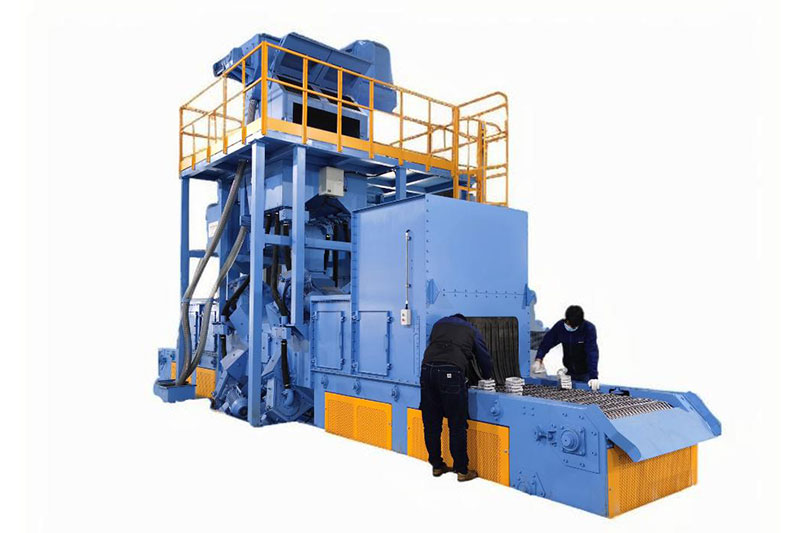
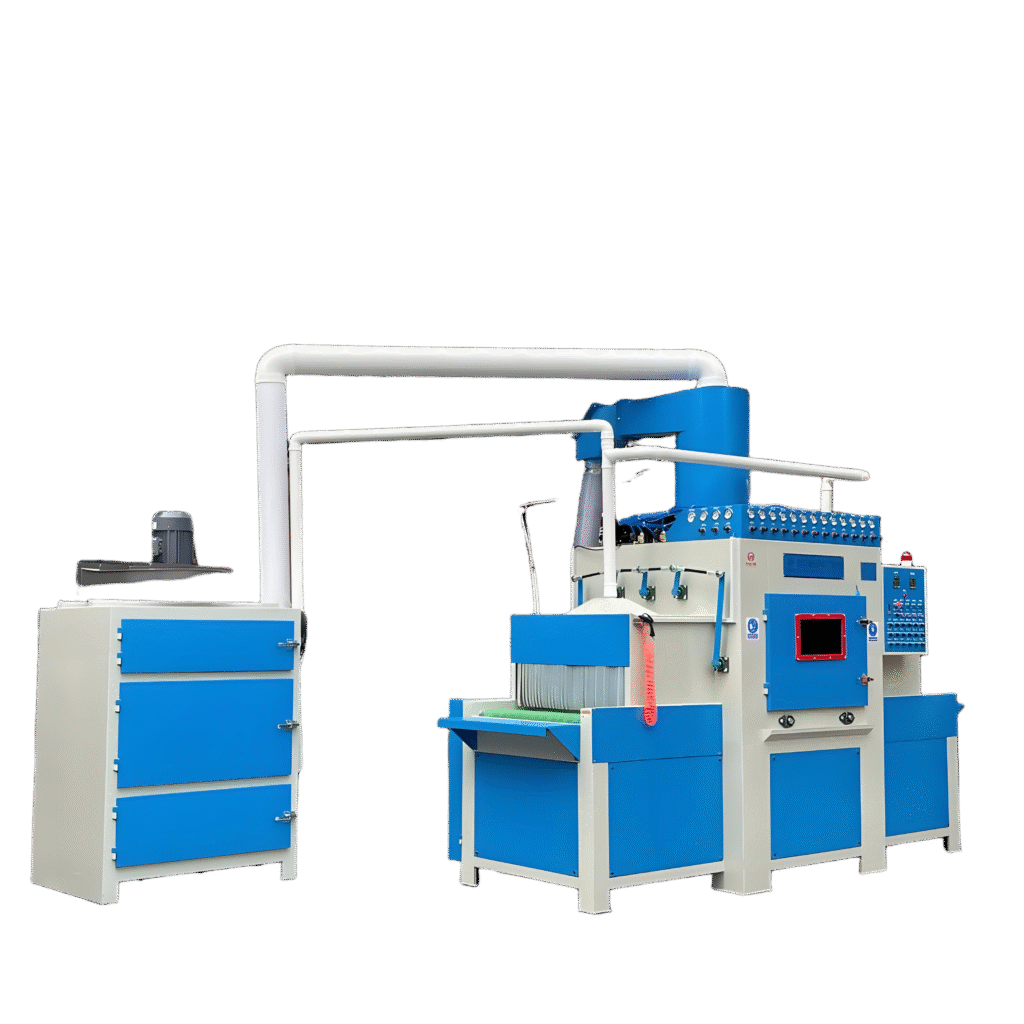
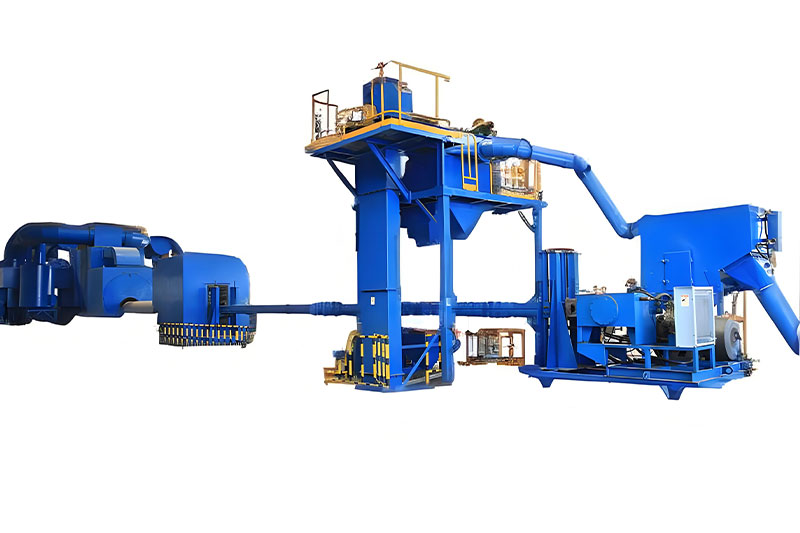
The best purchase decision compares required capacity, workpiece range, surface standard, automation, installation scope, energy use, maintenance, and spare parts over the complete service life. Our company provides Customizable OEM and ODM Shot Blasting Machine solutions as an experienced Manufacturer and Supplier, helping buyers select practical อุปกรณ์ล้อเลื่อน within a controlled budget.
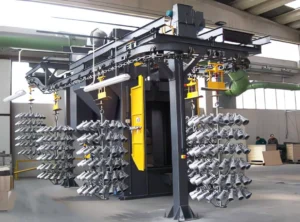
Separate the Initial Investment from Operating Cost
A supplier quotation usually shows the machine price, but the approved budget must cover the complete project. Procurement teams should separate one-time investment from recurring operating expenses before comparing proposals.
| ประเภทค่าใช้จ่าย | Typical items to review | Budget control question |
| One-time investment | Machine, dust collector, conveyor, controls, tooling, freight, installation, and commissioning | Are all required systems included in the quoted scope? |
| Infrastructure | Foundation, electrical work, ventilation, ducting, lifting, building modifications, and fire protection | Will site preparation create additional costs? |
| Operating cost | Abrasive, electricity, compressed air, filters, labor, cleaning, and waste handling | What will the machine cost per shift or per treated workpiece? |
| Lifecycle cost | Wear parts, repairs, software support, upgrades, training, and shutdown losses | Can the Supplier provide reliable long-term support? |
The lowest purchase price is not necessarily the lowest-cost solution. A complete comparison should estimate total cost of ownership using the following structure:
Total cost of ownership = initial investment + installation and infrastructure + operating costs + maintenance and spare parts + expected quality and downtime losses
Select Capacity from Actual Production Requirements
Over-provisioning is a common source of unnecessary capital expenditure. A machine with excessive blast chamber size, motor power, automation, or conveyor capacity may increase purchase price, energy consumption, maintenance requirements, and spare parts inventory without delivering a practical benefit.
Prepare a verified requirement sheet
- Maximum and minimum workpiece dimensions
- Maximum individual weight and batch weight
- Required pieces per hour or tonnes per shift
- Material type and allowable impact intensity
- Required cleanliness and surface roughness standard
- Loading, unloading, and product handling method
- Available workshop space and utility capacity
- Expected production growth during the equipment service life
Choose capacity using current demand, realistic growth, and a reasonable operating margin rather than an exaggerated future scenario. If products vary significantly, request a process review from the Manufacturer. A Customizable configuration may provide adjustable cycle time, interchangeable tooling, or variable conveyor speed instead of an unnecessarily large machine.
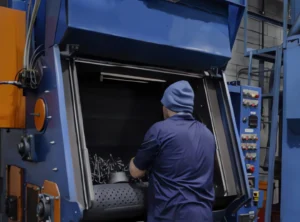
Compare Supplier Quotes on an Equal Scope
Different Suppliers may use different definitions of standard scope. One quotation may include dust collection and commissioning, while another may list them as options. Procurement should issue the same technical specification to every bidder and normalize all commercial proposals before selecting a Manufacturer.
Key quotation comparison points
- Confirm machine model, effective working dimensions, load capacity, and rated throughput.
- Check blast wheel quantity, motor power, material, balancing method, and expected service life.
- Verify abrasive circulation, separation, storage, recovery, and consumption assumptions.
- Compare dust collector airflow, filter area, emission performance, and disposal method.
- Review control system functions, safety devices, language options, and data interfaces.
- Identify included installation, commissioning, operator training, testing, and documentation.
- List excluded costs such as freight, civil work, electrical connection, cranes, and taxes.
- Confirm delivery milestones, acceptance standards, warranty conditions, and compensation clauses.
| Commercial item | คำถามสำหรับการจัดซื้อ |
| Machine price | Does it include all production-critical components? |
| Optional functions | Are they necessary for current products or merely future possibilities? |
| Installation | Who provides technicians, tools, travel, and site supervision? |
| Acceptance | Are throughput, cleanliness, noise, dust, and media consumption measurable? |
| Payment terms | Are payments linked to design approval, factory testing, delivery, and acceptance? |
Control Spare Parts and Maintenance Costs
Spare parts can significantly affect the real cost of อุปกรณ์ล้อเลื่อน. Request a recommended inventory for commissioning, the first two years, and normal service life. Separate fast-wearing components from critical electrical and mechanical parts.
Evaluate the spare parts program
- Obtain prices and expected replacement intervals for blast wheels, blades, liners, screens, filters, seals, and belts.
- Confirm whether wear parts are manufactured in-house or sourced externally.
- Check interchangeability and compatibility of standard components.
- Request lead times, minimum order quantities, packaging, and shipping costs.
- Ask whether technical support is available for troubleshooting and replacement.
- Include annual spare parts expenditure in the TCO model.
A dependable OEM or ODM partner should provide drawings, manuals, maintenance schedules, electrical documentation, and a clear parts identification system. Low-cost parts are not beneficial if uncertain quality causes repeated downtime or surface defects.
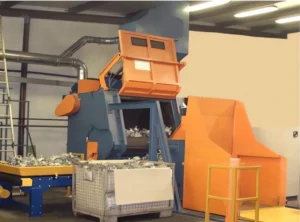
Make the Purchase Decision on TCO and Risk
Before approval, score each proposal for technical fit, total cost, supplier capability, delivery risk, and after-sales support. Do not pay for features that do not improve throughput, quality, safety, or labor efficiency. At the same time, do not remove essential dust control, guarding, testing, or maintenance access to achieve a lower headline price.
Final procurement checklist
- Does the solution fit the actual workpiece and production profile?
- Are one-time and recurring costs separately documented?
- Are quote scopes technically and commercially comparable?
- Are spare parts, service response, and training contractually defined?
- Can the Supplier demonstrate relevant equipment and process experience?
- Are factory acceptance and site acceptance criteria measurable?
Build your budget around verified production data and total ownership cost. Contact our team for a site-based assessment and a Customizable OEM or ODM proposal that balances Shot Blasting Machine performance, investment, maintenance, and long-term operating value.
 Thai
Thai  English
  Russian
  Spanish
  Portuguese
  French
  Indonesian