
Single surface treatment has flaws; combining Wheelblast Equipment with sandblasting/pickling avoids quality risks and ensures optimal results.
This guide details combined application scenarios, operation points of Wheelblast Equipment with sandblasting/pickling, helping improve surface treatment efficiency and quality.
Explore below to master key schemes of Wheelblast Equipment and sandblasting combined applications.
What Are the Scenarios and Operation Points of Wheelblast Equipment Combined with Sandblasting?
Combining Wheelblast Equipment with sandblasting integrates the high-efficiency of wheel blast and the precision of sandblasting, making it ideal for complex workpieces that require both large-area cleaning and fine finishing. Typical scenarios include large steel structures (bridges, ship hulls), precision mechanical parts, and automotive components. For large steel structures, Wheelblast Equipment is first used for high-speed shot projection to quickly remove thick oxide skin, rust, and welding slag—this step completes 80% of the cleaning work efficiently. Then, sandblasting is applied to local dead angles (welding seams, bolt holes) and areas requiring high surface finish, using fine abrasives to achieve uniform roughness. Operation points: strictly follow the sequence of Wheelblast Equipment first, then sandblasting, to prevent fine sandblasting abrasives from being embedded in the workpiece surface during wheel blast. Adjust Wheelblast Equipment parameters (abrasive size 1.0-1.2mm, shot flow rate 40-50 kg/min) for rough cleaning, and use small-nozzle sandblasting equipment (abrasive size 0.3-0.5mm) for fine processing. Ensure the interval between the two processes does not exceed 2 hours to avoid re-oxidation. This combination improves efficiency by 30-40% compared to single sandblasting and enhances surface treatment quality significantly.
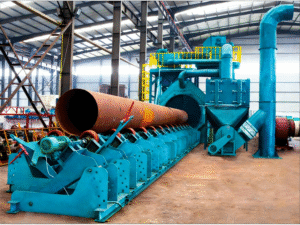
What Are the Scenarios and Operation Points of Wheelblast Equipment Combined with Pickling?
Wheelblast Equipment combined with pickling is widely used for workpieces requiring high-purity surfaces, such as stainless steel components, high-strength steel castings, and aerospace parts. Pickling can thoroughly remove stubborn oxide scale and impurities that Wheelblast Equipment alone cannot eliminate, while Wheelblast Equipment pre-treatment breaks dense oxide layers to speed up pickling. Application scenarios include stainless steel pipe production, high-pressure boiler components, and precision forgings. For stainless steel pipes, Wheelblast Equipment first performs shot blasting to create micro-cracks on the surface oxide scale, allowing pickling solution to penetrate quickly. Then, the workpiece is immersed in a mixed acid solution (hydrochloric acid + nitric acid) for pickling. Operation points: control Wheelblast Equipment’s shot intensity (Almen intensity 0.2-0.3A) to avoid damaging the base material. After wheel blast, clean the surface with high-pressure water to remove residual abrasives before pickling—this prevents abrasives from reacting with acid and affecting pickling effect. Strictly control pickling temperature (40-60℃) and time (5-15 minutes) to avoid over-pickling. Post-pickling, neutralize and passivate immediately. This combination reduces pickling time by 50% and ensures surface purity, avoiding defects from incomplete oxide removal. Notably, sandblasting is sometimes used as a supplementary process here for local fine cleaning after pickling.
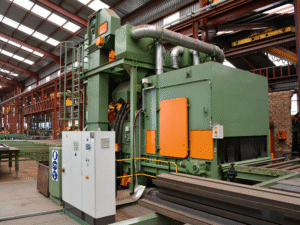
What Are the Core Advantages of Combining Wheelblast Equipment with Sandblasting/Pickling?
Combining Wheelblast Equipment with sandblasting/pickling has obvious advantages over single processes, meeting modern industrial strict requirements. First, improved quality: Wheelblast Equipment handles large-area rough cleaning, sandblasting achieves fine finishing, and pickling removes residual impurities—multi-stage treatment ensures high cleanliness and uniform roughness. Second, enhanced efficiency: ความเร็วสูงของอุปกรณ์ Wheelblast ช่วยลดภาระการทำงานในกระบวนการถัดไป และการเตรียมพื้นผิวล่วงหน้าช่วยลดเวลาการทำทรายพ่นและการหมัก เช่น การจัดการโครงสร้างเหล็กขนาดใหญ่ด้วยอุปกรณ์ Wheelblast + การทำทรายพ่นมีประสิทธิภาพมากกว่าการทำทรายพ่นเพียงอย่างเดียวถึง 30%. ประการที่สาม การลดต้นทุน: การรวมช่วยลดการใช้วัสดุขัดทรายในการทำทรายพ่นลง 25% และการใช้สารละลายกรดในการหมักลง 30% ทำให้ลดต้นทุนการทำซ้ำจากการบำบัดที่ไม่สมบูรณ์. ประการที่สี่ การขยายขอบเขตการใช้งาน: มันสามารถจัดการชิ้นงานที่มีรูปทรงซับซ้อน ชิ้นส่วนที่มีออกไซด์หนา และความต้องการที่มีความแม่นยำสูงซึ่งกระบวนการเดี่ยวมีปัญหา นอกจากนี้ กระบวนการรวมยังช่วยปรับปรุงการยึดเกาะของการเคลือบ/การชุบทุติยภูมิขยายอายุการใช้งานของชิ้นงาน. ข้อดีเหล่านี้ทำให้การใช้ อุปกรณ์ Wheelblast + การทำทรายพ่น/การหมัก เป็นทางเลือกหลักในอุตสาหกรรมการผลิตระดับสูง.
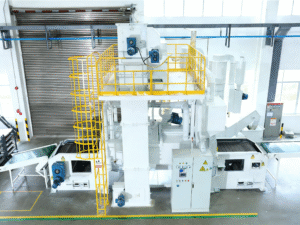
ควรระมัดระวังอะไรบ้างเมื่อรวมอุปกรณ์ Wheelblast กับการทำทรายพ่น/การหมัก?
เพื่อให้มั่นใจในผลลัพธ์และความปลอดภัยของการรวมอุปกรณ์ Wheelblast กับการทำทรายพ่น/การหมัก, จำเป็นต้องปฏิบัติตามมาตรการระวังที่สำคัญ. ประการแรก ลำดับกระบวนการ: สำหรับอุปกรณ์ Wheelblast + การทำทรายพ่น ควรใช้การยิงล้อก่อนเสมอเพื่อหลีกเลี่ยงการติดขัดของวัสดุขัดทรายในระหว่างการยิงล้อ สำหรับอุปกรณ์ Wheelblast + การหมัก การเตรียมพื้นผิวด้วยการยิงล้อเป็นสิ่งจำเป็นเพื่อให้แน่ใจว่ากรดสามารถซึมผ่านได้. ประการที่สอง การทำความสะอาดระหว่างกระบวนการ: หลังจากการใช้งานอุปกรณ์ Wheelblast ควรทำความสะอาดพื้นผิวด้วยอากาศ/น้ำแรงดันสูงเพื่อลบวัสดุขัดทรายและฝุ่นที่เหลืออยู่ ป้องกันไม่ให้เกิดม contamination ใหม่ในกระบวนการทำทรายพ่น/การหมัก. ประการที่สาม การจับคู่เครื่องมือ: เลือกอุปกรณ์ Wheelblast และอุปกรณ์ทำทรายพ่นที่ตรงกับขนาดของชิ้นงานและความต้องการการบำบัด สำหรับชิ้นส่วนที่มีความแม่นยำขนาดเล็ก ควรใช้เครื่อง Wheelblast ขนาดเล็กพร้อมกับการทำทรายพ่นแบบหัวฉีดละเอียด. ประการที่สี่ ความปลอดภัยด้านสิ่งแวดล้อม: ติดตั้งระบบกำจัดฝุ่นบนอุปกรณ์ Wheelblast เพื่อลดมลพิษจากฝุ่น การทำทรายพ่นควรทำในห้องปิด และการหมักต้องอยู่ในโรงงานที่ทนทานต่อการกัดกร่อน และผู้ปฏิบัติงานต้องสวมใส่อุปกรณ์ป้องกัน. ประการที่ห้า การตรวจสอบคุณภาพ: ตรวจสอบความสะอาดและความหยาบของพื้นผิวหลังจากแต่ละกระบวนการ (อุปกรณ์ Wheelblast, การทำทรายพ่น, การหมัก) เพื่อให้แน่ใจว่ามีการปฏิบัติตาม มาตรการระวังเหล่านี้ช่วยหลีกเลี่ยงการล้มเหลวของกระบวนการและความเสี่ยงในคุณภาพ, เพื่อให้มั่นใจในการปฏิบัติการที่มีเสถียรภาพ.
บทสรุป
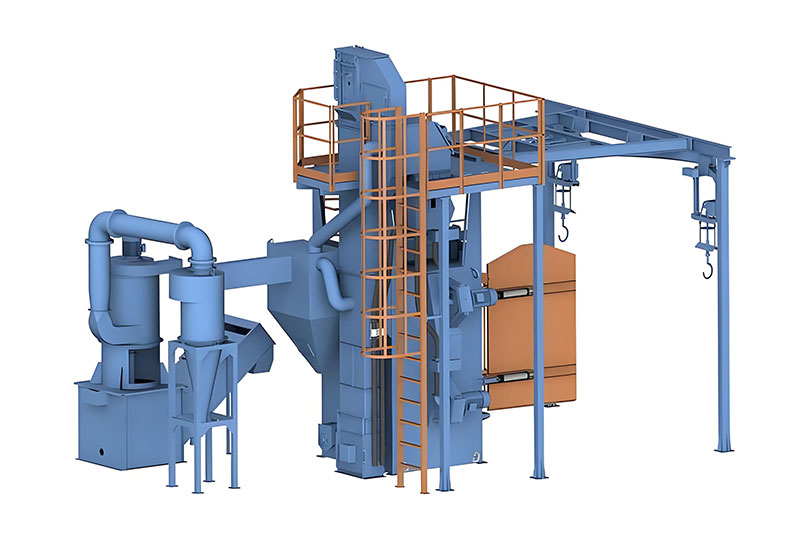
Combining Wheelblast Equipment with sandblasting/pickling optimizes surface treatment quality and efficiency.
 Thai
Thai  English
  Russian
  Spanish
  Portuguese
  French
  Indonesian