
Automotive casting inefficiency plagues manufacturers; horizontal flaskless molding machine and sand casting molding machine offer solutions.
This article explores horizontal flaskless molding machine applications in automotive casting via case studies, showing how it outperforms traditional sand casting molding machine.
Explore real case studies of horizontal flaskless molding machine in automotive casting below.
Why Horizontal Flaskless Molding Machine Is Ideal for Automotive Casting Parts Production
Automotive casting parts, including engine blocks, cylinder heads, brake calipers, and battery boxes for electric vehicles, require high precision, consistency, and efficiency—demands that the horizontal flaskless molding machine excels at meeting, far surpassing many traditional sand casting molding machine models.
- Unlike conventional sand casting molding machine that relies on flasks to support molding sand, the horizontal flaskless molding machine eliminates flasks entirely, using high-strength, compacted sand molds that maintain shape without external support. This design not only reduces material and storage costs but also streamlines the molding process, making the horizontal flaskless molding machine faster and more flexible for automotive casting’s diverse part requirements.
- The horizontal flaskless molding machine boasts automated sand feeding, compaction, and mold handling, reducing labor reliance and human error—critical for automotive casting, where even minor dimensional deviations can render parts unfit for use.
- Additionally, the horizontal flaskless molding machine offers superior dimensional accuracy (tolerances as tight as ±0.05mm) and surface finish, reducing the need for secondary machining and cutting production time.While traditional เครื่องจักรหล่อทราย can produce automotive casting parts, they lack the speed, consistency, and cost-efficiency of the horizontal flaskless molding machine, especially for high-volume or complex automotive components. For B2B automotive casting manufacturers, investing in a horizontal flaskless molding machine is a strategic move to meet industry demands and gain a competitive edge.
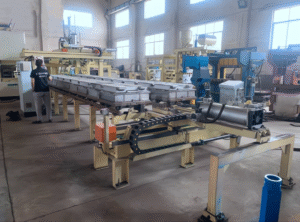
Case Study 1: Horizontal Flaskless Molding Machine for Automotive Engine Block Production
A leading global automotive component manufacturer specializing in engine blocks faced persistent challenges with their traditional sand casting molding machine: low production efficiency, high scrap rates (12-15%), and inconsistent part quality, which delayed deliveries and increased operational costs.
- Engine blocks require intricate internal structures, precise dimensional accuracy, and uniform material density—requirements that their outdated sand casting molding machine struggled to meet. To address these issues, the manufacturer adopted a horizontal flaskless molding machine from Chong Jen Machinery, a professional supplier with deep expertise in automotive casting equipment.
- The horizontal flaskless molding machine’s automated compaction system ensured uniform sand density, eliminating porosity and shrinkage defects common with their previous sand casting molding machine.The machine’s flaskless design reduced mold handling time by 30%, while its integrated core-setting feature streamlined the production of complex engine block geometries.
After implementing the horizontal flaskless molding machine, the manufacturer achieved remarkable results: scrap rates dropped to 2.8%, production efficiency increased by 40%, and per-unit production costs decreased by 22%. The table below compares key performance metrics before and after adopting the horizontal flaskless molding machine:
| Performance Metric | Traditional Sand Casting Molding Machine | Chong Jen Horizontal Flaskless Molding Machine | Improvement |
| Scrap Rate | 12-15% | 2.8% | 75%+ |
| Production Efficiency (Units/Hour) | 18 | 32 | 40% |
| Per-Unit Production Cost | $48 | $37.44 | 22% |
Case Study 2: Horizontal Flaskless Molding Machine for Electric Vehicle Battery Box Casting
With the rise of electric vehicles (EVs), a regional automotive manufacturer sought to expand into EV battery box production, but their existing sand casting molding machine was unable to meet the strict requirements of battery box components.
- EV battery boxes demand lightweight, high-strength, and leak-proof castings with precise dimensional accuracy—standards that the traditional sand casting molding machine could not consistently achieve, leading to frequent part failures during testing. The manufacturer turned to a horizontal flaskless molding machine to overcome these challenges, leveraging its advanced features to optimize battery box casting.
- The horizontal flaskless molding machine’s precise sand compaction (0.7-0.9 MPa) ensured uniform mold density, preventing leaks and structural weaknesses in the battery boxes. Its automated workflow, from sand preparation to mold release, reduced production cycle time by 35% compared to the sand casting molding machine, allowing the manufacturer to scale production quickly.
Additionally, the horizontal flaskless molding machine’s flexibility enabled easy switching between different battery box designs, critical as EV models evolve rapidly. Chong Jen Machinery provided technical support to optimize the horizontal flaskless molding machine’s parameters for EV battery box casting, ensuring the parts met international safety standards.Within six months, the manufacturer increased EV battery box production by 50%, reduced scrap rates to 3.2%, and secured long-term contracts with two major EV manufacturers—all made possible by the horizontal flaskless molding machine’s superior performance over traditional sand casting molding machine.
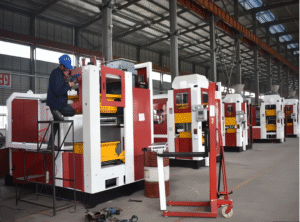
Key Advantages of Horizontal Flaskless Molding Machine Over Traditional Sand Casting Molding Machine
The two case studies highlight the clear advantages of the horizontal flaskless molding machine over traditional sand casting molding machine in automotive casting parts production.
- First, efficiency: the horizontal flaskless molding machine eliminates flask handling, reducing mold cycle time by 25-40% compared to sand casting molding machine, making it ideal for high-volume automotive production.
- Second, quality: the horizontal flaskless molding machine’s automated compaction and precise control ensure consistent dimensional accuracy and surface finish, reducing scrap rates by 70% or more—critical for automotive parts that require strict tolerances.
- Third, cost savings: by reducing labor, material waste, and secondary machining, the horizontal flaskless molding machine lowers per-unit production costs by 15-25%, delivering a faster return on investment than sand casting molding machine.
- Fourth, flexibility: the horizontal flaskless molding machine can produce a wide range of automotive casting parts, from small brake components to large engine blocks, without the need for different flasks, unlike เครื่องจักรหล่อทราย that requires specialized flasks for different part sizes.
- Finally, sustainability: the horizontal flaskless molding machine’s sand reclamation system recycles used sand, reducing material waste and environmental impact—an increasingly important factor for automotive manufacturers focused on green production. These advantages make the horizontal flaskless molding machine the preferred choice for modern automotive casting operations, outperforming traditional sand casting molding machine in every key metric.
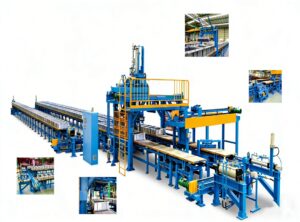
How to Choose the Right Horizontal Flaskless Molding Machine for Automotive Casting
Selecting the right horizontal flaskless molding machine for automotive casting parts production requires careful consideration of several factors, as not all horizontal flaskless molding machine models are suited for every application.
- First, match the machine’s capacity to your production volume: high-volume automotive manufacturers need a horizontal flaskless molding machine with a fast cycle time (36-50 seconds per mold) and high throughput, while small to medium-sized operations can opt for a more compact model.
- Second, prioritize precision: look for a horizontal flaskless molding machine with tight dimensional tolerances (±0.05mm or better) and uniform sand compaction, critical for complex automotive parts like engine blocks and battery boxes.
- Third, consider automation features: fully automated horizontal flaskless molding machine models with integrated core setters, conveyor systems, and PLC control reduce labor costs and human error, aligning with modern automotive production needs.
- ประการที่สี่, ประเมินการสนับสนุนหลังการขาย: เลือกผู้จำหน่ายที่ Chong Jen Machinery เสนอการฝึกอบรมทางเทคนิค, การติดตั้ง vorplace และการสนับสนุนการบำรุงรักษา 24 ชั่วโมง, เพื่อให้เครื่องทำแม่พิมพ์แบบไม่มีฟลาสก์ของคุณทำงานที่ประสิทธิภาพสูงสุด.
- สุดท้าย, เปรียบเทียบประสิทธิภาพกับเครื่องทำแม่พิมพ์แบบหล่อทรายที่คุณมี: คำนวณศักยภาพในการเพิ่มประสิทธิภาพ, อัตราส่วนของขยะที่ลดลง, และการประหยัดค่าใช้จ่ายเพื่อพิสูจน์การลงทุน. โดยมุ่งเน้นไปที่ปัจจัยเหล่านี้, ผู้ผลิตการหล่อรถยนต์ B2B สามารถเลือกเครื่องทำแม่พิมพ์แบบไม่มีฟลาสก์ที่ตรงตามความต้องการเฉพาะของพวกเขาและให้คุณค่าในระยะยาว.
บทสรุป
เครื่องทำแม่พิมพ์แบบไม่มีฟลาสก์ให้ประสิทธิภาพดีกว่าเครื่องทำแม่พิมพ์แบบหล่อทรายในด้านการหล่อรถยนต์.
Contact Chong Jen Machinery
สำหรับโซลูชันเครื่องทำแม่พิมพ์แบบไม่มีฟลาสก์ที่ปรับแต่งสำหรับชิ้นส่วนการหล่อรถยนต์,
contact Chong Jen Machinery: อีเมล: [email protected], หรือเยี่ยมชมเว็บไซต์ทางการของเราเพื่อดูกรณีศึกษาเพิ่มเติมและรายละเอียดทางเทคนิค.
 Thai
Thai  English
  Russian
  Spanish
  Portuguese
  French
  Indonesian