
Manual operation of shot blasting machines causes inefficiency and errors, leading to high costs—PLC control and intelligent monitoring enable impactful upgrades.
This guide explains optimizing shot blasting machine efficiency, intelligent monitoring applications, safety enhancements, cost-benefits, and future trends of automation upgrades with PLC and monitoring tech.
Explore practical insights below to unlock the full potential of your shot blasting machine through automation.
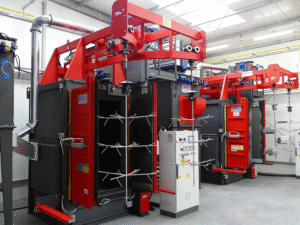
How to Optimize Shot Blasting Machine Efficiency Through PLC Control Systems?
PLC (Programmable Logic Controller) systems are pivotal in optimizing the efficiency of a shot blasting machine by automating core workflows and eliminating manual bottlenecks. A PLC integrates seamlessly with the shot blasting machine’s mechanical components, enabling precise control over blasting parameters such as shot flow rate, blast wheel speed, conveyor velocity, and processing time. For example, when processing different workpiece batches, the PLC retrieves preprogrammed parameter sets—adjusting the shot flow to 50 kg/min for small parts and 80 kg/min for large castings—ensuring optimal resource usage without human intervention. This automation reduces setup time by 40% compared to manual adjustments, allowing the shot blasting machine to handle more batches per hour. Additionally, PLCs synchronize the shot blasting process with upstream and downstream production lines, enabling continuous operation. By minimizing idle time and ensuring consistent parameter execution, PLC control boosts the shot blasting machine’s throughput by 30-50% while reducing shot media waste by 15-20%. The centralized control also allows operators to monitor multiple shot blasting machines simultaneously, further improving overall operational efficiency in industrial settings.
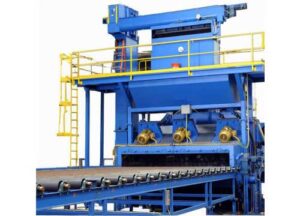
Application Examples and Advantages of Intelligent Monitoring Technology in Shot Blasting Machines?
Intelligent monitoring technology offers tangible applications and advantages that elevate the performance of a shot blasting machine. Real-world examples include vibration sensors installed on blast wheels to detect imbalance, temperature sensors monitoring motor heat, and laser sensors measuring workpiece surface roughness post-blasting. In an automotive component factory, these sensors enabled the shot blasting machine to automatically adjust blast intensity based on real-time data—reducing over-processing by 25% and ensuring uniform surface quality. Another example is ultrasonic sensors tracking shot media levels, triggering automatic refills to avoid production pauses. The key advantages are multifaceted: intelligent monitoring provides real-time visibility into the shot blasting machine’s operation, identifies inefficiencies promptly, and enables data-driven decision-making. It also reduces unplanned downtime by 45% through early fault detection, as sensors alert operators to potential issues (e.g., bearing wear, media clogs) before they escalate. For shot blasting processes requiring strict quality control, vision-based monitoring systems verify workpiece compliance, eliminating the need for manual inspections and accelerating throughput.
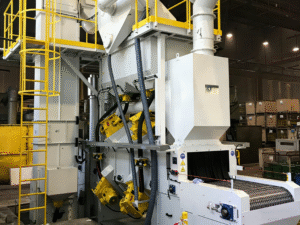
How PLC Control and Intelligent Monitoring Technology Enhance Equipment Safety?
PLC control and intelligent monitoring technology significantly enhance the safety of shot blasting machines by minimizing human-machine interaction and mitigating operational risks. PLCs integrate safety interlocks that automatically shut down the shot blasting machine if unsafe conditions are detected—such as open chamber doors, excessive vibration, or abnormal pressure in the dust collection system. This prevents operators from being exposed to high-velocity shot media or hazardous dust. Intelligent monitoring complements this by providing 24/7 oversight: gas sensors detect dust concentration exceeding safe limits, triggering the shot blasting machine to pause and activate additional ventilation. In heavy-industry applications, emergency stop signals from the PLC can halt all operations within 0.5 seconds, reducing accident severity. Furthermore, automated workflows reduce the need for operators to enter the shot blasting machine’s vicinity during operation, lowering the risk of injuries from moving parts or flying debris. Data logged by the monitoring system also supports safety audits, allowing managers to identify potential hazards and refine protocols. Together, these technologies create a safer working environment for operators while ensuring the shot blasting machine adheres to global safety standards.
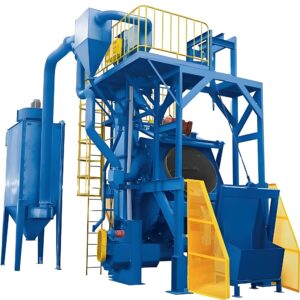
Cost-Benefit Analysis of Shot Blasting Machine Automation Upgrades?
Анализ соотношения затрат и выгод от автоматизации машин струйной обработки показывает значительную долгосрочную ценность, несмотря на первоначальные инвестиции. Начальные расходы, как правило, включают оборудование PLC (3,000-8,000), датчики и устройства мониторинга (2,000-5,000), а также услуги по интеграции (5,000-10,000). Тем не менее, возврат на инвестиции (ROI) достигается в течение 6-12 месяцев для большинства промышленных пользователей. С savings затрат на рабочую силу значительны: автоматизация снижает необходимость в операторах на полную ставку на 60-70%, так как один техник может контролировать несколько машин струйной обработки. Затраты на обслуживание снижаются на 30-40% благодаря предиктивному обслуживанию, обеспечиваемому интеллектуальным мониторингом — замена компонентов производится только тогда, когда данные указывают на износ, а не по фиксированному графику. Операционные сбережения включают снижение потребления абразивного материала (15-20%) и уменьшение потребления энергии (10-15%), благодаря оптимизированным параметрам PLC. Кроме того, продленный срок службы машин струйной обработки (на 2-3 года дольше) и сниженные уровни отходов (25-30%) дополнительно увеличивают прибыльность. Для крупных производственных предприятий ежегодная экономия затрат может превышать 150,000 за одну машину струйной обработки, что делает обновления автоматизации финансово целесообразным решением.
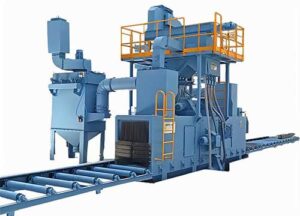
Будущие тренды и вызовы в развитии автоматизации машин струйной обработки?
Будущее автоматизации машин струйной обработки формируется новыми трендами и ключевыми вызовами. Один из заметных трендов — интеграция технологий Интернета вещей (IoT), которая позволяет удаленный мониторинг и управление машинами струйной обработки через облачные платформы, позволяя операторам настраивать параметры или устранять неисправности из любого места. Предсказательное обслуживание на основе ИИ — это еще одно достижение, когда алгоритмы машинного обучения анализируют данные мониторинга для более точного предсказания сбоев. Кроме того, переход к зеленому производству будет способствовать разработкеэнергоэффективных машин струйной обработки с более умным управлением энергией через PLC. Однако проблемы продолжают существовать: проблемы совместимости между устаревшими машинами струйной обработки и современными автоматизированными системами требуют дорогостоящей доработки. Риски кибербезопасности также возникают, поскольку подключенные машины струйной обработки становятся уязвимыми к утечкам данных. Кроме того, необходимость в квалифицированных техниках для управления и обслуживания систем PLC и мониторинга создает разрыв в рабочей силе в некоторых регионах. Преодоление этих проблем потребует сотрудничества между производителями, поставщиками технологий и учебными учреждениями, чтобы обеспечить бесшовную, безопасную и доступную автоматизацию для отрасли струйной обработки.
Заключение
Обновления автоматизации с использованием технологий PLC и мониторинга оптимизируют машины струйной обработки для повышения эффективности, безопасности и ценности.
Электронная почта:[email protected]
 Russian
  English
  Spanish
  Portuguese
  French
  Indonesian
  Thai
Thai