
How to Control Green Sand Compactability Before Automatic Molding to Prevent Production Losses
Inconsistent compactability causes scrap, cycle delays, and costly rework on automated lines. Foundries face rejected castings and downtime when sand properties drift. Implement a standardized pre-molding checklist that integrates moisture control, clay content checks, muller time optimization, and return sand handling to stabilize the sand molding machine and the entire foundry system.
Our company recommends a measurable compactability standard—target green sand compactability range, routine compactability tests every shift, and calibrated instruments—ensuring OEM/OEM-level consistency and enabling Supplier and Manufacturer traceability across the foundry system.
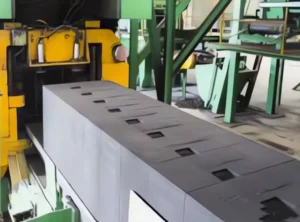
Key Pre-Molding Controls for Foundry Systems
Moisture and Clay Content Management
- Measure moisture with calibrated meters at feed points; target band ±0.2%.
- Control clay content via supplier certificates and periodic lab checks; excess clay raises stickiness and reduces permeability.
- Work with Manufacturer and Supplier to source customizable binder blends (OEM/ODM options) for stable responses in the molding machine.
Compactability Test and Muller Time Optimization
- Perform a compactability test (ASTM-style) at the muller discharge every shift.
- Record compactability vs. muller time; adjust muller time in 30–60 second increments to hit target density.
- Log results in the foundry system and share with Supplier/OEM contacts for process tuning.
Return Sand Temperature and Additives
- Monitor return sand temperature; above 35°C can soften binders—cooling or fresh sand addition required.
- Use additives (conditioning agents, controlled antioxidants) from approved ODM/OEM sources to restore properties without overcorrecting.
- Customizable dosing via automated dispensers on the sand molding machine ensures consistent distribution.
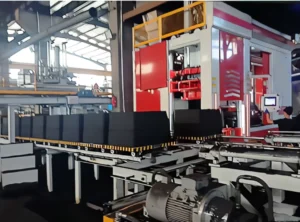
Lab Frequency, Defect Linkage, and Continuous Improvement
Establish a lab schedule tied to production risk: hourly checks during startup, shift checks in steady state, and escalation for any trending deviation. Link compactability data to defects (blowholes, dimensional shifts) in the foundry system database to trace root causes to specific molding machine batches, Manufacturer settings, or Supplier material lots.
Operational Steps for Integration
- Define compactability KPI and acceptance limits with Manufacturer and Supplier input.
- Install inline sensors and routine manual compactability tests near the molding machine.
- Set automated alerts in the foundry system for out-of-spec readings and require ODM/OEM support for corrective action.
Quick Reference Tables
| Target Compactability and Actions | ||
| Compactability (%) | Действие. | Ответственный |
| ≥ Target +0.3 | Reduce muller time; check moisture | Process Engineer / Manufacturer |
| Within Target ±0.3 | Continue monitoring; shift log | Operator / Supplier |
| ≤ Target -0.3 | Add conditioner or fresh sand; inspect return sand temp | Maintenance / ODM |
| Lab Frequency by Risk Level | ||
| Risk | Lab Frequency | Примечания |
| Startup/New Tooling | Hourly | Calibrate molding machine and confirm OEM settings |
| Steady Production | На смену | Log to foundry system; notify Supplier on drift |
| High Defect Rate | Continuous until resolved | Engage Manufacturer/ODM for root cause |
Summary and Call to Action
Standardize compactability checks, partner with Manufacturer and Supplier for customizable OEM/ODM solutions, and integrate controls into your foundry system and molding machine workflows. Contact our team to audit your sand process and implement a robust pre-molding control plan now.
 Russian
  English
  Spanish
  Portuguese
  French
  Indonesian
  Thai
Thai