
Choosing Between a Roller Conveyor Shot Blasting Line and a Pass-Through Monorail System — Avoid Costly Mismatches
Selecting the wrong system causes rework, part damage, and production bottlenecks. Roller conveyor machines can deform thin plates and leave blind spots; pass-through machines may struggle with irregular castings or heavy H-beams. A structured comparison focused on workpiece compatibility, throughput, and site constraints helps procurement, enabling Customizable OEM/ODM options that fit budget and process goals.
Prioritize workpiece geometry, fixture needs, throughput, and protection; our company evaluates site conditions and recommends Manufacturer- or Supplier-backed, customizable shot blasting machine or wheelblast equipment solutions to minimize risk.
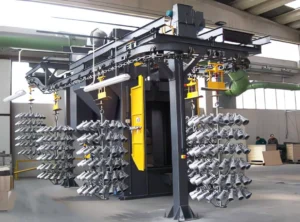
Overview: Core Differences
Operational principles
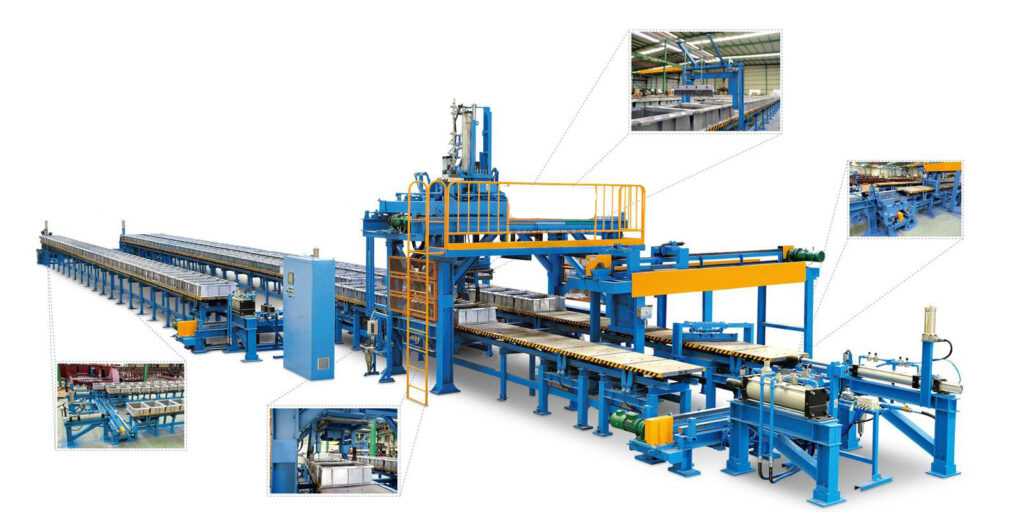
- Roller conveyor machine: parts sit on rollers and travel through a shot blasting machine; best for flat, rigid items with consistent footprints.
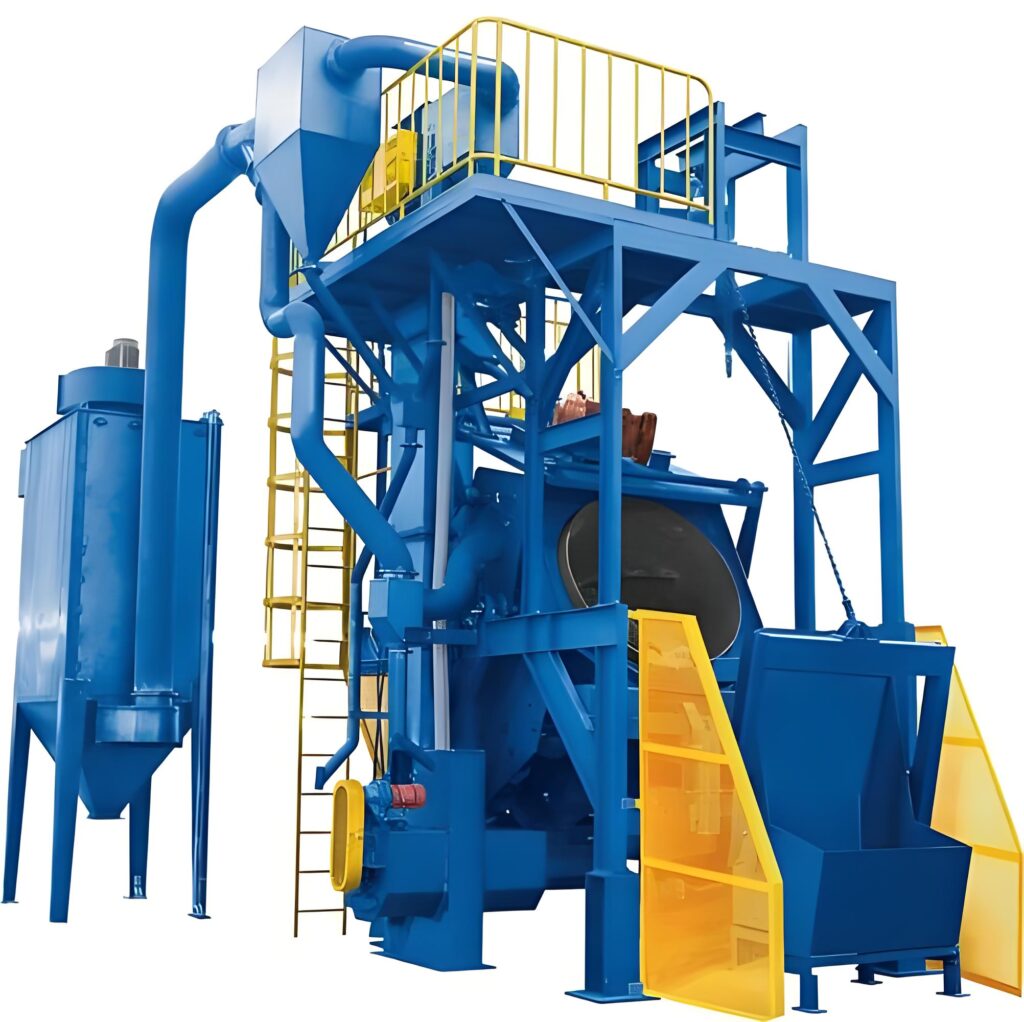
- Pass-through machine (overhead/monorail): parts are suspended and pass through the blast zone, enabling 360° access for suspended workpieces.
Key procurement considerations
- Workpiece compatibility: geometry, weight, and fragility determine conveyor type.
- Throughput and cycle time: line speed and indexing affect ROI.
- Site layout and headroom: monorail systems require overhead structure; roller lines require stable floor space.
- Protection and fixtures: thin-sheet protection and internal cavity masking must be planned early.
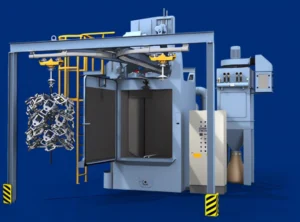
Workpiece Compatibility: Which System Fits Which Parts?
Long steel plates and H-beams
- Roller conveyor machine: can handle long plates if supported continuously, but risk of sagging or deformation for thin plates; requires precision roller spacing and support fixtures.
- Pass-through machine: monorail is less suitable for heavy, long H-beams unless engineered with heavy-duty hoists; custom trolleys from a Manufacturer or Supplier may be required.
Irregular castings and welded assemblies
- Rollers create blind spots for complex geometries—areas contacting rollers may not receive adequate cleaning.
- Pass-through machine: preferred for 360° cleaning of suspended workpieces; avoids dead corners and allows targeted fixturing for cavities.
Flat-lay conveying and thin-sheet protection
- Flat-lay on roller conveyors is efficient for consistent flat plates, but thin-sheet deformation is a major risk—use protective spacers, low-pressure settings, or Customizable roller cushions from OEMs.
- Pass-through systems using overhead hooks or frames can avoid direct contact with the blast surface, protecting thin sheets but increasing handling complexity.
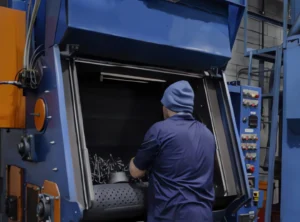
Quality Risks: Dead Corners, Collisions, and Mixed Production
Internal cavity dead corners
- Suspended 360° cleaning reduces internal cavity dead corners when fixtures expose openings.
- Roller systems can miss internal cavities unless parts are rotated or flipped—adds cycle time and handling.
Workpiece collisions and line layout
- Monorails risk collisions when mixing sizes or when trolleys hang at different heights—requires collision detection and careful SOPs.
- Roller lines minimize vertical interference but require consistent footprints; cross-part collisions are less common but misfeeds cause jams.
Mixed-production adaptation
- For multiple product categories, Customizable fixtures and adjustable parameters from an OEM/ODM ensure flexibility.
- Manufacturers and Suppliers offering modular wheelblast equipment and convertible conveyor modules simplify adaptation between runs.
Cost, Throughput, and Maintenance Tradeoffs
Decision-makers should weigh capital expense versus operational risk: roller conveyor lines often have lower initial cost for flat parts but higher risk of rework for mixed or delicate products. Pass-through machines cost more upfront and require overhead support, yet can reduce manual handling and increase first-pass yield for complex parts.
| High-level Comparison | ||
| Criterion | Roller Conveyor Machine | Pass-Through Machine |
| Best for | Flat, rigid plates; high-volume uniform parts | Suspended, irregular, or assembly-based parts needing 360° cleaning |
| Risk | Deformation of thin sheets; blind spots | Complex fixtures; potential collisions; higher CAPEX |
| Customization | Roller spacing, cushions, low-pressure settings | Custom trolleys, multi-hook fixtures, variable-height drives |
| Estimated Procurement Metrics | ||
| Metric | Roller Line (typical) | Monorail Pass-Through (typical) |
| Approx. CAPEX | $80k–$250k | $150k–$500k |
| Typical Throughput | High for uniform flats | High for mixed/complex parts with proper fixtures |
| Maintenance Complexity | Moderate (rollers, bearings) | Higher (hoists, trolleys, overhead track) |
Practical Selection Checklist and Implementation Steps
- List all workpiece types, weights, dimensions, and internal cavities; mark fragile or thin-sheet items.
- Match each part to required blast exposure (360°, single side, internal cleaning).
- Identify floor space, headroom, and structural capacity for overhead systems.
- Request modular, Customizable proposals from qualified Manufacturer and Supplier candidates, including OEM/ODM variants and warranty terms.
- Run pilot tests with representative parts—measure first-pass yield, handling time, and damage rate.
- Decide on final layout and specify consumables, fixtures, and protective measures (rollers cushions, masks, jigs).
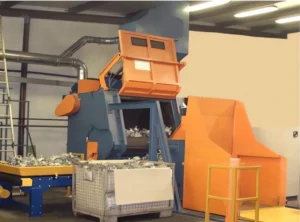
How We Help: Custom Solutions and Vendor Roles
- As a Manufacturer and supplier network partner, we provide OEM-grade wheelblast equipment and Customizable conveyor modules tailored to part families and site conditions.
- ODM options enable bespoke fixtures and trolley designs for suspended 360° cleaning, while standard roller conveyor machines are offered with protective cushions and adjustable supports.
- We advise on cost-benefit tradeoffs, pilot validation, and phased deployment to reduce production disruption.
Summary
Choose based on part geometry, throughput needs, and site constraints; pilot testing with Manufacturer/ Supplier-backed OEM or ODM variants prevents costly mistakes. Contact us for a customized evaluation and a proposal that matches your workpieces and budget.
 English
  Russian
  Spanish
  Portuguese
  French
  Indonesian
  Thai
Thai