
How to Solve Uneven Mold Texturing and Residue Cleaning Failures in Blasting Operations?
Most mold manufacturers face uneven surface texturing, residual oxide film, and partial over-polishing during surface treatment. Improper Blasting Room operation leads to defective mold surfaces, reduced product adhesion, shortened mold service life, and increased rework costs that severely hinder mass production stability.
Standard mold treatment relies on calibrated Sand Blasting Room parameters and process control. As a professional Manufacturer and Supplier, we support Customizable, OEM and ODM blasting solutions for all mold types.
Continue reading to master standardized operation steps, parameter matching rules and error prevention skills for professional mold surface blasting.
Core Pre-Operation Preparation for Mold Surface Blasting
Complete pre-operation preparation determines 80% of mold blasting quality, avoiding most common surface defects. Before running any Sala de Jateamento de Areia equipment, operators must complete standardized inspection and preparation work tailored to mold material and surface requirements.
- First, confirm mold base material hardness and target roughness standards, as steel molds, aluminum molds and alloy molds require completely different blasting parameters.
- Segundo, select matched dry and clean abrasives without oil or dust impurities. Fine stainless steel shots are suitable for precision mold texturing, while steel grit applies to heavy oxide removal.
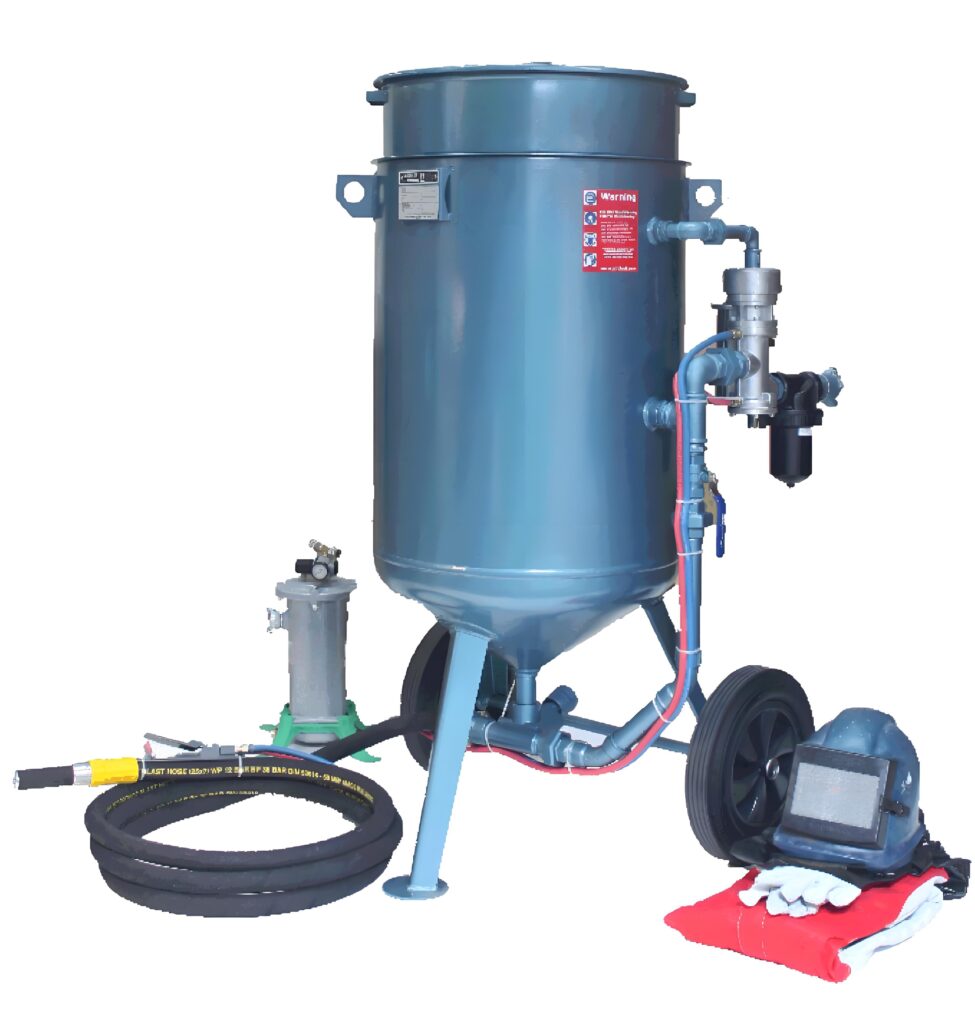
- Third, inspect Blasting Room sealing, negative pressure system and nozzle integrity to prevent dust overflow and unstable air pressure. As a reliable Manufacturer and Supplier, we provide standardized pre-operation checklists for all Customizable, OEM and ODM blasting projects to ensure consistent initial conditions.
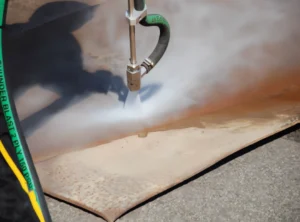
Standard Parameter Setting and Operation Steps for Mold Treatment
Precise parameter calibration is the core of high-quality mold surface treatment. Random pressure and distance adjustment is the main cause of uneven blasting effects. Professional Sand Blasting Room operation follows fixed parameter ranges for different mold scenarios, effectively balancing cleaning quality and mold protection.
- Blasting pressure: Precision mold finishing adopts 0.3–0.5MPa; heavy residue removal uses 0.5–0.7MPa to avoid edge chipping
- Nozzle distance: Maintain 150–250mm steady distance to prevent over-blasting or incomplete cleaning
- Spray angle: Keep 45°–60° inclined spraying, avoiding vertical impact that damages mold precision surfaces
- Moving speed: Uniform speed of 3–5m/min ensures consistent roughness across the entire mold surface
Operators need to conduct small-area trial blasting on non-key mold areas first, adjust parameters slightly according to the actual effect, and then carry out full-surface operation. This standardized process completely eliminates batch quality fluctuations.
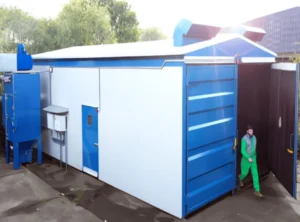
Why Unregulated Blasting Room Operation Damages Mold Precision?
Many factories pursue high cleaning efficiency and adopt excessive pressure and vertical spraying, causing irreversible precision damage to high-precision molds. Excessive air pressure produces strong instantaneous impact force, resulting in mold edge collapse, surface micro-deformation and dimensional tolerance deviation.
Too short spraying distance leads to local over-blasting, destroying the original mold texture datum, while unstable moving speed causes alternating deep and shallow surface traces. In addition, unfiltered impure abrasives leave scratch marks on smooth mold surfaces, directly affecting subsequent injection molding product surface quality. Only standardized Sala de Jateamento de Areia operation can protect mold precision while completing efficient surface treatment.
Scenario-Based Parameter Comparison for Different Mold Types
Different mold materials and usage scenarios require differentiated Blasting Room configuration schemes. The following comparison table provides accurate parameter references for daily mold surface treatment, suitable for Customizable, OEM and ODM mass processing projects:
| Mold Type | Working Pressure | Abrasive Type | Applicable Treatment Effect |
| Precision Alloy Mold | 0.3–0.4MPa | Fine Steel Shot | Uniform fine texturing, no surface damage |
| Ordinary Steel Mold | 0.4–0.6MPa | Granulado de Aço | Remove oxide and old coating thoroughly |
| Large Forging Mold | 0.6–0.7MPa | Medium Grit Abrasive | Efficient heavy residue cleaning |
Post-Operation Maintenance to Secure Long-Term Blasting Stability
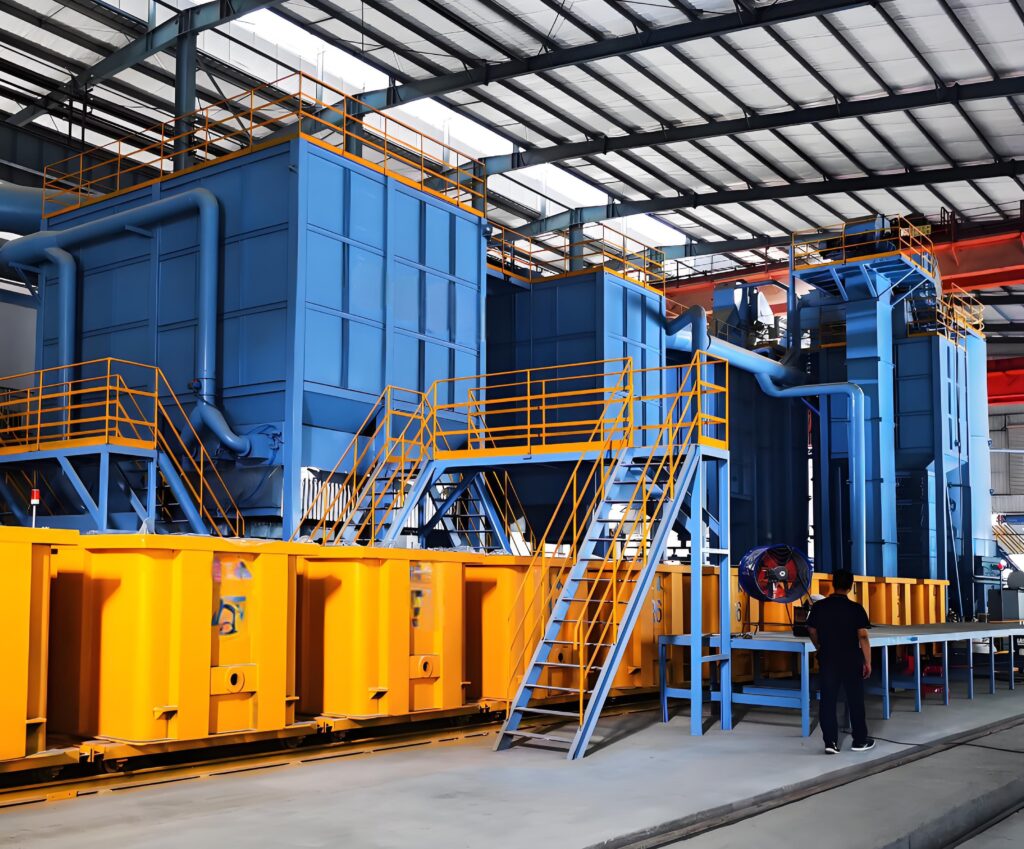
Standard post-operation processing is essential to maintain stable Sand Blasting Room performance and consistent mold treatment quality. After daily operation, clean residual abrasives and dust inside the Blasting Room, screen deteriorated abrasive particles, and replace blocked filter cartridges in time.
Check nozzle wear and pipeline tightness to avoid pressure loss in the next operation. Reasonable maintenance effectively extends equipment service life and ensures long-term stable output of mold surface treatment quality. As a professional Manufacturer and Supplier, we support one-stop Customizable, OEM and ODM after-sales debugging and maintenance guidance for global clients.
Master standardized blasting processes to stabilize mold quality and reduce defects. Inquire now for tailored Sand Blasting Room solutions and professional technical support.
 Portuguese
  English
  Russian
  Spanish
  French
  Indonesian
  Thai
Thai