
A vibração e o ruído do equipamento Wheelblast prejudicam os trabalhadores e o equipamento; medidas práticas resolvem esses problemas de forma eficaz.
Este guia detalha métodos práticos de redução de vibração e ruído para o equipamento Wheelblast, garantindo operações de jateamento seguras e estáveis.
Explore métodos específicos e pontos-chave para redução de vibração e ruído de máquinas de jateamento abaixo.
Quais são as principais fontes de vibração e ruído no equipamento Wheelblast?
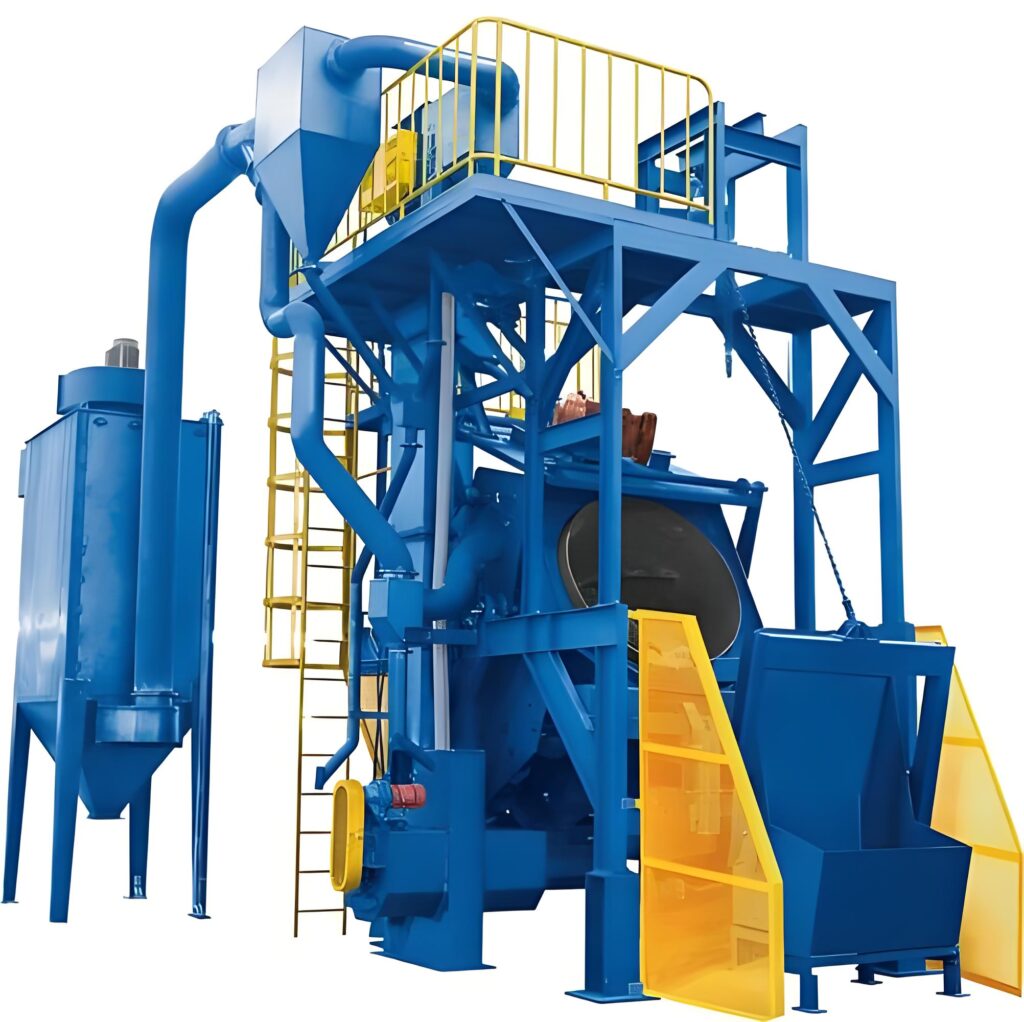
Para implementar uma redução eficaz de vibração e ruído, é primeiro necessário esclarecer suas principais fontes em Equipamento Wheelblast. A vibração vem principalmente de três aspectos:
- A rotação de alta velocidade da cabeça do impulsor durante o jateamento da máquina, que causa força centrífuga desequilibrada e desencadeia a vibração do equipamento;
- O impacto do abrasivo na peça de trabalho e na parede interna do equipamento durante shot blasting, gerando vibração de impacto que se espalha por toda a máquina;
- A operação instável do motor e do sistema de transmissão, como rolamentos soltos ou saída de potência desigual, levando a uma vibração adicional.
As fontes de ruído estão intimamente relacionadas à vibração: a rotação de alta velocidade do impulsor e o impacto do abrasivo durante o jateamento produzem ruído aerodinâmico e ruído de impacto, representando 70% do ruído total; o motor, ventilador e outros componentes geram ruído mecânico; a vibração da carcaça do equipamento e do pipeline produz ruído de radiação estrutural. Compreender essas fontes fornece uma direção direcionada para a subsequente redução de vibração e ruído.
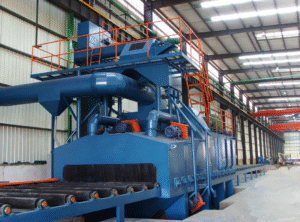
Como implementar a redução de vibração de fundação para o equipamento Wheelblast?
A redução de vibração de fundação é a medida básica para controlar a vibração do equipamento Wheelblast, e precisa ser implementada em conjunto com o modelo do equipamento e condições de local.
- Projete uma fundação de redução de vibração dedicada: de acordo com o peso e a intensidade de vibração do equipamento, despeje uma fundação de concreto armado com espessura não inferior a 30 cm, e coloque uma camada de isolamento de vibração entre a fundação e o solo. A camada de isolamento de vibração pode ser feita de almofadas de borracha, borracha amortecedora ou feltro asfáltico, com espessura de 5-10 cm, que pode absorver vibrações de forma eficaz e evitar que se espalhem para o ambiente ao redor.
- Assegure a nivelatividade e estabilidade da fundação: durante a instalação, use um nível para calibrar a fundação, evite força desigual sobre o equipamento, o que pode levar a um aumento da vibração.
- Fixe o equipamento firmemente: use high-strength anchor bolts to connect the Wheelblast Equipment to the foundation, and add shock-absorbing washers between the bolts and the equipment base to reduce vibration transmission. For large-scale Wheelblast Equipment, additional anti-vibration beams can be installed around the foundation to enhance the stability of the foundation and further reduce vibration amplitude during shot blasting.
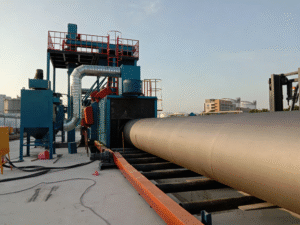
How to Reduce Vibration by Optimizing Wheelblast Equipment Structure?
Optimizing the structure of Wheelblast Equipment is an effective way to reduce vibration from the source, which is suitable for both new equipment and old equipment renovation.
- Optimize the impeller head structure: select high-precision balanced impellers, and conduct dynamic balance detection before installation to ensure that the impeller rotates stably without unbalanced centrifugal force; replace worn blades and shot wheels in time, as uneven wear will cause unbalanced rotation and increase vibration.
- Improve the equipment shell and inner lining: install wear-resistant and shock-absorbing lining plates (such as polyurethane lining plates) on the inner wall of the equipment, which can absorb the impact of abrasive during machine shot, reduce impact vibration, and also reduce noise; reinforce the equipment shell with steel plates to improve its rigidity, avoid vibration and noise caused by shell deformation.
- Optimize the transmission system: use flexible couplings to connect the motor and the impeller head, which can absorb the vibration generated by the motor and reduce the transmission of vibration to the impeller; regularly lubricate the bearings and gears of the transmission system to reduce friction vibration, ensure smooth operation, and further reduce the overall vibration of the Wheelblast Equipment.
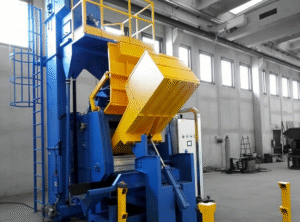
How to Implement Noise Reduction Measures for Wheelblast Equipment?
Noise reduction for Wheelblast Equipment needs to adopt comprehensive measures combining source control, transmission isolation and absorption.
- Control noise from the source: optimize machine shot parameters, appropriately reduce the impeller speed and abrasive flow rate under the premise of ensuring shot blasting efficiency, which can reduce impact noise and aerodynamic noise; select low-noise motors and fans, and install mufflers at the air inlet and outlet of the fan to reduce mechanical noise and aerodynamic noise.
- Isolate noise transmission: install a detachable sound insulation enclosure around the Wheelblast Equipment, the enclosure is made of double-layer steel plates with sound-absorbing cotton (thickness of 5-8cm) filled in the middle, which can reduce noise transmission by 30-40%; wrap the equipment pipeline with sound-absorbing tape or damping cloth to reduce noise generated by pipeline vibration.
- Strengthen noise absorption: install sound-absorbing panels on the inner wall of the workshop where the Wheelblast Equipment is located, and lay sound-absorbing floor tiles on the ground to absorb the scattered noise in the air; set up sound insulation barriers around the equipment if necessary, especially in areas close to the operation position, to protect workers from noise harm.
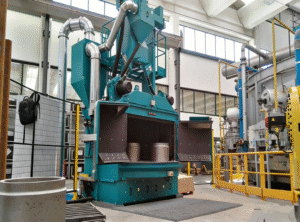
How to Maintain Vibration and Noise Reduction Effects of Wheelblast Equipment?
The vibration and noise reduction effect of Wheelblast Equipment needs regular maintenance to avoid performance degradation caused by wear or improper operation.
- Establish a daily inspection system: após cada shot blasting operation, check the vibration isolation layer, sound insulation enclosure and other components, and replace the aging or damaged rubber pads, sound-absorbing cotton in time; check the tightness of the equipment bolts and the wear of the impeller blades, and tighten or replace them in time to avoid increased vibration and noise.
- Conduct regular detection: use vibration meters and noise meters to detect the vibration amplitude and noise level of the equipment every week, compare with the standard value, and find out the abnormal situation in time to analyze the cause and handle it.
- Strengthen operator training: guide operators to master the correct operation method of Equipamento de Jateamento por Rodas, avoid improper operation (such as overloading, idling) leading to increased vibration and noise; let operators understand the importance of vibration and noise reduction maintenance, and timely report equipment abnormalities. Regular maintenance can ensure that the vibration and noise reduction measures of the equipment are always in good condition, and maintain long-term stable shot blasting operation.
Conclusão
Practical foundation, structure and maintenance measures reduce Wheelblast Equipment vibration and noise.
For professional Wheelblast Equipment vibration and noise reduction solutions,
entre em contato conosco por e-mail: [email protected]
 Portuguese
  English
  Russian
  Spanish
  French
  Indonesian
  Thai
Thai