
Comparing Total Project Risk: Standard vs Custom Equipamento de Explosão for Procurement Teams
Choosing between standard and custom blasting equipment risks schedule slips, cost overruns, or performance gaps. Procurement and engineering teams face unknown engineering hours, complex FATs, and spare parts uniqueness that delay production. Apply a risk-weighted checklist covering delivery risk, warranty boundaries, operator training, and lifecycle support to decide if customization is worth the investment.
Our company recommends scoring total cost of ownership, delivery certainty, and operational risk—prioritize solutions where OEM/ODM Manufacturer alignment, Supplier guarantees, and clear FAT plans reduce net project risk.
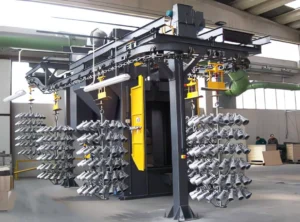
Decision Framework: When Customization Adds Value
Engineering Hours vs Performance Gain
- Estimate engineering hours required for custom blasting equipment development and compare to the performance delta over a standard máquina de jateamento.
- Calculate break-even: additional throughput or yield improvement × margin vs engineering and validation cost.
- Engage Manufacturer and ODM early to obtain realistic Customizable design estimates from Supplier proposals.
Delivery Risk and FAT Complexity
- Map delivery milestones: design, prototype, FAT, shipment, installation.
- Assess FAT complexity for jato de roda and other custom modules; custom FATs often require on-site trials and extended Manufacturer presence.
- Score delivery risk: Supplier reliability, distance, spare parts lead time, and logistics contingencies.
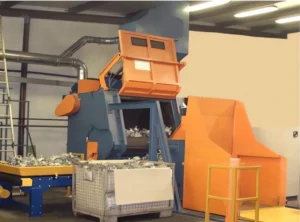
Operational Considerations
Spare Parts Uniqueness and Operator Training
- Custom blasting equipment typically uses unique spares; quantify lead times and consolidation options with Supplier and OEM channels.
- Plan operator and maintenance training: custom controls or process logic increase training hours and documentation needs.
- Where possible, specify Customizable modules that retain standard interfaces to lower spare part diversity and training overhead.
Warranty Boundaries and Lifecycle Support
- Negotiate warranty boundaries: cover for custom-engineered components versus standard máquina de jateamento parts.
- Confirm Manufacturer and ODM service support levels, escalation paths, and remote diagnostics for wheel blast and blasting equipment systems.
- Include lifecycle support clauses: spare part kits, PM schedules, and obsolescence management with the Supplier contract.
Risk Scoring Template and Example Tables
| Risk Score Weighting (Example) | |||
| Risk Factor | Peso | Standard Equipment | Custom Equipment |
| Engineering Hours | 25% | Low (1) | High (5) |
| Delivery Risk | 20% | Low (1) | Medium-High (4) |
| FAT Complexity | 15% | Low (1) | High (5) |
| Spare Parts Uniqueness | 15% | Low (1) | High (5) |
| Operator Training | 10% | Low (1) | Medium (3) |
| Lifecycle Support | 15% | Standard OEM (1) | Depends on Manufacturer/ODM (3) |
| Quick Trade-off Guide | ||
| Need | Prefer Standard Blasting Equipment | Prefer Custom Equipamento de Explosão |
| Fast delivery | Yes | Não |
| Unique geometry/process | Não | Yes |
| Minimize spare parts | Yes | Não |
| Future flexibility | Limited | High if designed with customizable modules |
Practical Steps to Quantify Total Project Risk
- Create a cross-functional scoring team: procurement, engineering, operations, and maintenance; include Supplier and Manufacturer input.
- Assign weights to risk categories (use table template) and score both standard and custom options.
- Run sensitivity analysis for delivery delays, FAT rework, and unique spare part lead times.
- Negotiate firm commitments from OEM/ODM and Supplier for lead times, training hours, and warranty remedies before finalizing selection.
Summary and Call to Action
Use the risk-weighted checklist, engage Manufacturer and Supplier early, and require clear OEM/ODM commitments for FAT, warranty, and lifecycle support. Contact our procurement advisory team to run your project risk score and select the optimal shot blasting machine or jato de roda solution.
 Portuguese
  English
  Russian
  Spanish
  French
  Indonesian
  Thai
Thai