
Severe Dust Overflow and Exceeded Emissions in Industrial Blasting Room Operations
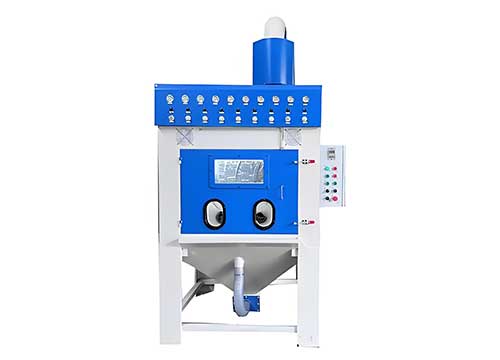
Many manufacturing plants face persistent indoor dust accumulation, outdoor emission overages, and operator visibility reduction during daily Sala de Jateamento de Areia operation. Excessive dust triggers frequent environmental inspection failures, reduces workpiece surface quality, and causes premature wear on internal Blasting Room mechanical components, creating long-term operational losses and safety hazards for production lines.
The standard dust removal configuration for industrial Sand Blasting Room requires 99.5% filtration efficiency and 0.3μm precision filtering. As a top vertical Manufacturer and Supplier, we deliver fully Customizable dust control solutions for all Blasting Room scenarios.
Project engineers and contractors can continue reading to explore real case root causes, parameter matching rules, and targeted upgrades for accurate scenario-based optimization.
Why Do Standard Blasting Room Systems Produce Excessive Dust?
Most excessive dust issues stem from mismatchednegative pressure parameters and non-standard system topology, rather than simple equipment quality problems. Many factory owners adopt universal standard dust collectors without considering actual workshop space, workpiece size and blasting intensity, leading to insufficient dust capture capacity of the Sand Blasting Room.
In addition, long-term operation causes filter cartridge blockage, pipeline air leakage and abrasive powder accumulation. These hidden faults gradually reduce the air circulation efficiency of the Blasting Room. Even newly installed equipment will experience dust overflow after 1–3 months of continuous operation if lacking regular parameter calibration and maintenance.
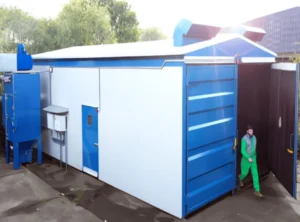
Core Technical Parameter Standards for Qualified Sand Blasting Room Dust Control
To eliminate excessive dust fundamentally, professional project matching must follow standardized technical parameters. As a reliable Manufacturer and Supplier, we summarize universal and Customizable industrial indicators for Blasting Room dust removal systems:
- Negative pressure value: Maintain stable -800Pa to -1200Pa inside the fully enclosed Sand Blasting Room to prevent floating dust diffusion
- Filter precision: Adopt 0.3μm ultra-fine filter cartridges to intercept metal dust and abrasive fine powder
- Air volume matching ratio: Configure 1800–2200m³/h air volume per cubic meter of Blasting Room space
- Automatic pulse cleaning cycle: Set 60–90 seconds interval to avoid filter cartridge blockage and pressure loss
Factories that ignore these matching parameters will inevitably face dust overflow, poor visibility and unqualified environmental discharge, which severely restricts standardized batch blasting production.
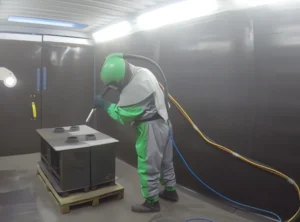
Scenario-Based Solution Upgrades for Different Blasting Room Environments
Different workshop layouts and production intensities require targeted Customizable upgrades. Universal dust removal schemes cannot adapt to diversified industrial scenarios. The following comparison table shows the differentiated configuration standards for three typical Sand Blasting Room application environments:
| Application Scenario | Core Environmental Challenge | Standard Upgrade Configuration | Eficiência na Remoção de Poeira |
| Small Closed Workshop | Poor air circulation, easy dust accumulation | Compact pulse dust collector + enhanced sealing structure | 99.2% |
| Large Open-Style Blasting Room | Large space, easy dust outward diffusion | High-negative-pressure centralized dust collection system | 99.6% |
| High-Frequency Batch Production | Fast filter blockage, rapid pressure attenuation | Automatic self-cleaning filter + dual-air-channel design | 99.8% |
For small closed workshops, enhancing cabin sealing performance is the core solution to avoid negative pressure loss. For large open Sand Blasting Room units, increasing matched air volume and negative pressure can completely solve dust diffusion. For high-frequency production lines, automatic pulse cleaning systems ensure long-term stable dust removal efficiency without frequent shutdown maintenance.
Daily Maintenance Rules to Prevent Recurring Excessive Dust Problems
Even fully upgraded Blasting Room equipment will suffer dust overflow without standardized daily maintenance. The core maintenance focus lies in real-time monitoring of pressure difference data and regular accessory replacement. When the filter cartridge pressure difference exceeds 150Pa, dust removal efficiency will drop sharply, requiring timely pulse cleaning or cartridge replacement.
Regular inspection of pipeline sealing, door gap rubber strips and ventilation status can effectively avoid air leakage faults. As a professional Manufacturer and Supplier, we provide one-stop Customizable after-sales maintenance guidance for all Sala de Jateamento de Areia equipment, helping enterprises maintain long-term stable environmental compliance and production efficiency.
Adopt scenario-matched configurations and standardized maintenance to eliminate blasting dust issues completely. Submit inquiries now for professional Blasting Room customization and technical upgrade solutions.
 Portuguese
  English
  Russian
  Spanish
  French
  Indonesian
  Thai
Thai