
Why Many Foundries Struggle With Unstable Sand Casting Quality and Low Yields
Most small and mid-sized foundries face recurring production pain points including inconsistent surface finish, hidden sand hole defects, and low casting qualification rates. These issues rarely stem from raw materials alone. In most cases, they arise from mismatched Molding Equipment, outdated molding parameters, and improper sand compaction control. Unstable process control wastes raw materials, delays orders, and raises long-term operational costs for batch Sand Casting production.
Reliable Sand Casting results depend on standardized processes and matched molding machinery. As a professional Manufacturer, we supply Customizable OEM and ODM clay sand molding machine and automatic sand molding machine solutions for global foundries.
This article breaks down core process principles, key control standards, and equipment selection rules to help you eliminate common casting defects and boost production efficiency.
Basic Principle and Complete Workflow of Modern Sand Casting
Sand Casting is the most widely used metal forming process in the global foundry industry. It utilizes bonded sand molds to form hollow cavities, injects molten metal into preset mold spaces, and obtains target workpieces after cooling, solidification and shakeout. The core advantage lies in low tooling cost, strong part adaptability, and support for both tiny precision parts and large mechanical castings.
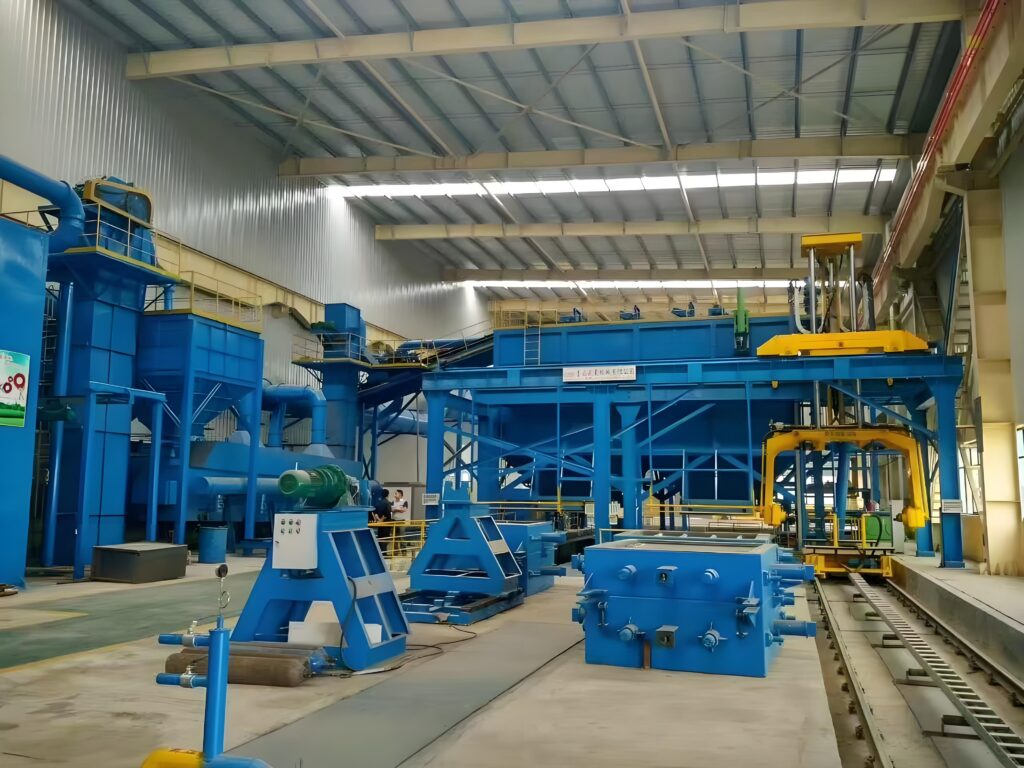
A complete standardized production workflow includes six fixed steps, all of which determine final product quality. Strict process control in every link is the foundation to reduce defective rates and stabilize batch consistency. Professional Supplier and Manufacturer teams always optimize the whole process flow according to client workpiece characteristics and production scale.
- Sand Mixing: Mix raw sand, binder, curing agent and water in precise proportions to ensure mold sand strength, air permeability and toughness, avoiding loose molds or poor gas discharge.
- Mold Making: Use professional Molding Equipment to compact molding sand and form standard casting cavities, the most critical link affecting workpiece dimensional accuracy.
- Core Making: Manufacture sand cores for complex inner structures such as holes and grooves to realize multi-dimensional casting shape requirements.
- Mold Assembly: Combine upper molds, lower molds and sand cores accurately to prevent mold dislocation and flash defects during pouring.
- Melting and Pouring: Heat metal materials to qualified molten state and fill the mold cavity steadily under standard temperature and speed.
- Cooling and Finishing: Wait for full solidification before shakeout, cutting, polishing and surface treatment to finish final castings.
Why Molding Equipment Selection Determines Sand Casting Batch Stability
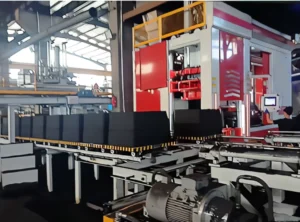
Many foundries ignore a core fact: manual process adjustments can only solve individual sporadic defects, while standardized Molding Equipment determines long-term batch stability. Traditional manual molding relies on worker experience, resulting in fluctuating compaction density and inconsistent mold size, which cannot support modern large-scale Sand Casting production.
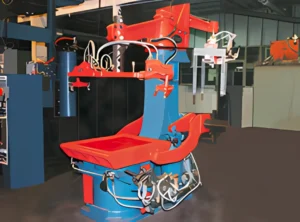
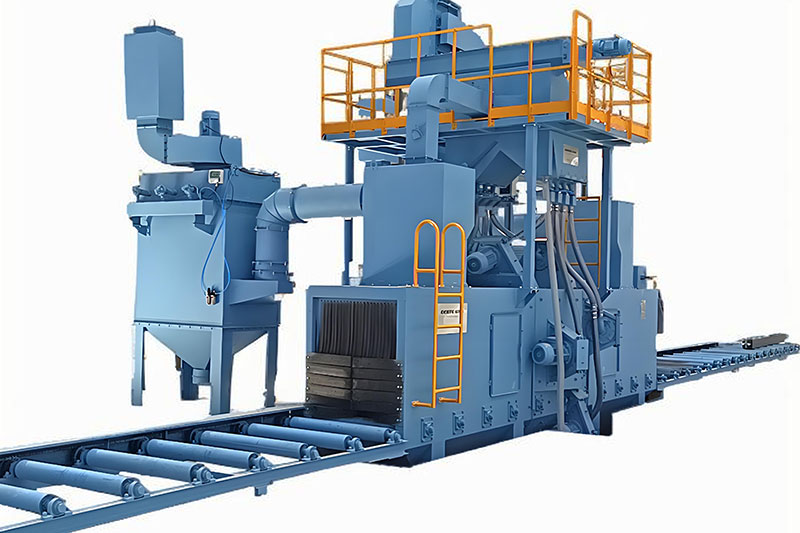
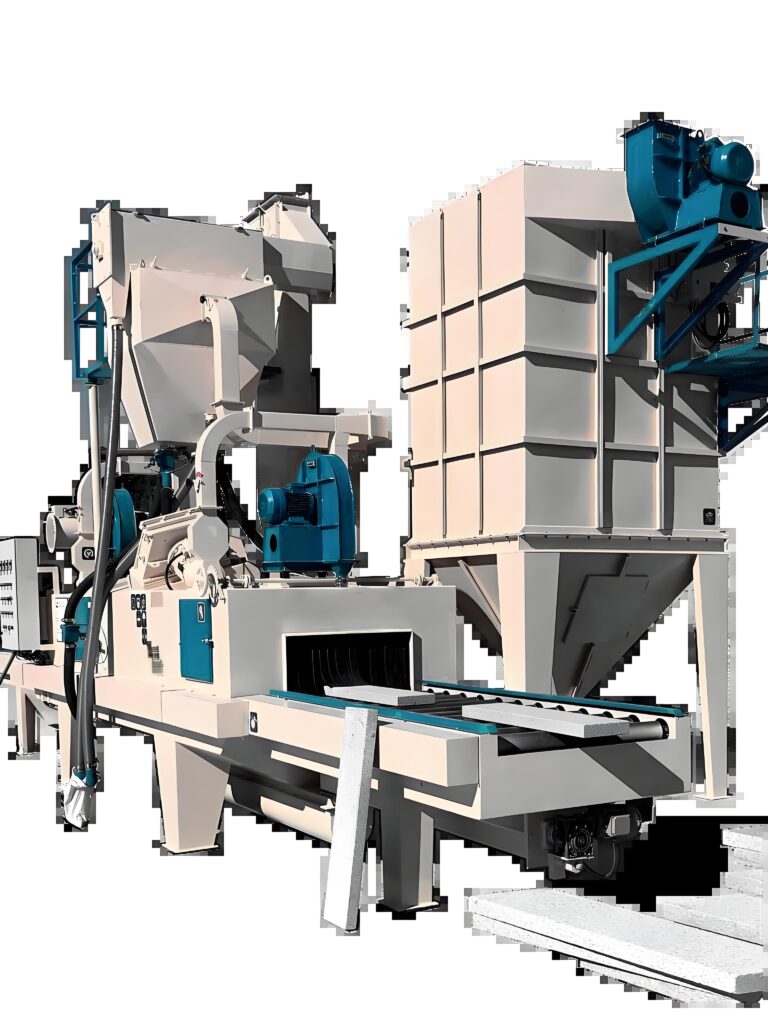
Different types of molding machines match different production scales and casting precision requirements. The clay sand molding machine is mainly used for conventional clay sand casting with low cost and strong versatility, suitable for ordinary iron castings and aluminum castings. The upgraded automatic sand molding machine realizes fully automatic sand feeding, compaction and mold flipping, greatly reducing manual errors and improving molding consistency.
Excellent Manufacturer teams provide Customizable parameter adjustment for all equipment. Through OEM structural modification and ODM function upgrading, the equipment can adapt to special workpiece sizes, workshop space and regional production standards, solving the batch instability problem of traditional fixed-spec molding machines.
Parameter Comparison: Clay Sand Molding Machine vs Automatic Sand Molding Machine
To help foundries and engineering purchasers select matched Molding Equipment accurately, we sort out core technical and production parameters of the two mainstream molding devices. This data comparison covers efficiency, precision, customization and applicable scenarios, completely solving equipment selection confusion in Sand Casting projects:
| Core Parameter | Clay Sand Molding Machine | Automatic Sand Molding Machine |
| Single Molding Cycle | 40–60 seconds per mold | 20–30 seconds per mold |
| Daily Batch Output | 600–900 molds | 1800–2500 molds |
| Mold Dimensional Tolerance | ±0.8mm, suitable for ordinary castings | ±0.3mm, suitable for precision castings |
| Labor Dependence | High, requires 2–3 operators | Low, only 1 monitoring operator |
| Customization Support | Basic OEM size adjustment | Full Customizable OEM/ODM upgrade |
| Applicable Scenario | Small-batch, multi-variety Sand Casting | Large-scale standardized mass production |
From the data, we can clearly conclude that clay sand molding machine is cost-effective for small-batch flexible production, while automatic sand molding machine is the best choice for foundries pursuing high efficiency and high qualification rate. Professional Supplier vendors will recommend targeted equipment combinations according to client order characteristics, instead of blindly pushing high-priced automatic equipment.
Common Sand Casting Defects and Equipment-Based Solutions
Most casting defects such as sand holes, air holes, shrinkage cavities and mold flash are not caused by raw sand problems, but by unreasonable molding pressure, unstable sand filling and uneven compaction density. Relying solely on manual inspection cannot eliminate hidden dangers; only standardized Molding Equipment can realize fundamental improvement.
Sand Hole and Air Hole Defects
These defects are mainly caused by insufficient mold air permeability and uneven sand compaction. Traditional manual molding leads to partial over-compaction or loose sand layers. The automatic sand molding machine adopts uniform pneumatic sand shooting and segmented pressure control, which ensures consistent internal density of the mold and smooth gas discharge, fundamentally reducing pore defects.
Dimensional Deviation and Flash
Mold dislocation and uneven parting surface fit are the main causes of flash and dimensional deviation. High-quality clay sand molding machine and automatic models are equipped with precise positioning structures. Meanwhile, Manufacturer teams can carry out Customable precision calibration and ODM positioning module upgrades to further improve mold assembly accuracy for high-precision casting projects.
Low Batch Consistency
Manual molding has large operational randomness, leading to inconsistent quality of front and rear batches. Automatic Molding Equipment fixes parameters such as sand volume, shooting time and compaction pressure through PLC programs, realizing fully repeatable molding standards. It is the core equipment guarantee for long-term stable batch Sand Casting production.
How to Choose a Qualified Equipment Supplier for Sand Casting Projects
Equipment performance is closely related to Manufacturer strength and after-sales service. Many purchasers only compare prices and ignore supplier technical capabilities, resulting in unupdated equipment parameters and unavailable Customizable services in the later stage. We summarize core audit standards for Molding Equipment procurement:
- Technical Capability Audit: Verify whether the supplier has independent R&D and debugging capabilities to support OEM appearance modification and ODM functional optimization.
- Process Matching Audit: Confirm that the Supplier can recommend targeted clay sand molding machine or automatic sand molding machine according to your sand type, workpiece size and output demand.
- After-Sales Audit: Check remote debugging service, spare parts supply and long-term parameter tuning support to avoid production stagnation caused by equipment failure.
- Compliance Audit: Confirm complete ISO9001 quality certification and CE safety certificationto ensure smooth cross-border delivery and legal production.
A trustworthy Manufacturer does not sell fixed standard equipment, but provides customized overall Sand Casting production solutions according to client actual conditions, helping foundries reduce defective rates and increase comprehensive economic benefits.
Optimize your Sand Casting process with matched Molding Equipment. Contact our professional team to get Customizable OEM/ODM solutions and free process optimization guidance today.
 English
  Russian
  Spanish
  Portuguese
  French
  Indonesian
  Thai
Thai