
Could Delaying a Shot Blasting Machine Reduce Your Profit?
Purchasing managers often hesitate between buying equipment, outsourcing sandblasting, or continuing manual grinding. Outsourcing may create transport delays and variable treatment quality, while manual work increases labor dependency and rework. However, an incorrectly selected Shot Blasting Machine can also create unused capacity and excessive operating costs. A reliable ROI review must compare the complete lifecycle cost.
Buying a Shot Blasting Machine is cost-effective when annual treatment volume, labor savings, quality improvement, and production control outweigh equipment investment and running costs. Our company is a Manufacturer and Supplier of Customizable OEM and ODM Wheelblast Equipment, supporting project approval with application-based cost and ROI analysis.
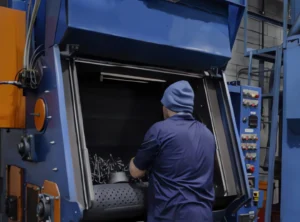
Is Purchasing a Shot Blasting Machine Cost-Effective?
The decision should be based on treated workpiece volume, current processing cost, required surface quality, and expected equipment utilization. A machine can produce strong returns when a factory has repetitive work, rising labor expenses, frequent outsourcing, or strict requirements for consistent surface preparation.
Purchasing is more likely to be financially attractive when the following conditions exist:
- Surface treatment is required every working day.
- Outsourced sandblasting creates transport, scheduling, or quality problems.
- Manual grinding requires significant labor and produces inconsistent results.
- Workpieces must meet stable standards before painting, coating, welding, or machining.
- Production volume is sufficient to keep the equipment utilized.
- The factory can provide suitable space, power, ventilation, and dust control.
- Management wants greater control over delivery schedules and process data.
For low-volume or irregular production, outsourcing may remain practical. Purchasing managers should therefore avoid judging profitability only by machine ownership. The central question is whether internal treatment reduces the total cost per acceptable workpiece while improving delivery reliability and process control.
Compare Outsourced Sandblasting with Manual Grinding
Outsourced sandblasting usually involves treatment charges, packing, transportation, loading, scheduling, inspection, and possible rework. Manual grinding may avoid external logistics but often requires more operators, longer cycle times, consumable tools, and additional inspection. Both options can create hidden costs when demand changes or quality is inconsistent.
| Cost factor | Outsourced sandblasting | Manual grinding | Internal shot blasting |
| Direct processing | Supplier treatment fee | Labor and tool consumption | Energy, media, and labor |
| Logistics | Outbound and return transportation | Usually limited | Internal material handling |
| Quality control | Dependent on external Supplier | Operator dependent | Process parameters can be standardized |
| Lead time | External scheduling risk | Slow for large quantities | Controlled within the factory |
| Scalability | Depends on Supplier capacity | Limited by available labor | Determined by machine capacity |
| Investment | Low capital commitment | Low equipment investment | Higher initial investment |
Internal Wheelblast Equipment may provide the best long-term value when the factory has repeatable production and sufficient annual demand. It can reduce handling, shorten production cycles, and establish more consistent abrasive projection than manual methods. The final comparison should include quality-related losses, not only direct processing charges.
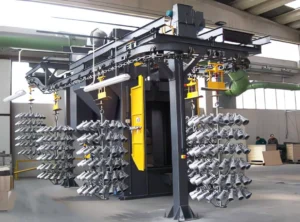
Detailed Cost Breakdown of a Shot Blasting Machine
A complete financial model separates initial investment from recurring operating expenses. This prevents purchasing teams from approving a machine based on an incomplete quotation.
Initial investment items
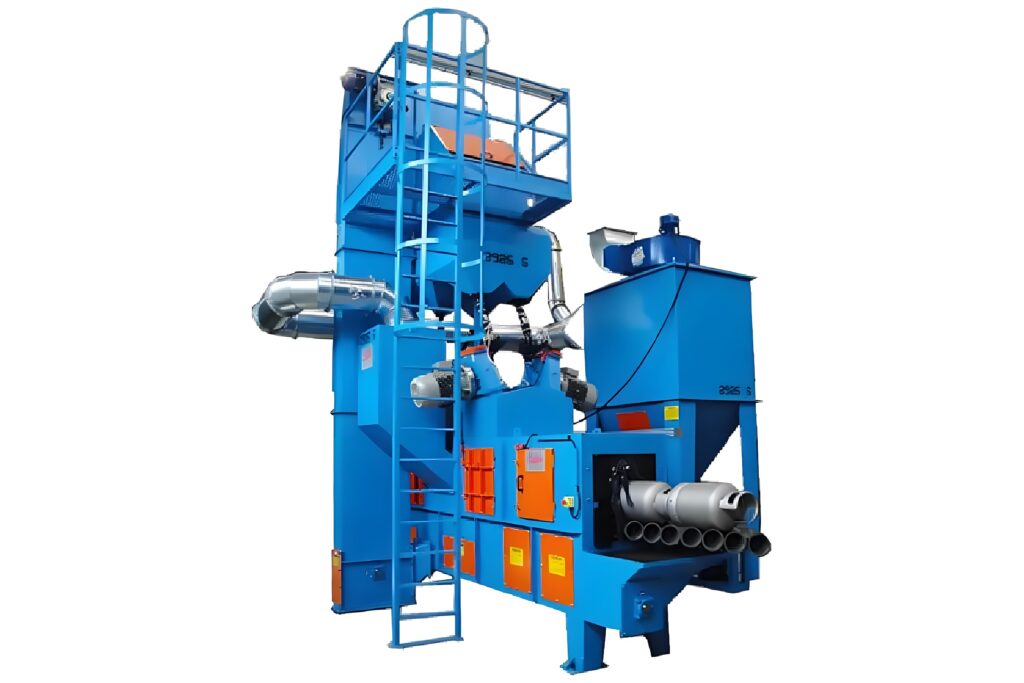
- Shot Blasting Machine body, blast wheels, chamber, and protective liners
- Loading, unloading, hanger, tumble, or roller conveyor systems
- Abrasive circulation, separator, elevator, and recovery equipment
- Dust collector, filters, ducting, and discharge equipment
- Electrical cabinet, control system, sensors, and safety interlocks
- Foundation, workshop modifications, power connection, and ventilation
- Freight, insurance, installation, commissioning, and operator training
- Initial abrasive media and essential spare parts
Operating cost items
- Electricity for blast wheels, conveyors, dust collectors, and auxiliary systems
- Steel shot, steel grit, or other approved abrasive media
- Blast wheel blades, liners, seals, filters, screens, and conveyor wear parts
- Routine cleaning, inspection, lubrication, and maintenance labor
- Dust disposal, environmental monitoring, and workplace safety activities
- Production losses caused by planned or unexpected downtime
- Rework, scrap, and customer claims caused by unstable surface quality
| ROI calculation area | Recommended measurement |
| Annual treatment volume | Workpieces or tonnes processed per year |
| Current external cost | Processing, transport, inspection, and rework cost per workpiece |
| Labor savings | Reduced grinding hours and total employment cost |
| Quality savings | Lower scrap, rework, and coating failure losses |
| Internal operating cost | Energy, media, maintenance, labor, and dust disposal |
| Payback evaluation | Net annual benefit compared with installed investment |
Build an ROI Case for Internal Project Approval
Purchasing managers can make the proposal easier to verify by presenting conservative, expected, and high-utilization scenarios. The calculation should use actual production information instead of generic claims from a Manufacturer or Supplier.
- Record current outsourcing, grinding, logistics, and rework costs.
- Measure annual volume, workpiece dimensions, and required surface standards.
- Obtain a technical proposal based on real production conditions.
- Calculate internal energy, abrasive, labor, maintenance, and downtime costs.
- Estimate quality, delivery, and labor savings conservatively.
- Compare net annual benefit with the complete installed investment.
- Review warranty, spare parts, service response, and expansion requirements.
Request a line-by-line quotation with included and excluded items. For Customizable OEM or ODM equipment, document every change affecting capacity, automation, layout, delivery, or maintenance. A credible Manufacturer should also support sample testing and define acceptance criteria before contract signing.
Turn Treatment Costs into a Measurable Investment Decision
Compare outsourcing, manual grinding, and internal Wheelblast Equipment using total cost per qualified workpiece. Contact our team for a production-based assessment, ROI breakdown, and Customizable Shot Blasting Machine proposal that supports confident internal approval and controlled long-term operating costs.
 English
  Russian
  Spanish
  Portuguese
  French
  Indonesian
  Thai
Thai