
Will a Low-Priced Molding Machine Create Higher Costs Later?
A low purchase price can make a molding machine appear financially attractive, but the saving may disappear through frequent repairs, unstable production, excessive scrap, and expensive retrofits. When downtime stops customer deliveries and spare parts become difficult to obtain, the cheapest machine can become the most expensive asset in the factory.
The right choice is based on three-year total cost, not purchase price alone. Our company evaluates machine reliability, controls, hydraulics, abrasive and material handling, spare parts, service capability, and upgrade potential to provide Customizable OEM and ODM solutions with measurable lifecycle value.
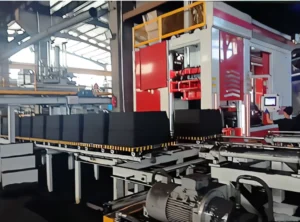
Where Do Low-Price Savings Usually Go?
A low quotation is often created by reducing specifications, simplifying components, limiting testing, or excluding supporting equipment. Some reductions are acceptable when they do not affect safety, quality, or uptime. Others transfer the cost directly to the buyer after installation.
Common destinations for the apparent saving include:
- Frequent replacement of low-quality wear parts
- Emergency maintenance and unplanned technician visits
- Production losses during troubleshooting and repair
- Scrap caused by unstable molding parameters
- Manual rework caused by poor dimensional consistency
- Retrofits for missing safety, automation, or monitoring functions
- Premium freight for urgent spare parts
- Additional labor required to operate or maintain an inefficient machine
The issue is not that every inexpensive machine is unreliable. The issue is that procurement teams must verify what has been removed from the scope. A Supplier should explain the machine configuration, component brands or specifications, testing procedures, warranty limits, and long-term service plan before the price is compared.
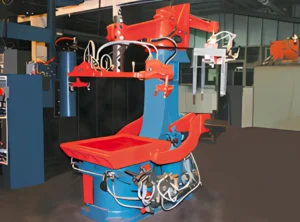
Know Where Costs Can Be Reduced Safely
Procurement savings are possible when they are based on functional requirements rather than indiscriminate component downgrading. A professional Manufacturer can often offer several configurations while preserving the performance of the core machine.
Potentially acceptable saving areas
- Non-critical auxiliary conveyors or storage arrangements
- Optional automation that is not needed for the current production volume
- Standardized guards, platforms, and access structures
- Generic fasteners, sensors, and non-specialized electrical accessories
- Locally available cables, pipes, and installation materials that meet specifications
- Phased additions such as extra stations, data interfaces, or automatic loading
These choices should be documented in the technical agreement. A lower-cost configuration is only beneficial if the omitted functions can be added later without dismantling the main machine or interrupting production for an unreasonable period.
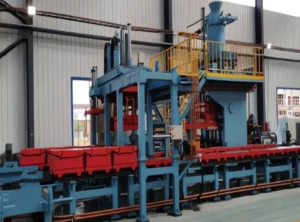
Do Not Cut Corners on Core Reliability
Some components directly determine machine stability, product consistency, and repair frequency. Reducing their quality can create costs that are much greater than the original saving.
Machine body and structural accuracy
The machine frame, chamber, guide system, worktable, and load-bearing parts must withstand repeated mechanical impact and vibration. Poor structural accuracy can cause alignment problems, abnormal wear, noise, leakage, and inconsistent product handling.
Hydraulic and pneumatic systems
Hydraulic cylinders, valves, seals, pumps, and pipelines must be correctly sized and protected from contamination. Weak hydraulic components may cause unstable clamping, incomplete movement, oil leakage, and repeated production interruptions.
Electronic controls
Control cabinets, PLCs, inverters, sensors, safety circuits, and operator interfaces should be selected according to the process requirements. Unstable controls can create incorrect cycles, parameter loss, difficult fault diagnosis, and dependence on one unavailable component.
Material and abrasive handling
Untuk molding systems that use sand, additives, or other bulk materials, handling equipment must maintain stable flow and accurate dosing. Poor conveyors, elevators, hoppers, recovery devices, or screening systems can contaminate materials and create blockages that affect the entire line.
| Area | Possible saving | Risk of excessive cost reduction |
| Auxiliary equipment | Use standard or phased options | Usually manageable if interfaces are reserved |
| Machine body | Limited opportunity | Structural deformation, vibration, short service life |
| Hydraulics | Standardize non-critical accessories | Leakage, unstable movement, frequent downtime |
| Electronic controls | Use approved equivalent components | Faults, difficult troubleshooting, obsolete parts |
| Penanganan material | Optimize layout and capacity | Blockages, contamination, unstable production flow |
Measure Downtime and Spare Parts as Financial Losses
Downtime is often underestimated because the accounting system records only the repair invoice. The actual loss may include idle labor, delayed deliveries, missed production targets, contract penalties, lost machine utilization, and customer dissatisfaction.
A practical downtime calculation is:
Downtime loss = stopped production value + idle labor + urgent repair cost + delivery or quality impact
For example, if a line is unavailable for several hours, the factory may need to schedule overtime or outsource part of the order. If a critical control component is unavailable for several weeks, the loss can exceed the original equipment discount.
Spare parts risks to verify
- Which parts are recommended for the first two or three years?
- Are critical parts standard or specially manufactured?
- Can equivalent components be sourced locally?
- What is the normal delivery time for urgent parts?
- Are drawings, part numbers, and maintenance manuals included?
- Does the Supplier maintain a long-term spare parts policy?
- Are software passwords and control-system backup files provided?
A low-cost machine with no reliable spare parts channel may force the buyer to store excessive inventory. That ties up working capital and still may not protect against obsolete electronic controls or custom-made mechanical parts.
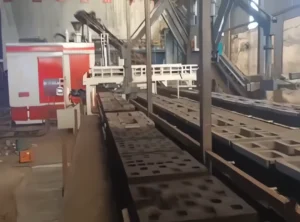
Compare Three-Year Total Cost Instead of Purchase Price
Procurement should compare each proposal using the same operating assumptions. The calculation should include the initial payment, installation, energy, maintenance, consumables, spare parts, downtime, scrap, and future modifications.
- Record the complete purchase price and excluded items.
- Add transport, installation, commissioning, training, and site preparation.
- Estimate annual labor, electricity, lubrication, consumables, and routine maintenance.
- Estimate wear-part replacement and critical spare parts for three years.
- Calculate expected downtime using realistic repair frequency and response times.
- Estimate scrap and rework caused by process instability.
- Add likely upgrades for safety, automation, dust control, or production expansion.
- Subtract any verified resale or residual value at the end of the period.
| Three-year cost category | Low-cost proposal | Higher-specification proposal |
| Peralatan awal | Lower purchase price | Higher purchase price |
| Pemasangan dan pengoperasian awal | May exclude services or require local coordination | Usually defined in a broader project scope |
| Maintenance and spare parts | May be higher due to frequent replacement | Often more predictable |
| Waktu henti | Potentially high if parts or support are delayed | Lower when service and component supply are established |
| Scrap and rework | May increase with unstable control or material flow | More controlled when process performance is validated |
| Retrofit requirements | May be required after installation | Can be defined before contract signing |
| Three-year total | Must be verified, not assumed to be lower | May be lower despite a higher initial price |
The best proposal is not necessarily the most expensive. It is the proposal with the lowest verified cost for producing acceptable parts at the required output, quality level, and operating schedule.
Check Additional Expenses Before They Appear
Low-cost solutions may require later spending on features that were not included in the original quotation. These expenses are especially common when the factory expands production or receives stricter customer requirements.
- Additional dust collection or environmental equipment
- Safety guards, interlocks, emergency circuits, and access platforms
- Automatic loading and unloading systems
- Extra sensors and production monitoring
- New control cabinets or PLC replacement
- Structural reinforcement and floor modification
- Additional molds, tooling, or material preparation equipment
- Noise reduction and workplace improvement measures
- Integration with existing ERP, MES, or quality records
Before signing a contract, request a written list of optional functions, future upgrade costs, interface requirements, and installation limitations. A Customizable solution should allow realistic expansion without forcing the buyer to replace the entire machine.
When Is Used Machinery Worth Considering?
Used machinery can be financially reasonable when its condition, history, compatibility, and supportability are verified. It should not be selected solely because the advertised price is attractive.
Used equipment evaluation steps
- Confirm the manufacturer, model, manufacturing year, and operating history.
- Inspect the machine body, guides, hydraulic system, controls, and material-handling components.
- Review maintenance records, failure history, and replaced parts.
- Check whether electrical and safety components remain supported.
- Verify compatibility with current products, molds, utilities, and factory space.
- Estimate transport, refurbishment, installation, and commissioning costs.
- Obtain a performance test using representative materials and products.
- Compare the refurbished total cost with a new machine warranty and service plan.
Used equipment is more suitable when the design is proven, spare parts are available, the expected workload is moderate, and refurbishment costs are clearly defined. A new machine is usually safer when production is critical, customer quality requirements are strict, or the used equipment has unknown operating history.
Choose the Lowest Verified Three-Year Cost
Do not judge a molding machine by its purchase price alone. Ask tim kami for a transparent three-year cost comparison, technical risk review, and Customizable OEM or ODM proposal that protects uptime, quality, spare parts availability, and long-term production value.
 Indonesian
 English
 Russian
 Spanish
 Portuguese
 French
 Thai