
Can Poor Peralatan Molding Line Design Delay Your Foundry Project?
Foundry projects often face delayed installation, incomplete commissioning, unstable output, and unexpected cost increases when production line planning begins with isolated equipment quotations. Incompatible machines and unclear responsibilities can prevent the line from reaching its target capacity. A coordinated Molding Equipment production line design reduces technical uncertainty, startup problems, and delivery risk before contracts are signed.
The safest selection standard is a verified production line plan covering capacity, equipment interfaces, utilities, layout, expansion space, acceptance criteria, and responsibility boundaries. Our company provides Customizable OEM and ODM Peralatan Molding solutions, supported by engineering review, factory testing, installation guidance, and documented project delivery procedures.
Build the Production Line Around the Complete Project
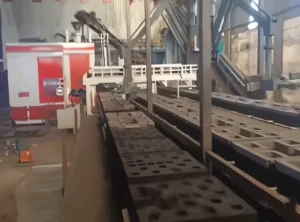
Molding equipment production line design should begin with the required production results rather than a preferred machine model. Purchasing professionals should evaluate the complete route from material preparation and molding through handling, pouring, cooling, shakeout, cleaning, inspection, and dispatch. Every major station must support the planned takt time, product mix, and quality requirements.
Information required before equipment selection
- Annual, monthly, and peak production targets
- Product dimensions, weights, materials, and batch frequency
- Required mold size, handling method, and changeover frequency
- Upstream melting and pouring capacity
- Downstream cooling, cleaning, inspection, and machining capacity
- Available workshop area, height, crane capacity, and transport access
- Power, compressed air, water, drainage, ventilation, and dust collection requirements
- Expected labor availability and planned automation level
- Future product development and capacity expansion objectives
A Supplier should provide a process flow diagram, general arrangement drawing, utility list, equipment interface schedule, and capacity calculation. This documentation allows the purchasing team to compare proposals on engineering completeness instead of comparing equipment prices alone.
Reduce Risks in Casting Projects Before Ordering
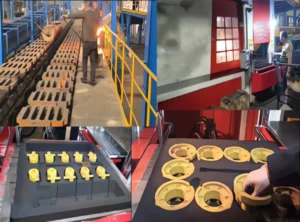
Production startup problems are often created during the planning stage. If one station is slower than the rest of the line, work in process accumulates and the rated capacity becomes unrealistic. If maintenance access is omitted, minor failures can create extended stoppages. If dust collection, electrical systems, or transfer equipment are treated as later additions, installation may require expensive site modifications.
Risk reduction actions for procurement teams
- Confirm the product and capacity model using actual production data.
- Balance every process station against the required hourly output.
- Identify bottlenecks, buffer locations, maintenance zones, and emergency access.
- Verify civil foundations, lifting paths, service routes, and workshop clearances.
- Review utilities under normal operation and peak demand conditions.
- Require interface drawings and responsibility boundaries before manufacturing begins.
- Use factory testing and documented performance acceptance before final payment.
| Project risk | Typical cause | Preventive procurement measure |
| Delivery delay | Late drawings, unclear interfaces, or incomplete civil data | Approve a document schedule and milestone responsibility matrix |
| Low production output | Unbalanced capacity or unrealistic rated speed | Require verified cycle time and performance calculations |
| Frequent stoppages | Weak maintenance access or incompatible controls | Review service areas, alarms, spare parts, and control interfaces |
| Cost escalation | Excluded utilities, installation, or civil modifications | Request a complete installed cost breakdown |
| Startup instability | Insufficient testing, training, or production support | Define commissioning, training, and acceptance obligations |
Bagaimana Line Design Affects Project Delivery
Line design determines whether civil construction, equipment manufacturing, installation, and commissioning can proceed in the correct sequence. A complete design package gives the project team early information about foundations, embedded parts, openings, platforms, cable routes, ducting, and utility connection points. Without this information, construction may finish before the equipment requirements are known.
Documents that should be approved before civil work
- General arrangement and equipment location drawings
- Foundation loads, anchor positions, pits, and embedded components
- Equipment height, crane clearance, and maintenance access dimensions
- Electrical single line diagrams and control cabinet locations
- Compressed air, water, drainage, ventilation, and dust collection requirements
- Material flow routes, safety barriers, operator platforms, and emergency exits
- Equipment delivery sequence and installation lifting plan
The contract should connect design approval to manufacturing release. A Manufacturer should not begin fabrication of major equipment until the applicable technical drawings and interfaces are confirmed. This reduces the risk of equipment arriving before the site is ready or requiring changes after production has started.
Avoid Incompatible Equipment Configurations
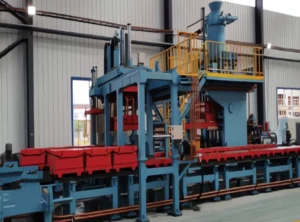
Purchasing separate machines from different suppliers can create problems with dimensions, controls, communication protocols, conveyor speeds, load limits, and maintenance standards. Each item may function correctly on its own while the integrated line fails to achieve stable production.
Interface checks for Molding Equipment
- Product and mold dimensions at every transfer point
- Conveyor height, speed, direction, load, and accumulation capacity
- Electrical voltage, motor control, sensors, and safety circuits
- Communication protocols and data exchange between control systems
- Utility pressure, flow, connection size, and peak consumption
- Dust, heat, noise, and environmental conditions around adjacent equipment
- Operator access, guarding, emergency stops, and maintenance clearance
- Compatibility of spare parts, lubrication, tools, and service procedures
For complex projects, a single qualified Supplier with system integration responsibility may reduce interface risk. When multiple suppliers are necessary, the contract should appoint one party to coordinate integration and identify which party is responsible for each connection and performance result.
Use Flexible Design for Future Capacity Expansion
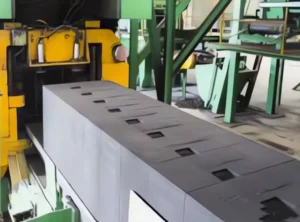
A line sized only for current demand may become a constraint when new products or customers are added. However, excessive initial capacity can increase capital cost and leave equipment underused. The preferred approach is staged expansion, where the initial line meets current requirements while the layout and utilities support future modules.
Expansion provisions worth including
- Reserved floor area and structural load capacity
- Spare electrical capacity and accessible cable routes
- Additional compressed air, water, exhaust, and dust collection capacity
- Modular conveyors and transfer points
- Control architecture that can accept additional stations
- Space for extra molding units, cooling capacity, or cleaning equipment
- Standardized components that simplify future integration
Customizable OEM and ODM solutions can be configured for product variety, staged automation, and future output growth. The purchasing team should request two scenarios from the Supplier: the initial investment plan and the expansion plan. This makes future cost, downtime, and installation requirements easier to evaluate.
Define Responsibilities for Delivery and Acceptance
Unclear responsibilities are a major source of project disputes. The contract should define who supplies each item, who prepares the site, who connects utilities, who performs testing, and who is accountable when the complete line fails to meet its agreed performance.
| Tahap proyek | Responsibility to define | Required evidence |
| Engineering | Drawing preparation, review, approval, and revision control | Approved drawings and interface register |
| Manufaktur | Production schedule, quality control, and inspection access | Inspection records and factory test report |
| Pemasangan | Foundation readiness, lifting, assembly, wiring, and utilities | Installation checklist and punch list |
| Commissioning | Dry testing, trial production, training, and troubleshooting | Commissioning report and training records |
| Penerimaan | Output, quality, availability, safety, and environmental criteria | Signed performance acceptance record |
Acceptance should use measurable conditions, including production rate, operating time, product quality, energy consumption where applicable, safety functions, and documentation completeness. Payment milestones can then be linked to approved design, factory testing, delivery, commissioning, and final performance acceptance.
Control Project Risk Before the Purchase Order
A reliable Molding Equipment project depends on integrated design, verified interfaces, expansion planning, and contractual accountability. Contact our team for a site review, risk assessment, and Customizable OEM or ODM production line proposal that supports predictable delivery and stable startup.
 Indonesian
  English
  Russian
  Spanish
  Portuguese
  French
  Thai
Thai