
Mengapa Mesin Shot Blasting Selection Determines Workplace Safety
Shot blasting workshops combine high-speed abrasive impact, rotating machinery, dust, noise, and electrical power. When equipment is selected without a formal risk assessment, shot spatter, entanglement, dust explosions, or electrical failures can cause serious injuries. These incidents are often rooted in inadequate machine design rather than operator error, making safety-focused procurement essential.
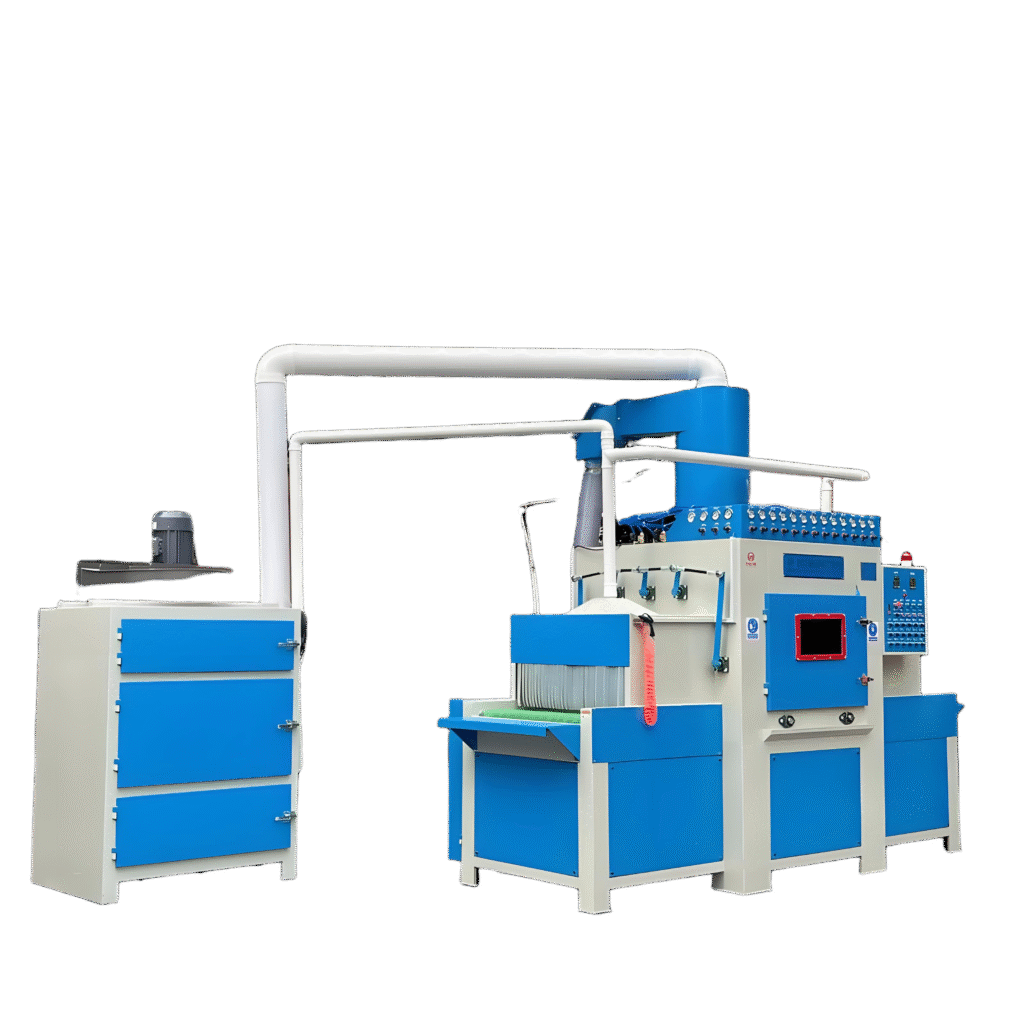
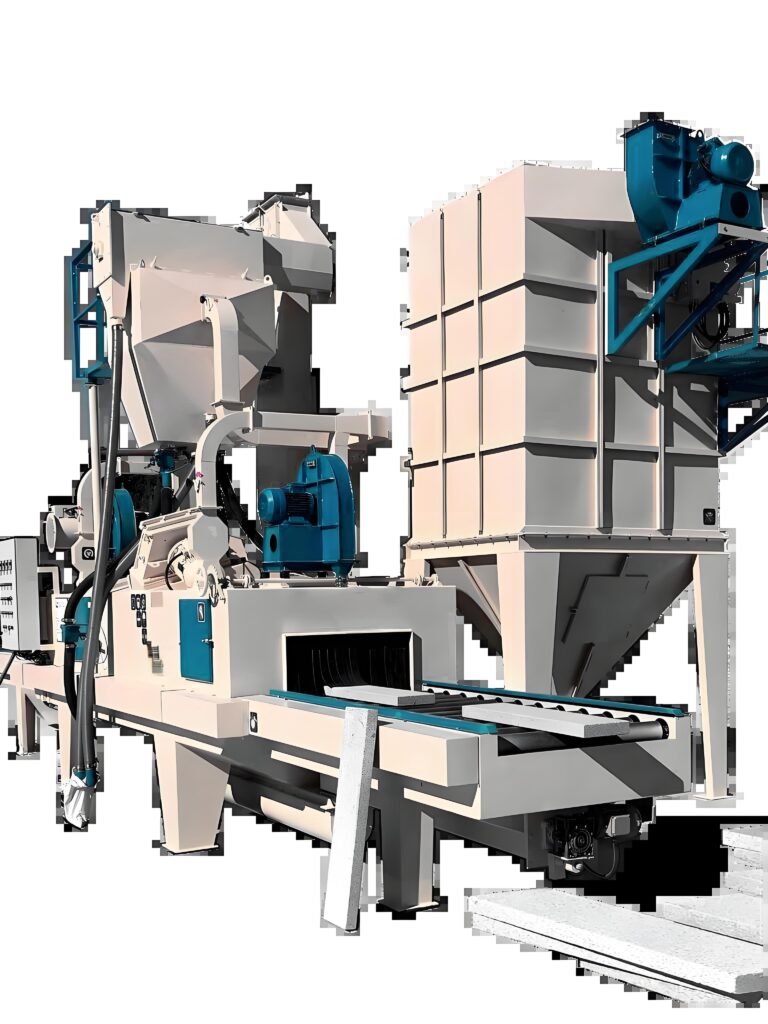
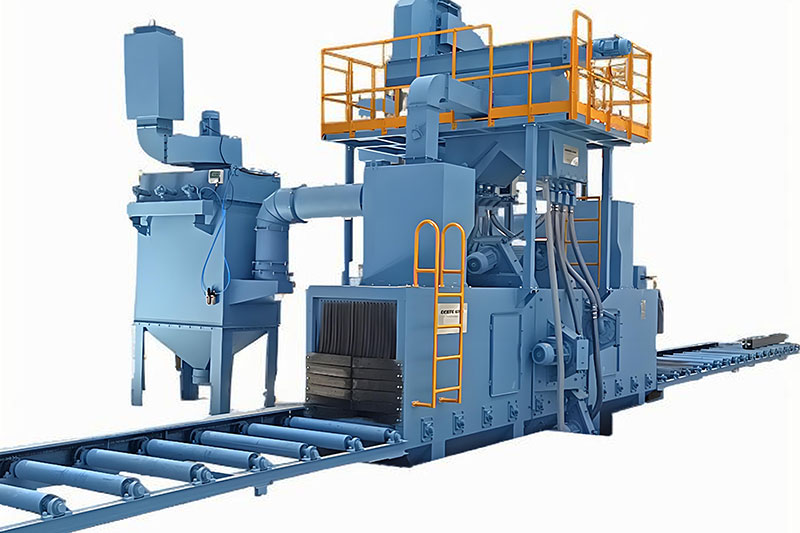
The safest solution combines risk-based machine selection, enclosed abrasive control, guarding, interlocks, explosion protection where required, reliable alarms, PPE, training, and emergency planning. Our company provides Customizable OEM and ODM shot blasting machine solutions, helping each Supplier and factory match Peralatan Wheelblast to workpiece materials, operating conditions, and workplace safety requirements.
Typical Shot Blasting Incidents and Their Root Causes
Procurement teams should evaluate hazards before comparing prices or production capacity. A machine that performs well technically may still be unsuitable if its safety architecture does not match the workpiece, abrasive, operating cycle, or workshop environment.
| Incident type | Typical root cause | Procurement control |
| Shot spatter | Inadequate enclosure, worn seals, open transfer points, or incorrect loading | Specify sealed chambers, protected openings, inspection windows, and containment testing |
| Dust fire or explosion | Combustible dust, ignition sources, poor housekeeping, or unsuitable collector design | Require dust-risk assessment, grounding, suitable filtration, venting, and suppression provisions |
| Mechanical injury | Exposed rotating parts, unguarded conveyors, unexpected startup, or unsafe access | Specify fixed guards, interlocks, emergency stops, lockout provisions, and safe platforms |
| Electrical accident | Improper grounding, damaged cables, inadequate protection, or unauthorized modifications | Require compliant control panels, protective devices, electrical drawings, and commissioning tests |
| Exposure to dust and noise | Insufficient extraction, filter failure, excessive noise, or unsuitable PPE | Define airflow, filtration, noise assessment, exposure controls, and operator protection |
Before issuing a purchase order, the buyer should ask the Manufacturer to identify foreseeable hazards, safety functions, residual risks, and required operating controls. Safety responsibilities should be assigned between the equipment Supplier, installer, factory, and operators.
Classify Workpiece and Operating Risks Before Selection
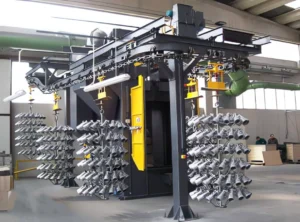
Risk classification should consider material composition, geometry, surface contamination, abrasive type, loading method, and production conditions. Ordinary steel components may present different hazards from aluminum, magnesium, coated, painted, or contaminated parts.
Risk factors procurement teams should review
- Workpiece material and alloy composition
- Presence of oil, paint, coatings, plastic, rubber, or other combustible residues
- Part geometry, wall thickness, cavities, and the possibility of trapped abrasive
- Workpiece temperature, moisture, and contamination before blasting
- Abrasive type, feed rate, impact energy, and dust generation characteristics
- Batch size, automatic loading, manual loading, and frequency of access
- Indoor ventilation, collector location, exhaust routing, and nearby ignition sources
- Required cleaning intensity and the likelihood of abnormal operating conditions
Ordinary carbon-steel parts may require standard containment and dust-control measures when the process is well controlled. Light alloy parts, especially magnesium-containing materials, may create higher combustible-dust concerns. Aluminum dust can also require careful assessment depending on particle characteristics, contamination, concentration, and collection conditions.
Procurement should never assume that one explosion-protection arrangement fits every material. The selected Supplier should complete a documented dust-hazard assessment and explain whether the system requires grounding, spark control, explosion venting, suppression, isolation, specialized filtration, or other safeguards.
Use Structural Design to Prevent Spatter and Mechanical Injuries
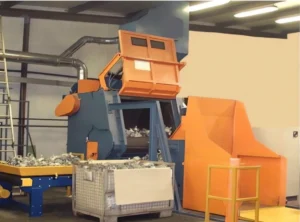
Machine structure is the first layer of personnel protection. A safe mesin blasting should prevent operators from entering hazardous zones during operation and should contain abrasive particles even when seals, liners, or loading arrangements experience normal wear.
- Confirm that the blasting chamber is fully enclosed and designed for the specified abrasive velocity and workpiece size.
- Check door seals, curtains, transfer openings, inspection windows, and recovery points for effective abrasive containment.
- Require fixed guards around blast wheels, shafts, belts, chains, elevators, conveyors, and rotating drives.
- Provide safe access platforms, stairs, handrails, lighting, and maintenance clearances.
- Use wear-resistant liners and replaceable seals to prevent gradual loss of containment.
- Prevent unexpected startup through controlled restart logic after power loss, door opening, or emergency stop.
- Provide lockout and isolation points for electrical, pneumatic, hydraulic, and mechanical energy.
For automated Peralatan Wheelblast, loading and unloading interfaces deserve special attention. Robots, roller conveyors, hooks, tumbling systems, and transfer mechanisms can create crush or entanglement zones. The quotation should show guarding boundaries and define how personnel access is prevented during automatic operation.
Specify Explosion Protection, Interlocks, and Alarm Systems
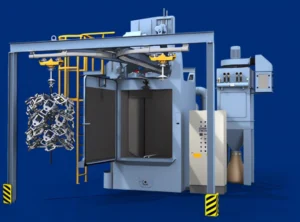
High-risk operating conditions require more than a standard dust collector. The protection concept should be based on the identified dust hazard, collector arrangement, process materials, and applicable site requirements.
- Explosion venting directed toward a safe area where pressure relief is required
- Explosion suppression or spark detection where the risk assessment supports its use
- Explosion isolation between the collector, ductwork, and connected equipment
- Grounding and bonding for machine sections, ductwork, collector components, and containers
- Temperature, airflow, vibration, filter differential-pressure, and motor overload monitoring
- Visible and audible alarms for abnormal conditions and required operator responses
- Safe shutdown logic that stops abrasive feed, blast wheels, conveyors, and connected systems in the correct sequence
Interlock selection checklist
- Verify that access doors cannot be opened while hazardous motion or abrasive projection continues.
- Confirm that opening a protected access point produces a controlled stop.
- Check that the machine cannot restart automatically after an interlock reset or power recovery.
- Ensure emergency stops are clearly identified, reachable, and tested during acceptance.
- Confirm that alarms identify the abnormal condition rather than providing only a general fault signal.
- Define reset authorization and maintenance access rules in the operating procedure.
Ask the Manufacturer for the safety circuit diagram, alarm matrix, risk assessment, and functional test procedure. A low-cost control panel that omits safety-rated components can create significant retrofit expense and regulatory exposure.
Combine Equipment Protection, PPE, and Emergency Response
Engineering controls should be the primary protection, but PPE and operating discipline remain necessary. PPE cannot compensate for an inadequately enclosed machine, yet even a well-designed system requires personnel protection during loading, inspection, cleaning, and maintenance.
| Activity | Equipment protection | Personnel protection |
| Normal blasting | Sealed chamber, dust extraction, guards, interlocks, and alarms | Safety footwear, hearing protection, work clothing, and site-required respiratory protection |
| Loading and unloading | Protected openings, safe handling devices, and restricted access | Gloves suitable for the workpiece, eye protection, and manual-handling training |
| Cleaning and housekeeping | Safe dust collection and controlled waste discharge | Approved respiratory, eye, and skin protection based on exposure assessment |
| Pemeliharaan | Isolation points, lockout provisions, guards, and access platforms | Authorized-maintainer PPE, verification instruments, and permit controls |
Emergency response plan
- Stop the machine using the emergency control when safe to do so.
- Isolate electrical and other hazardous energy sources before entry or firefighting.
- Evacuate personnel from dust, fire, explosion, or structural-failure zones.
- Notify the responsible supervisor and emergency team according to the site procedure.
- Prevent unauthorized restart and preserve the incident area for investigation.
- Provide first aid and coordinate medical response for injured personnel.
- Inspect the machine, collector, ductwork, and safety devices before controlled reactivation.
- Document the event, determine root causes, and verify corrective actions.
Require Safety Training and Verify Supplier Capability
The Supplier should provide practical training, not only an operating manual. Training must reflect the delivered configuration, workpiece risks, emergency controls, and maintenance requirements.
- Machine operating sequence and permitted operating conditions
- Hazard identification for shot spatter, dust, noise, rotating equipment, and electrical energy
- Correct loading, unloading, abrasive handling, and housekeeping procedures
- Interlock, alarm, emergency-stop, and controlled-restart functions
- Lockout and isolation procedures for maintenance personnel
- Filter inspection, collector cleaning, seal replacement, and abnormal-condition reporting
- PPE selection, inspection, storage, and replacement
- Fire, explosion, injury, dust-release, and evacuation response procedures
- Daily inspection checklists and escalation requirements
Request training records, competency verification, maintenance manuals, risk assessments, electrical drawings, spare-parts lists, and acceptance-test results before final payment. A professional Manufacturer should also define warranty coverage for safety-critical components, including interlocks, alarms, sensors, seals, guards, and control devices.
Select Safety Before the Accident Selects for You
Prevent accidents by evaluating workpiece risks, structural protection, explosion controls, interlocks, PPE, training, and emergency readiness before approving a quotation. Contact our team for a risk-based, Customizable OEM or ODM shot blasting machine proposal that aligns Wheelblast Equipment with your personnel safety and production requirements.
 Indonesian
 English
 Russian
 Spanish
 Portuguese
 French
 Thai