
Unoptimized horizontal molding wastes massive power, raising factory costs and reducing profit margins.
Optimize horizontal molding energy usage by upgrading automatic systems, refining sand molding machine operation, and tuning horizontal flaskless molding machine parameters for low-carbon foundry production.
Learn practical energy-saving tactics to cut operational costs effectively.
Why Traditional Horizontal Molding Lines Suffer from High Energy Waste
Most conventional foundry workshops rely on outdated semi-automatic horizontal molding equipment and fixed operating modes, resulting in severe ineffective energy consumption throughout the production cycle.
- Traditional horizontal molding lines adopt constant-frequency motor operation, maintaining full power output during standby, mold adjustment, and material waiting periods, generating massive idle power waste. The old sand molding machine lacks intelligent adjustment functions, running continuously at full load regardless of actual sand demand, leading to unnecessary energy loss.
- Meanwhile, traditional horizontal flaskless molding machine equipment features outdated hydraulic systems with low transmission efficiency, causing repeated pressurization and pressure loss during frequent mold opening and closing actions.
In addition, non-standard manual operation leads to disordered production rhythms, frequent equipment startup and shutdown, and unbalanced load operation, further amplifying overall energy consumption. Industry operational data shows that unoptimized traditional horizontal molding lines have an ineffective energy waste rate of 25% to 35%, making energy expenses one of the largest proportions of foundry production costs and seriously restricting enterprise profit growth and green production transformation.
Automatic Sand Molding Machine Energy-Saving Optimization Strategies
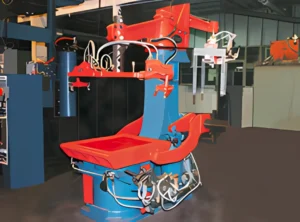
The sand molding machine is a core auxiliary energy-consuming device in horizontal molding production, and its operational efficiency directly affects the overall energy consumption level of the entire line.
- Traditional sand processing equipment operates with fixed time and fixed power modes, unable to adjust operating status according to real-time production progress, resulting in long-term no-load operation and power waste. Professional energy-saving optimization focuses on intelligent frequency conversion transformation and linkage control upgrades.
- The upgraded automatic sand molding machine adopts real-time sensor monitoring to perceive production rhythm changes, automatically adjusting stirring speed, feeding volume, and equipment operating power according to the actual demand of horizontal molding production. When the main molding line is in standby or mold switching state, the sand molding machine automatically enters low-power energy-saving mode to eliminate ineffective energy consumption.
Moreover, optimized circulating screening structures reduce repeated stirring and secondary processing, improving sand preparation efficiency and shortening unit operation time. The following data table shows the energy-saving effect of optimized sand molding machine equipment:
| Sand Molding Machine Status | Unit Power Consumption | No-Load Energy Waste | Overall Efficiency |
| Traditional Fixed-Frequency Operation | High | 32% | 65% |
| Automatic Intelligent Optimization | Reduced by 28% | 8% | 92% |
Chong Jen Machinery optimizes frequency conversion and linkage control systems for automatic sand molding machine equipment. Our professional energy-saving configurations perfectly match horizontal molding production rhythms, helping foundries significantly reduce auxiliary equipment power consumption and achieve low-cost sand preparation.
Horizontal Flaskless Molding Machine Hydraulic and Power Optimization
As the core host equipment of horizontal molding production lines, the horizontal flaskless molding machine’s hydraulic and power systems are the main sources of high energy consumption.
- Traditional hydraulic molding equipment uses constant-pressure fuel supply, continuously maintaining high hydraulic pressure even during non-working strokes, resulting in serious hydraulic loss and power waste.
- The upgraded energy-saving horizontal flaskless molding machine adopts servo hydraulic systems, which intelligently adjust pressure and flow according to different molding stages such as mold closing, compaction, and demolding. The system automatically reduces power output during standby and low-load stages, completely solving long-term high-pressure idle energy waste.
- Meanwhile, optimized mechanical structures reduce equipment friction resistance and invalid stroke distances, shortening single molding cycle time and improving effective power utilization rate.
In addition, precise positioning systems avoid repeated mold calibration and secondary compaction actions caused by positioning deviation, reducing redundant mechanical movements and energy loss. This targeted host equipment optimization can reduce the comprehensive energy consumption of the main molding machine by more than 30%, greatly improving the energy efficiency of automatic horizontal molding lines.
Automatic Production Scheduling and Process Rhythm Optimization
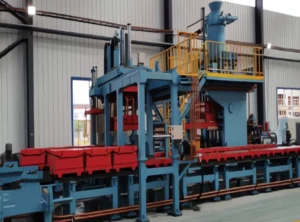
Equipment hardware upgrading alone cannot maximize energy-saving effects; automatic production scheduling and process rhythm optimization are key systematic means to reduce horizontal molding energy consumption.
- Many foundries have reasonable equipment configurations but suffer from disordered production arrangements, leading to scattered equipment operation, frequent startup and shutdown, and low-load running, which greatly increase unit product energy consumption. Modern optimized horizontal molding lines adopt automatic centralized control systems to integrate the operating rhythms of the main horizontal flaskless molding machine and supporting sand molding machine.
- The system uniformly arranges production sequences, concentrates continuous processing tasks, and avoids intermittent operation of equipment. Reasonable production scheduling eliminates peak load superposition of multiple devices, balances power load, and reduces grid energy loss and invalid power consumption.
- Meanwhile, standardized process parameter setting stabilizes molding cycle time, avoids quality fluctuations caused by parameter disorder, reduces rework energy consumption, and further improves the energy utilization rate of the entire horizontal molding line.
Long-Term Energy-Saving Management and Intelligent Monitoring Mechanisms
Sustained energy consumption optimization of horizontal molding relies on intelligent monitoring and standardized daily management mechanisms to avoid energy efficiency attenuation.
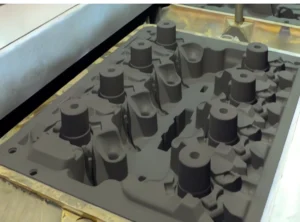
- Most energy-saving failures occur due to unmonitored equipment aging and parameter drift. Establishing an automatic energy data monitoring system can track the real-time power consumption of each equipment node, accurately locate high-energy-consumption equipment and abnormal energy waste points, and provide data support for refined optimization.
- Regular equipment maintenance, including hydraulic oil replacement, motor calibration, and dust cleaning of sand molding machine heat dissipation components, ensures long-term efficient operation of equipment and prevents increased energy consumption caused by component aging.
In addition, formulating scientific equipment standby management specifications avoids long-term idle power consumption of automatic equipment. Long-term refined management cooperates with hardware optimization to form a closed-loop energy-saving system, realizing continuous reduction of comprehensive energy consumption per unit product of horizontal molding production lines.
Conclusion
Equipment and process optimization effectively cuts horizontal molding energy consumption steadily.
Contact Chong Jen Machinery
For professional energy-saving horizontal molding upgrades, high-efficiency horizontal flaskless molding machine and automatic sand molding machine solutions,
contact Chong Jen Machinery [email protected]
 English
  Russian
  Spanish
  Portuguese
  French
  Indonesian
  Thai
Thai