
Mismatched sand systems cause unstable horizontal molding quality and frequent casting defects.
Accurate sand processing system matching for horizontal flaskless molding machine stabilizes clay sand performance, eliminates defects, and improves overall horizontal molding line productivity.
Learn scientific matching rules to optimize your foundry sand and molding coordination.
Why Sand Processing System Matching Determines Horizontal Molding Production Stability
Horizontal molding production relies entirely on qualified molding sand to ensure precise mold forming and defect-free casting.
- Many foundries focus only on upgrading the horizontal flaskless molding machine while ignoring the matching degree of the front-end sand processing system, resulting in persistent quality instability and low line efficiency.A mismatched clay sand molding machine cannot provide consistent sand moisture, uniform bonding strength, and qualified air permeability, which are the core foundations of high-precision horizontal molding.
- When sand processing parameters drift, the horizontal flaskless molding machine cannot achieve standard compaction density, triggering common defects such as sand inclusion, porosity, scabs, and dimensional deviation. Even high-end horizontal molding equipment cannot offset quality losses caused by unqualified sand materials.
In addition, poorly matched sand systems lead to excessive sand waste, repeated sand mixing, and frequent line shutdowns for sand parameter adjustment, greatly reducing production continuity. Industry data indicates that over 70% of horizontal molding casting defects originate from mismatched clay sand molding machine configurations rather than molding machine failures, proving that sand system matching is the core prerequisite for stable molding line operation.
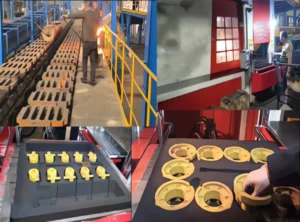
Core Matching Parameters Between Clay Sand Molding Machine and Horizontal Flaskless Molding Machine
Professional system matching requires precise alignment of multiple core parameters between the clay sand molding machine and horizontal flaskless molding machine to form a synchronized horizontal molding production loop.
- The first key parameter is sand processing capacity. The hourly sand output of the clay sand molding machine must fully match the hourly molding cycle of the horizontal flaskless molding machine to avoid sand supply shortage or accumulated redundant sand that deteriorates sand activity.
- The second core parameter is sand moisture control accuracy. Horizontal molding requires stable moisture between 2.8% and 3.5%; mismatched sand equipment with low precision will cause moisture floating and unqualified mold compactness.
- Third, sand mixing uniformity and bonding agent proportioning accuracy directly affect sand toughness and air permeability, determining the anti-collapse performance of high-speed horizontal molding.
- The fourth parameter is recycled sand screening efficiency, which removes fine powder and broken sand grains to prevent mold surface defects. The following table shows standard matching parameters for mainstream horizontal molding lines:
| Matching Parameter | Standard Requirement | Mismatch Consequence |
| Sand Moisture Control | ±0.2% Precision | Mold loose, porosity defects |
| Hourly Sand Output | 10% surplus of molding demand | Production stagnation, waiting time loss |
| Recycled Sand Powder Content | Below 8% | Poor air permeability, surface scabs |
Chong Jen Machinery specializes in integrated system matching for horizontal molding lines. We customize clay sand molding machine parameters and sand processing workflows according to horizontal flaskless molding machine models, ensuring perfect parameter linkage and eliminating quality risks caused by mismatched equipment.
Common Sand System Matching Mistakes in Traditional Horizontal Molding Lines
Most small and medium-sized foundries have obvious matching errors between sand processing equipment and horizontal flaskless molding machine, restricting long-term production upgrading.
- The most common mistake is blind equipment selection, where factories purchase high-speed horizontal molding equipment while retaining old low-precision clay sand molding machine, resulting in sand quality unable to keep up with molding speed. Fast-cycle horizontal molding requires rapid supply of high-activity molding sand, while outdated sand equipment causes sand aging and strength attenuation during intermittent supply.
- The second mistake is ignoring recycled sand system matching. Many lines lack complete cooling, screening and dust removal devices, leading to excessive temperature and fine powder in recycled sand, which destroys sand stability.
- The third mistake is fixed parameter operation. Traditional clay sand molding machine runs with fixed proportions all year round, ignoring seasonal temperature and humidity changes that affect sand moisture, causing seasonal quality fluctuations in horizontal molding products. These mismatching problems will not cause large-scale shutdowns in the short term but lead to long-term high defect rates, low equipment OEE, and increased comprehensive production costs.
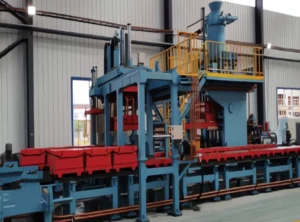
Step-by-Step Sand Processing System Matching Workflow for Optimal Molding Performance
Scientific system matching follows a standardized step-by-step workflow to realize zero-error coordination between clay sand molding machine and horizontal flaskless molding machine.
- First, confirm the hourly molding output and single mold sand consumption of the horizontal molding lines to calculate the required sand processing capacity, ensuring the sand machine has sufficient surplus capacity to support peak production.
- Second, select a matched clay sand molding machine with high-precision moisture detection and automatic proportioning functions to realize real-time adjustment of sand parameters.
- Third, configure complete recycled sand processing modules including cooling devices, multi-stage screening machines and dust removal systems to purify recycled sand and maintain stable sand performance.
- Fourth, set linkage operation logic to synchronize the startup, operation and standby status of the sand processing system and horizontal flaskless molding machine, avoiding idle operation and sand accumulation.
- Fifth, conduct trial production debugging, adjust sand proportion, moisture and stirring time according to actual casting effects, and lock the optimal process parameters for batch production.
This systematic matching method completely solves the problem of asynchronous equipment operation and unstable sand quality.
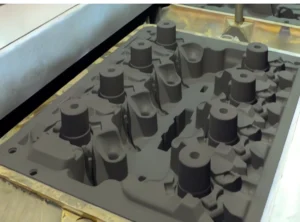
Long-Term Production Benefits of Perfect Sand and Molding System Matching
Accurate matching between sand processing systems and horizontal flaskless molding machine brings continuous economic and quality benefits for horizontal molding production.
- In terms of quality, stable clay sand performance eliminates over 90% of sand-related casting defects, greatly improving product qualification rate and reducing rework losses.
- In terms of efficiency, synchronous equipment operation reduces line waiting time and idle equipment loss, increasing the overall operating efficiency of the horizontal molding line by more than 20%.
- In terms of cost, optimized recycled sand processing improves sand recycling rate, reduces new sand supplementation and solid waste discharge, and cuts raw material and environmental protection costs.
Meanwhile, standardized matching reduces equipment operation load and parameter debugging frequency, lowering daily maintenance difficulty and failure rate. For foundry enterprises pursuing refined production management, professional system matching is the most cost-effective transformation method to stabilize product quality, improve production capacity and enhance market competitiveness.
Conclusion
Precise sand system matching optimizes horizontal molding quality and operational efficiency.
Contact Chong Jen Machinery
For professional clay sand molding machine and horizontal flaskless molding machine integrated matching solutions,
contact Chong Jen Machinery :[email protected]
 English
  Russian
  Spanish
  Portuguese
  French
  Indonesian
  Thai
Thai