Lack of clarity on Tumblast Working Principle causes misuse and inefficiency. This guide breaks down its mechanism with key Abrasive Acceleration insights.
This guide explains the Tumblast Shot Blaster’s core working principle, covering Workpiece Tumbling, Abrasive Acceleration, Contaminant Removal, Media Recycling, and Closed-Loop Operation for efficient surface treatment.
Dive into detailed steps below to master the Tumblast Working Principle and key operational mechanisms.
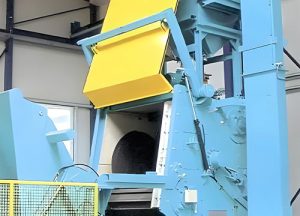
How does the Workpiece Tumbling system function in a tumblast shot blaster?
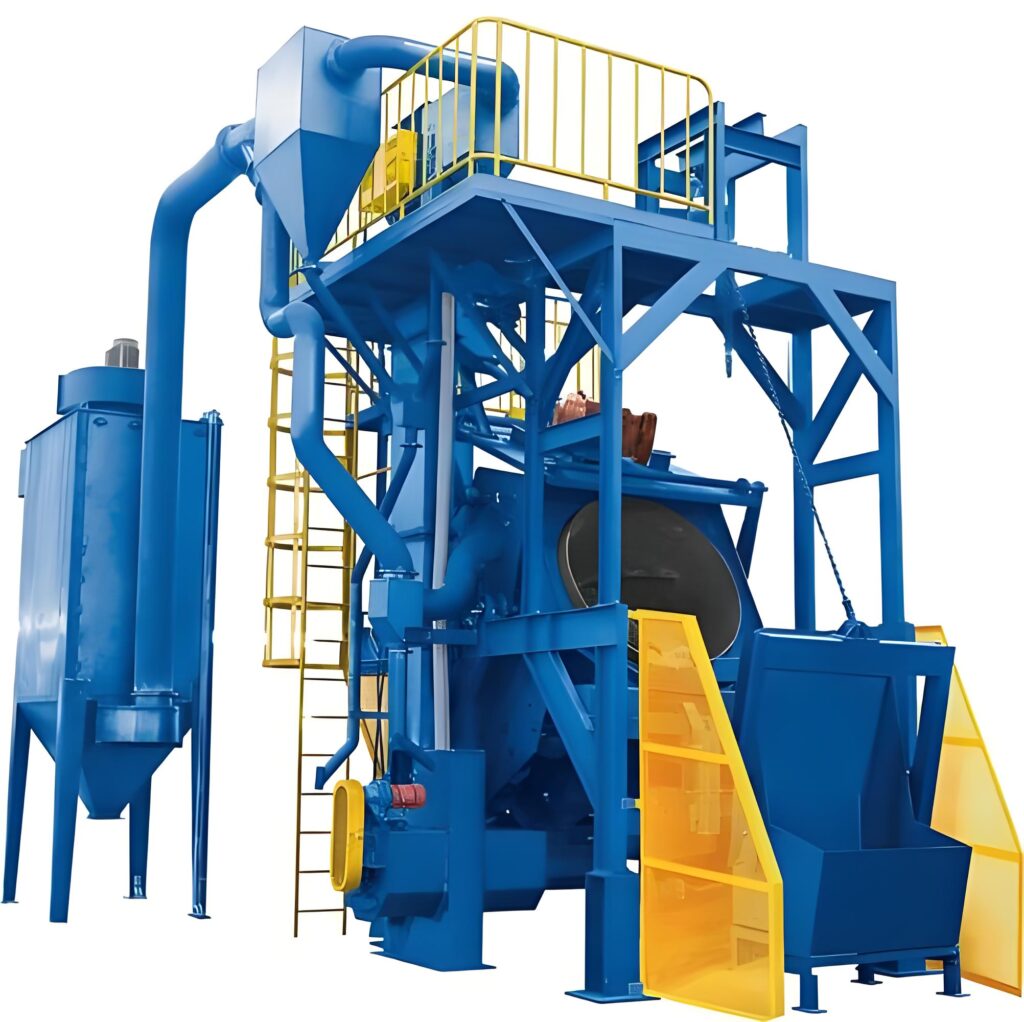
The Workpiece Tumbling system is the foundation of the Tumblast Working Principle, ensuring uniform abrasive contact for thorough cleaning. Composed of a hexagonal or octagonal rotating drum, it’s driven by a gear motor with adjustable speeds (5-15 RPM) to suit different workpiece types. When small bulk workpieces (screws, gears, small castings) are loaded, internal lifting bars elevate them as the drum rotates, then gravity causes them to fall freely—creating continuous tumbling. This motion exposes every workpiece surface, including recesses and gaps, eliminating cleaning dead ends. The drum’s shape minimizes workpiece collision damage, while speed adjustments balance cleaning efficiency and part protection. Without precise Workpiece Tumbling, abrasive media can only reach limited areas, leading to uneven results. This system’s synergy with other components defines the Tumblast Working Principle, making it critical for consistent performance. Whether processing delicate aluminum parts or sturdy steel components, Workpiece Tumbling adapts to ensure optimal exposure to abrasive streams.
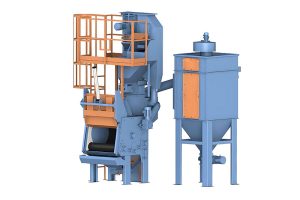
What is the role of Abrasive Acceleration in the tumblast working principle?
Abrasive Acceleration is the kinetic energy core of the Tumblast Working Principle, enabling effective surface treatment. The blast wheel (impeller) is the key component—driven by a high-power motor (15-30 kW) rotating at 2000-3000 RPM. Abrasive media (steel shot, glass beads) is fed into the blast wheel’s distributor, which evenly distributes it to rotating blades. Centrifugal force accelerates media to 60-80 m/s, creating a high-velocity stream directed by a directional sleeve toward tumbling workpieces. This accelerated media strikes surfaces with enough force to strip rust, scale, and burrs. Abrasive Acceleration intensity is adjustable via media size, hardness, or blast wheel speed—matching workpiece material needs. Without controlled Abrasive Acceleration, the machine lacks cleaning power, failing to meet surface quality standards. This mechanism is the heart of the Tumblast Working Principle, converting mechanical energy into targeted surface treatment. Mastering Abrasive Acceleration settings ensures efficient, damage-free cleaning for diverse applications.
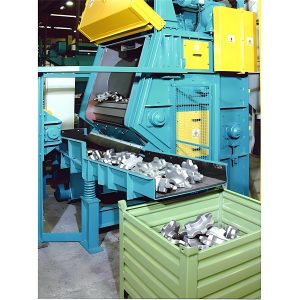
How does Contaminant Removal occur in line with the tumblast working principle?
Contaminant Removal is the primary objective of the Tumblast Working Principle, achieved through synchronized Workpiece Tumbling and Abrasive Acceleration. As workpieces tumble, accelerated abrasive media impacts their surfaces, breaking the bond between contaminants (rust, oil, burrs) and the base material. Rust and scale are dislodged by kinetic force, while oil is stripped via mechanical action and impact-generated heat. Burrs are smoothed by repeated abrasive contact, improving dimensional accuracy. The closed drum design contains the process, preventing contaminant dispersion and ensuring media stays focused on workpieces. Contaminant Removal efficiency depends on balancing tumbling speed, media velocity, and processing time—adjustable for light cleaning (degreasing) or heavy-duty rust removal. This step is integral to the Tumblast Working Principle, as it directly delivers the desired surface finish. Consistent Contaminant Removal relies on maintaining optimal parameters, ensuring every workpiece meets quality standards without rework.
How does Media Recycling support the tumblast working principle’s efficiency?
Media Recycling is a cost-saving cornerstone of the Tumblast Working Principle, enabling sustainable, continuous operation. After impact, used media and contaminants fall through the drum’s perforations into a collection hopper. A screw conveyor or elevator transports the mixture to a separator (cyclone or magnetic), which uses centrifugal force or magnetism to separate reusable media from lightweight contaminants. Clean media is recirculated to the blast wheel, while dust and debris are sent to a dust collector. Media Recycling reduces consumption by 80-90%, lowering operational costs and environmental impact. Advanced systems include screens to remove worn media, ensuring only high-quality media is reused—preserving Abrasive Acceleration effectiveness. Without efficient Media Recycling, the machine would require constant media replenishment, disrupting workflow. This system enhances the Tumblast Working Principle’s efficiency, supporting long production runs and cost-effective operation. Proper Media Recycling maintenance ensures consistent performance and extends machine lifespan.
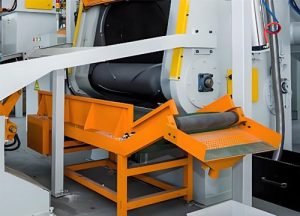
What is the function of Closed-Loop Operation in the tumblast working principle?
Closed-Loop Operation optimizes and regulates the Tumblast Working Principle, ensuring safety, consistency, and efficiency. It integrates sensors, controllers, and actuators to monitor key parameters: drum speed, media level, blast time, and dust collector pressure. Media level sensors trigger automatic refills, maintaining optimal Abrasive Acceleration. Timers control processing duration, preventing over/under-blasting. Safety interlocks halt operation if the drum door is open, protecting operators. PLC systems store custom programs for different workpieces, streamlining production changes. Closed-Loop Operation continuously adjusts parameters to compensate for variables like media wear, ensuring consistent Contaminant Removal and Workpiece Tumbling. This regulatory mechanism is vital to the Tumblast Working Principle, as it minimizes human error and maximizes reliability. Without Closed-Loop Operation, the machine’s performance would be erratic, leading to inconsistent results and safety risks. This system elevates the Tumblast Working Principle from a basic process to a controlled, efficient surface treatment solution.
Conclusion
Master the Tumblast Working Principle and key mechanisms for optimal, cost-effective operation.
E-mail:[email protected]