Is Poor Foundry Line Design Delaying Your ROI?
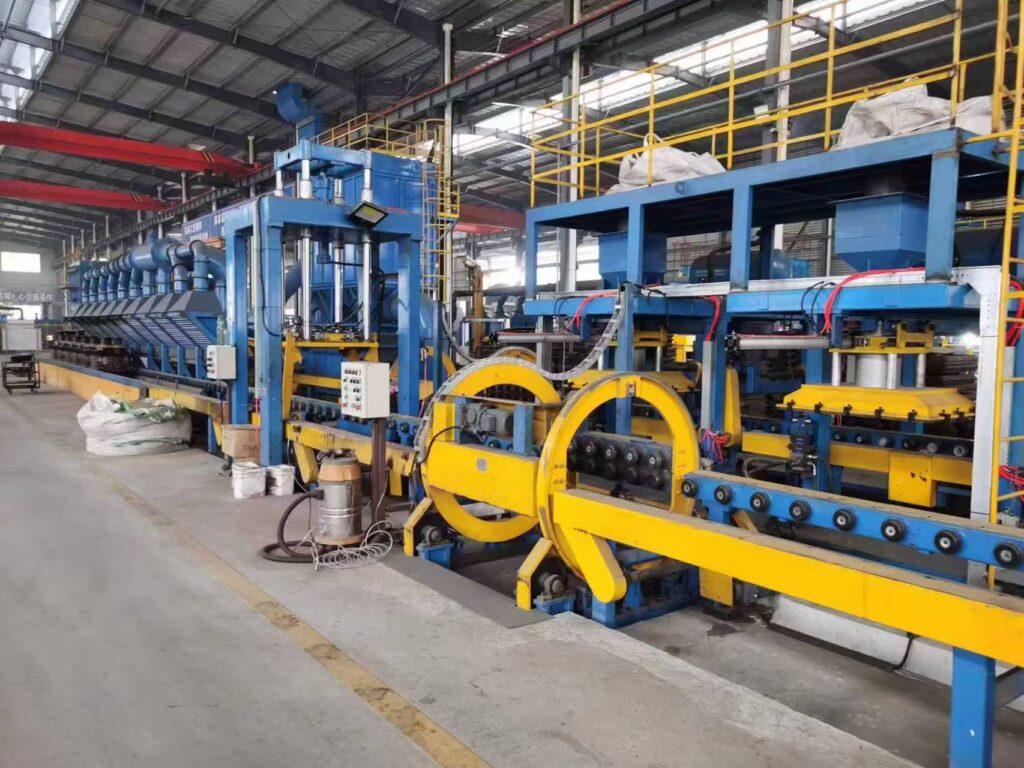
When a foundry production line is arranged without labor flow, maintenance access, or energy consumption in mind, hidden costs quickly reduce profitability. Excessive handling, long transfer distances, unplanned stoppages, and difficult servicing can extend the payback period. A data-driven Molding Equipment Line Design helps management increase output, control operating costs, and achieve faster Foundry ROI.
The best standard for selecting a molding line is measurable lifecycle value: balanced capacity, short material routes, low labor demand, reliable uptime, efficient energy use, and scalable automation. Our company provides Customizable Foundry Molding Equipment with OEM and ODM engineering support to help each Manufacturer and Supplier achieve a shorter payback period.
How Line Layout Impacts Labor Costs
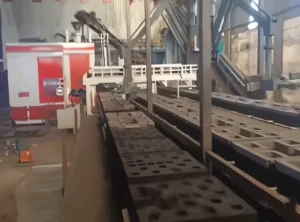
Layout directly determines how many operators are needed and how much time they spend moving, waiting, checking, or correcting work. A well-planned line places related equipment in a logical sequence and reduces unnecessary manual transfer. This improves labor productivity without requiring higher operator intensity.
Layout decisions that reduce labor expenditure
- Position connected equipment in a continuous material flow.
- Minimize manual lifting, repeated handling, and long walking distances.
- Use conveyors, transfer systems, and buffers between synchronized workstations.
- Place controls and inspection points where operators can monitor several stations.
- Provide safe maintenance access without stopping adjacent operations.
- Reserve space for automation, future equipment, and product expansion.
Procurement teams should evaluate labor using total employment cost rather than basic wages alone. Include recruitment, training, supervision, overtime, benefits, absenteeism, and the cost of manual quality correction. A Supplier proposal that appears more expensive may deliver better Foundry ROI if it reduces staffing requirements and stabilizes output.
Reduce Downtime With Well-Planned Line Design
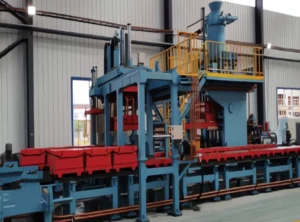
Downtime reduces revenue twice: production stops, while labor and facility expenses continue. A reliable Molding Equipment Line Design limits this risk by coordinating equipment capacity, maintenance access, spare parts, controls, and material buffers before installation.
Design measures for higher equipment availability
- Balance each station with the planned hourly production rate.
- Identify bottlenecks and provide suitable buffer capacity.
- Separate routine maintenance zones from normal operator pathways.
- Specify quick-access wear parts and practical replacement clearance.
- Integrate alarms, status monitoring, and fault diagnosis into the control system.
- Define preventive maintenance intervals and critical spare parts before commissioning.
| Design factor | Cost or performance effect | Procurement question |
| Material route | Controls handling labor and transfer time | Can the layout reduce unnecessary movement? |
| Buffer capacity | Prevents one short stoppage from stopping the complete line | Where are upstream and downstream buffers located? |
| Maintenance access | Shortens repair duration and improves safety | Can wear parts be replaced without major disassembly? |
| Energy system | Influences continuous operating expenditure | Are motors, controls, and auxiliary systems sized efficiently? |
Calculate a Simple ROI for Molding Line Investment
Management needs a transparent model that separates investment from annual benefits. The calculation should use realistic production data and conservative assumptions rather than the Manufacturer’s maximum rated capacity.
Basic calculation method
- Calculate annual benefits from additional saleable output.
- Add verified labor savings and energy savings.
- Add avoided outsourcing, rework, overtime, and downtime losses where applicable.
- Subtract additional maintenance, consumables, utilities, and financing costs.
- Divide net annual benefit by the total installed investment.
- Calculate payback period by dividing total installed investment by net annual benefit.
Useful formulas include:
- Net annual benefit = additional contribution margin + labor savings + energy savings + avoided losses − additional annual operating costs
- Simple ROI = net annual benefit ÷ total installed investment × 100%
- Payback period = total installed investment ÷ net annual benefit
Total installed investment should include Foundry Molding Equipment, transportation, installation, commissioning, training, utilities, civil work, controls integration, and initial spare parts. This prevents management from approving a project based only on the equipment quotation.
Flexible Design for Different Product Batches
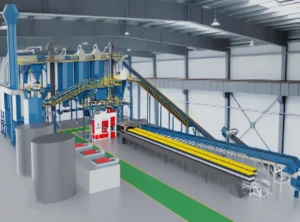
Product variety can significantly affect the payback period. A line designed only for one high-volume product may perform well initially but become inefficient when customer demand changes. Flexible design protects the investment by supporting different product batches, sizes, schedules, or future orders.
Flexibility features worth evaluating
- Adjustable conveying and workstation arrangements
- Fast changeover procedures and accessible tooling areas
- Recipe-based control for different production orders
- Modular stations that can be added or relocated
- Variable operating speeds matched to batch requirements
- Compatibility with future inspection, cleaning, or handling equipment
A Customizable OEM or ODM solution should distinguish essential flexibility from unnecessary complexity. Over-automation can increase capital cost without improving actual output. The right design matches automation level to annual volume, labor availability, product diversity, and expected order growth.
Real-World Example: Shorter Payback for an Optimized Line
Consider a foundry that replaces a labor-intensive arrangement with an integrated line. The new design reduces manual transfers, improves station balance, and provides maintenance access without dismantling adjacent equipment.
| Evaluation item | Previous arrangement | Optimized line |
| Operators per shift | 18 | 13 |
| Annual labor cost | Higher due to handling and overtime | Reduced through flow automation |
| Unplanned downtime | Frequent bottleneck stoppages | Lower through balanced capacity and buffers |
| Energy use per saleable unit | High due to idle and inefficient transfer systems | Lower through coordinated operation |
| Payback result | Extended by hidden operating costs | Shortened by combined annual savings |
For procurement approval, the project team should validate actual shift data after commissioning. Compare planned and measured labor hours, energy consumption, uptime, output, and maintenance expenditure. This creates an evidence-based Foundry ROI review and helps the Manufacturer improve future line configurations.
Accelerate Your Foundry Investment Return
Do not evaluate a production line by purchase price alone. Request a site-based layout review, lifecycle cost model, and payback calculation from our team. Contact us for Customizable OEM and ODM Foundry Molding Equipment and a Molding Equipment Line Design built for faster Foundry ROI.
 English
  Russian
  Spanish
  Portuguese
  French
  Indonesian
  Thai
Thai