
Shot blast machine principles are confusing; this guide explains them simply to avoid misunderstanding and improper use.
This guide explains the shot blast machine working principle simply, breaking down shot blasting steps clearly without complex jargon for easy understanding.
Read on to grasp the core of shot blast machine and shot blasting step by step.
What Are the Core Components of a Shot Blast Machine for Shot Blasting?
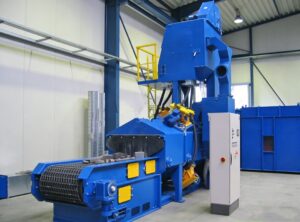
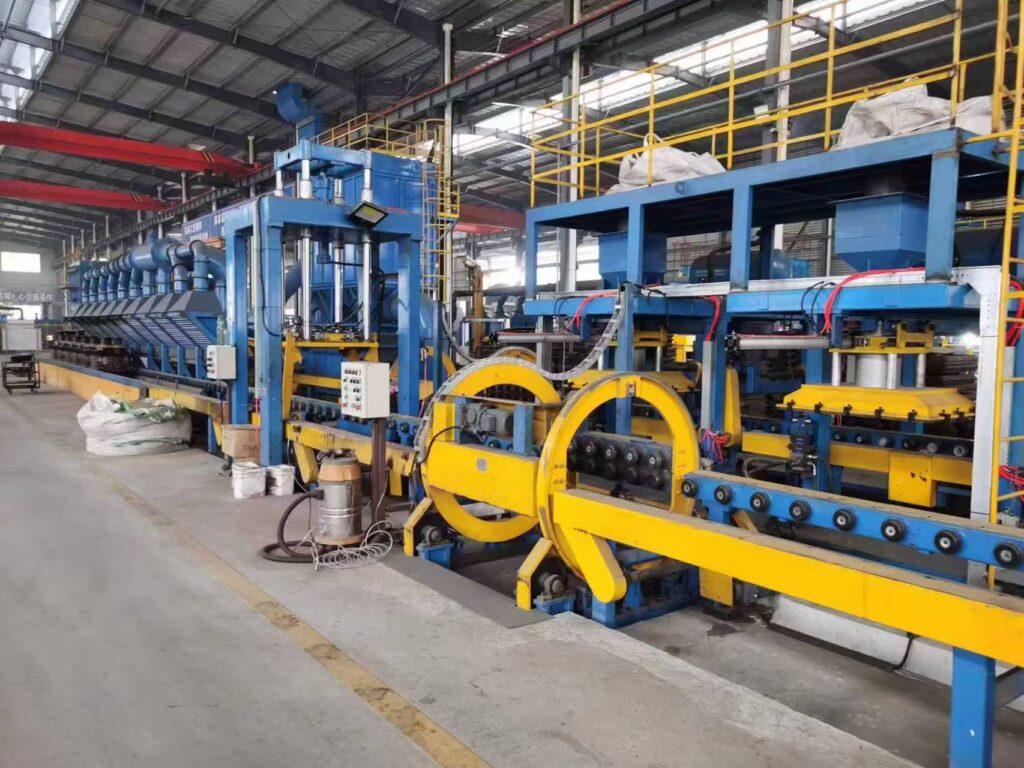
To understand the shot blast machine working principle, you first need to know its core components—each plays a key role in smooth shot blasting. The main components of a shot blast machine include the blast wheel, abrasive storage hopper, conveyor system, dust removal system, and control panel.
- The blast wheel is the “heart” of the shot blast machine, responsible for accelerating the abrasive (machine shot) to high speed for shot blasting. The storage hopper stores the abrasive and feeds it to the blast wheel stably.
- The conveyor system moves the workpiece into and out of the shot blast machine, ensuring uniform le sablage au jet coverage. The dust removal system collects dust and debris generated during shot blasting, keeping the environment clean. The control panel allows operators to adjust parameters (such as blast speed) to control the shot blasting effect.
These components work together seamlessly, and understanding them helps you easily grasp how the shot blast machine achieves efficient shot blasting without complex jargon.
How Does a Shot Blast Machine Complete Shot Blasting Step by Step?
The shot blast machine completes shot blasting through four simple, sequential steps—no complicated principles, easy to understand.
- Feeding: the workpiece is placed on the conveyor system and sent into the closed shot blast chamber of the shot blast machine, which prevents abrasive and dust from escaping during shot blasting.
- Abrasive acceleration: the abrasive (machine shot) in the storage hopper is fed into the blast wheel of the shot blast machine; the blast wheel rotates at high speed (1500-1800rpm), accelerating the abrasive to a high speed (30-50m/s).
- Sablage: l'abrasif à grande vitesse est projeté depuis la roue de projection, frappant la surface de la pièce à travailler de manière uniforme—cet impact élimine la rouille, les écailles d'oxyde et les débris, atteignant l'objectif du sablage.
- Post-traitement: après le sablage au jet, le système de convoyage envoie la pièce à travailler hors de la machine de sablage; le système d'élimination des poussières collecte la poussière et les débris, et le système de recyclage de l'abrasif sépare l'abrasif réutilisable des déchets, le réutilisant pour le sablage.
Ce processus étape par étape est le cœur du principe de fonctionnement de la machine de sablage, garantissant un sablage efficace et uniforme à chaque fois.
Conclusion
La machine de sablage réalise le sablage à travers des étapes simples et séquentielles.
Pour des explications plus simples de la machine de sablage et du sablage,
contactez-nous par e-mail :[email protected]
 French
  English
  Russian
  Spanish
  Portuguese
  Indonesian
  Thai
Thai