Open sand blasting causes heavy pollution and safety hazards; sand blasting room offers a standardized solution.
This article analyzes the definition, core structure and industrial applications of sand blasting room (sand blasting booth/blast booth), helping you fully understand this professional surface treatment facility.
Read on to explore the structure and industrial applications of sand blasting room.
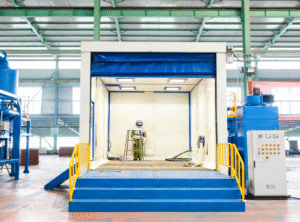
What Is the Core Definition and Structure of a Sand Blasting Room?
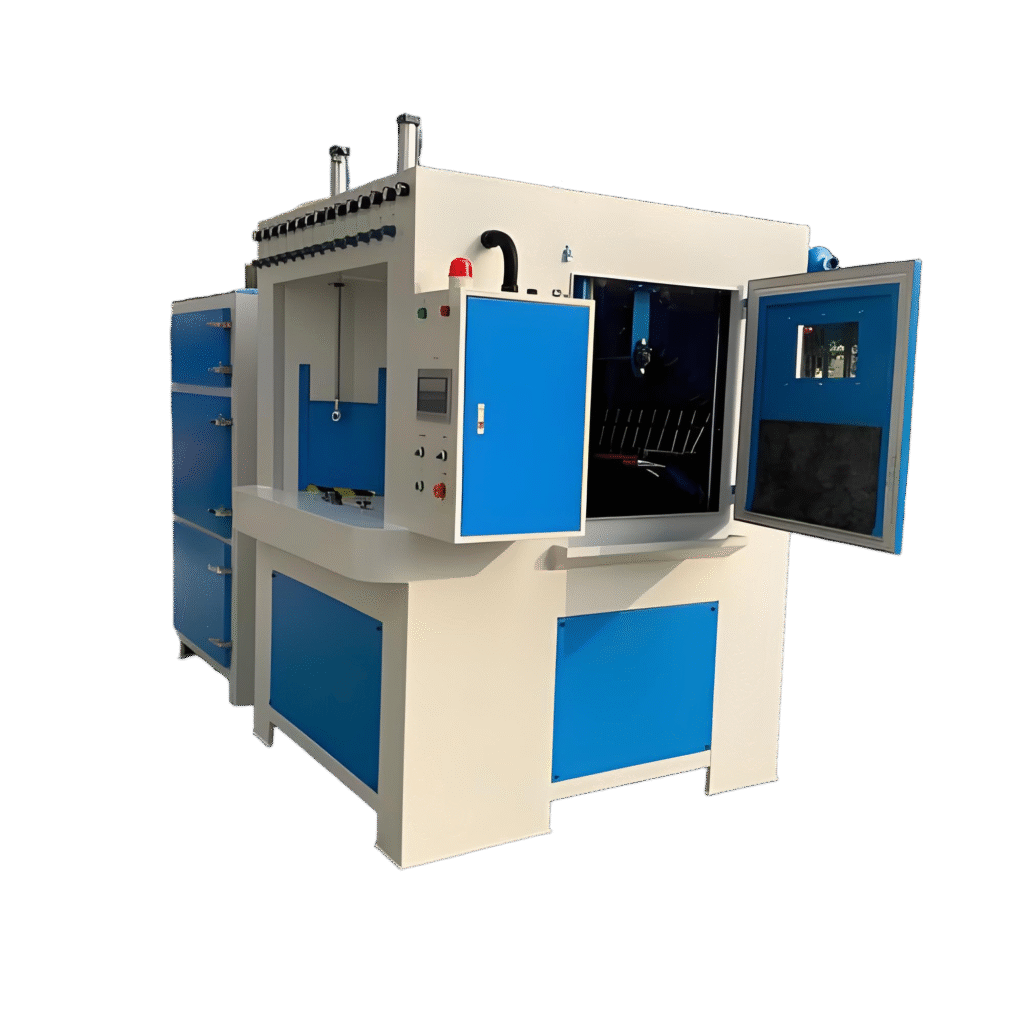
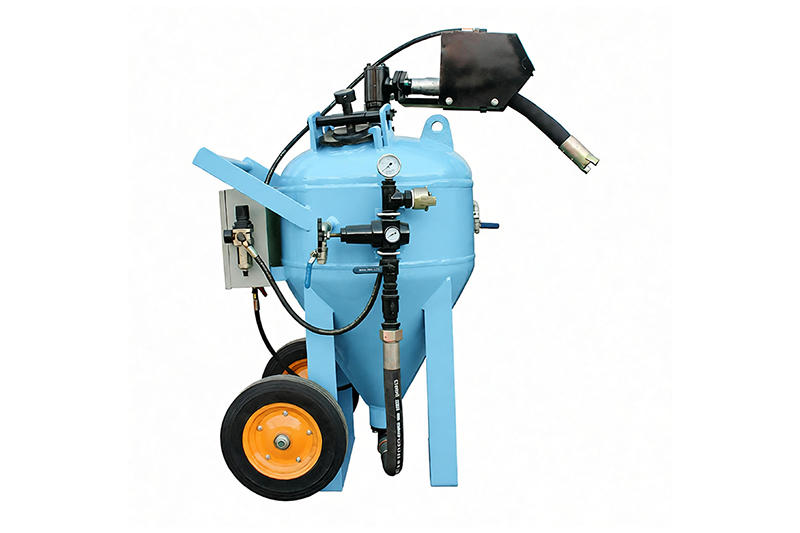
A sand blasting room, also called a sand blasting booth or blast booth, is a professional enclosed facility designed for large-scale and high-standard sand blasting operations. It integrates abrasive projection, dust collection and abrasive recovery to ensure safe and environmentally friendly operations. The core structure of a sand blasting room consists of five key components that are indispensable. First, the enclosed chamber, the main body of the sand blasting room, is made of wear-resistant steel plates or composite materials. It can resist the impact of high-speed abrasives, prevent abrasive splashing and dust leakage, and ensure the airtightness of the working space. Second, the sand blasting system, including sand blasting guns, air compressors and abrasive storage tanks, provides stable air pressure and abrasive supply for sand blasting operations, and the abrasive projection intensity can be adjusted as needed. Third, the dust removal system, the environmental protection core of the sand blasting booth, is composed of bag filters, fans and air ducts, which can efficiently collect dust and waste residue generated during operations to ensure emission compliance. Fourth, the abrasive recovery system recycles reusable abrasives through screw conveyors, bucket elevators and other components, reducing consumable waste and operating costs. Finally, the auxiliary system includes ventilation, lighting and emergency stop devices to ensure a comfortable working environment and operational safety. These components work together to make the sand blasting room (blast booth) a core facility for standardized sand blasting operations.
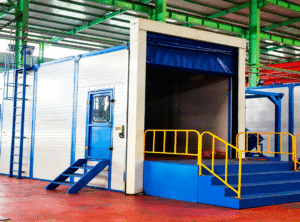
What Are the Common Types of Sand Blasting Booths and Their Adaptable Scenarios?
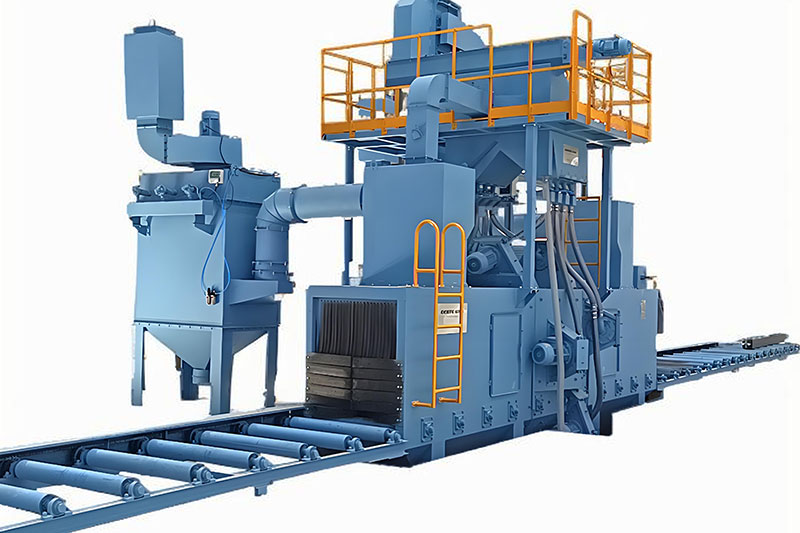
According to different industrial needs, sand blasting rooms (sand blasting booths/blast booths) have derived various types, each with clear adaptable scenarios to accurately match different production capacities and workpiece requirements. The first type is the batch-type sand blasting room. Adopting a fully enclosed structure, it is suitable for large workpieces or small-batch production. During operation, workpieces can be processed from multiple angles through movable sand blasting guns, with strong flexibility. It is widely used in heavy machinery and ship parts processing. The second type is the continuous sand blasting room , equipped with an automatic conveyor line to realize integrated operations of loading, sand blasting and unloading. It does not require frequent manual operations, has extremely high efficiency, and is suitable for mass workpiece processing in the automobile and hardware industries. The third type is the automatic sand blasting room, equipped with robotic arms or automatic sand blasting devices, which can realize unmanned operations. It has high sand blasting precision and uniform effect, and can effectively reduce human error. It is suitable for fields with high requirements for surface treatment such as aerospace and precision parts. The fourth type is the semi-open sand blasting room. Adopting a semi-enclosed structure, it has low construction costs and is suitable for outdoor large workpieces or temporary sand blasting operations. It needs to be equipped with additional dust removal equipment to ensure environmental compliance. Choosing the right type of sand blasting room can greatly improve surface treatment efficiency and quality.
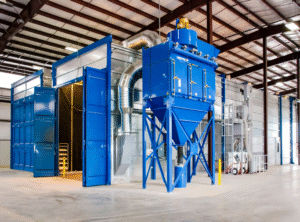
What Are the Core Applications of Blast Booths in Various Industrial Fields?
As a core surface treatment facility, sand blasting rooms are widely used in many industrial fields by virtue of their safety, efficiency and environmental protection advantages, becoming a key link to improve product quality. In the machinery manufacturing industry, sand blasting rooms are mainly used for surface treatment of machine tool beds, mechanical brackets, gears and other components. They can remove rust, oxide skin and burrs, improve the wear resistance and assembly precision of components, and extend the service life of equipment. In the automobile industry, sand blasting rooms are essential facilities for processing automobile bodies, chassis and engine parts. Sand blasting treatment enhances the surface roughness of parts, improves the adhesion of subsequent coating processes, and ensures the durability of automobile products. In the shipbuilding industry, large sand blasting rooms are used for surface treatment of hulls, decks, marine pipe fittings and other components. They can efficiently remove rust and old coatings on the hull surface, lay a foundation for anti-corrosion treatment, and ensure ship navigation safety. In the aerospace field, high-precision sand blasting rooms are used for surface strengthening treatment of aviation parts. Precision sand blasting improves the fatigue resistance of parts to meet the strict requirements of aerospace products. In addition, sand blasting rooms also play an important role in the hardware, construction, casting and other industries, realizing the needs of rust removal, decontamination and surface beautification of different workpieces, and promoting the quality upgrading of industrial products.
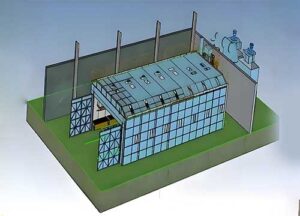
What Are the Core Advantages of Using a Sand Blasting Room Compared to Traditional Sand Blasting?
Compared with traditional open sand blasting operations, sand blasting rooms have significant advantages and become the first choice for modern industrial surface treatment. First, the environmental protection advantage: the enclosed structure and efficient dust removal system of the sand blasting room can effectively control dust diffusion, avoid air pollution, meet environmental policy requirements, and reduce harm to the health of operators. Second, the safety advantage: the sand blasting room isolates the sand blasting operation from the external environment, prevents safety accidents caused by abrasive splashing, and is equipped with emergency stop devices to further improve operational safety. Third, the quality advantage: the standardized working space and precise sand blasting system can ensure uniform surface treatment of workpieces, avoid errors in traditional manual sand blasting, and improve product qualification rate. Fourth, the cost advantage: the abrasive recovery system can realize the recycling of abrasives, reduce consumable waste, and the automatic sand blasting room can also reduce labor costs and improve production efficiency. Fifth, the adaptability advantage: the sand blasting room can be customized according to workpiece size and production capacity requirements, adapting to various sand blasting needs from precision parts to large equipment, with extremely strong versatility. These advantages make the sand blasting room a core facility in the field of industrial surface treatment, helping the industry develop in a green and efficient way.
Conclusion
Sand blasting room is an eco-friendly and efficient facility, boosting surface treatment in various industries.
E-mail:[email protected]